Table of Contents >> Show >> Hide
- What Counts as an “Alien Sighting” in 2026?
- A Quick Timeline of American “Alien Sightings” (and Why They Keep Coming Back)
- Why “Alien Sightings” Often Have Very Earthly Explanations
- 1) Satellites (especially Starlink) and the “beads on a string” effect
- 2) Planets, stars, and the “why is that star following my car?” illusion
- 3) Aircraft, drones, and “my camera made it look faster”
- 4) Weather and rare atmospheric light shows
- 5) The human factor: attention, stress, and reconstructive memory
- When a Sighting Stays “Unidentified”
- How to Evaluate an Alien Sighting Without Ruining the Fun
- How UAP Reports Work in the Real World
- So… Are Any Alien Sightings Actually Aliens?
- Conclusion
- Experiences Related to Alien Sightings (What People Commonly Describe)
“I saw something in the sky” is one of humanity’s oldest hobbiesright up there with arguing about sports and pretending we can totally fold a fitted sheet.
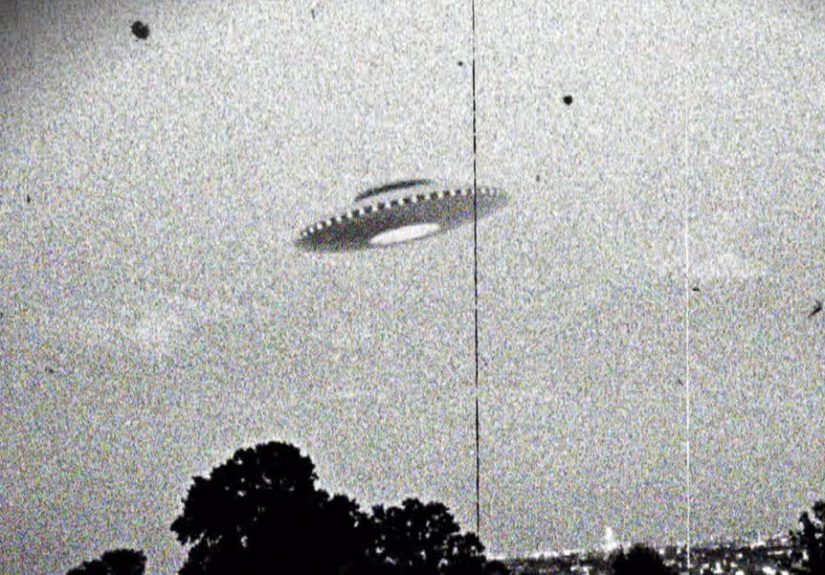
Today we call them alien sightings, UFO sightings, or (in government-speak) UAP sightingsbut the big question is the same:
Was that something truly unknown… or just something we didn’t recognize in the moment?
This article is a reality-based tour of modern alien sightings in the United States: what people report, what the latest official investigations say,
why so many “unexplainable” lights have very explainable roots, and how to evaluate a report without becoming either a cynic or the person who shouts
“ALIENS!” every time a drone flies by.
What Counts as an “Alien Sighting” in 2026?
Most people use “alien sighting” as shorthand for seeing a craft (or lights) that seem non-human. But official agencies are careful: they don’t start with
“aliens,” they start with “unidentified.” That’s why UAPUnidentified Anomalous Phenomenahas largely replaced the older term UFO.
It’s a broader label that includes objects in the air, things in space, and even some cases involving waterwithout implying a conclusion.
Translation: a UAP report means, “We don’t know what this was yet,” not “We’ve confirmed E.T. is commuting through our airspace.”
Most cases end up being ordinary once enough information shows up. A smaller slice stays unresolved mainly because the data is incomplete.
A Quick Timeline of American “Alien Sightings” (and Why They Keep Coming Back)
1940s–1969: Flying saucers, Roswell, and Project Blue Book
The modern U.S. UFO era kicked off in 1947an explosive year that included the “flying saucer” wave, the Roswell headlines,
and later the Air Force’s long-running effort to investigate reports: Project Blue Book.
Blue Book collected thousands of sightings and found most had conventional explanationsplanes, balloons, astronomical objects, weather, misperceptions.
A small percentage remained “unidentified,” often because the information was too thin to land on a confident answer.
2004–2017: Military encounters go mainstream
A major shift happened when military encountersespecially involving trained observers and multiple sensorsentered public conversation.
One widely discussed example is the 2004 USS Nimitz incident (often associated with the “Tic Tac” description),
plus later-released Navy videos that fueled a new wave of public interest. These cases didn’t “prove aliens,” but they did highlight a real issue:
sometimes something is seen, recorded, and still not confidently identified.
2020s: UAP becomes a government-wide data problem
Over the last few years, UAP moved from tabloid territory to a messy, grown-up category: aviation safety, intelligence,
and data quality. Multiple U.S. government bodies now treat UAP reports as something to log, triage, and resolve when possible.
A consistent theme in official reports: no confirmed evidence of extraterrestrial origin, and not enough high-quality data
to resolve every case.
Why “Alien Sightings” Often Have Very Earthly Explanations
If you’ve ever confidently waved at someone who wasn’t waving at you, congratulationsyou understand the alien sightings problem.
Perception is fast, memory is editable, and the sky is packed with objects that can look weird when you’re tired, excited, or staring through a windshield.
1) Satellites (especially Starlink) and the “beads on a string” effect
A huge chunk of modern sightings come down to satellitesparticularly satellite “trains,” where multiple satellites follow one another across the sky.
To a first-time observer, it can look like a coordinated fleet: evenly spaced lights gliding silently, sometimes fading in and out as the sunlight angle changes.
It’s dramatic. It’s eerie. It’s also… orbital traffic.
2) Planets, stars, and the “why is that star following my car?” illusion
Bright objects like Venus and Jupiter can look suspiciously “close” and “stable,” especially near the horizon where atmospheric distortion makes them shimmer.
Add thin clouds, heat haze, or a slightly dirty windshield, and you’ve got a free special effects package.
Movement illusions are common toowhen you’re driving, a distant bright object can appear to pace you or dart when you change lanes.
3) Aircraft, drones, and “my camera made it look faster”
Commercial and military aircraft can look strange at night due to landing lights, formation patterns, or perspective.
Drones add another layer: they can hover, accelerate quickly, and perform tight maneuversexactly the kind of motion people often describe as “not like any plane.”
Cameras make it worse. Zoomed phone video compresses depth cues, and digital stabilization can produce jitter that looks like sudden direction changes.
4) Weather and rare atmospheric light shows
Thunderstorms can produce upper-atmospheric flashes called transient luminous eventsincluding red sprites, blue jets, and elves.
They’re brief, high-altitude, and often described in ways that sound straight out of science fiction.
If someone reports “a red, jellyfish-like flash above a storm,” they may have witnessed a real phenomenonjust not an alien one.
5) The human factor: attention, stress, and reconstructive memory
Many sightings happen in low light, at odd angles, and during emotionally charged moments (“Did you see that?!” is not a calm scientific protocol).
Human memory is not a perfect playback system; it’s a reconstruction that can shift with retelling, suggestions, and time.
That doesn’t mean witnesses are lying. It means our brains are built for survival and storytelling, not precision sky-tracking.
When a Sighting Stays “Unidentified”
The frustrating truth is that some reports remain unresolved for a simple reason: not enough data.
To identify a mystery object, investigators typically need basics like distance, speed, size, altitude, and an unambiguous trackideally from more than one sensor.
If the report is “a bright light moved fast,” that’s sincere, but it’s not a measurement.
Official reviews repeatedly emphasize this gap: inconsistent reporting, limited metadata, and lack of calibrated sensor data.
The “mystery” isn’t always that the object is extraordinaryit’s that the evidence is incomplete.
How to Evaluate an Alien Sighting Without Ruining the Fun
You can keep the wonder and keep your standards. Here’s a practical checklist used by skeptics, investigators, and anyone who’s ever said,
“Okay, but what else could it be?”
- Lock down the basics: exact time, location, direction you faced, and how long it lasted.
- Check the usual suspects: planets (especially Venus/Jupiter), meteors, satellites, aircraft corridors, and local drone activity.
- Look for pattern clues: blinking suggests aircraft; steady lights can be satellites or stars; sudden flares can be reflections or angle changes.
- Get more than one viewpoint: multiple witnesses from different locations help triangulate distance and motion.
- Separate what you saw from what you inferred: “a light moved” is an observation; “it chased us” is an interpretation.
- Be cautious with video: phone zoom makes everything look more dramatic and less measurable.
How UAP Reports Work in the Real World
UAP reporting isn’t just for internet threads and group chats with too many exclamation points.
In aviation, unusual observations can be logged and routed through official channelsbecause even a mundane explanation (like a balloon or drone)
can still pose a safety risk. Recent FAA guidance has standardized terminology and procedures for reporting UAP activity in air traffic contexts.
For civilians, the practical takeaway is simple: if you think something could endanger life or property, treat it as a safety issue first.
If it’s simply unexplained, document it carefullydetails matter more than dramatic adjectives.
So… Are Any Alien Sightings Actually Aliens?
Here’s the most honest answer that respects both curiosity and evidence:
There is currently no public, verified proof that any U.S. alien sightings are extraterrestrial craft.
Government investigations have repeatedly said they haven’t found evidence pointing to extraterrestrial vehicles.
At the same time, officials also acknowledge that some reports remain unresolvedusually due to missing or poor-quality data.
If alien life exists elsewhere (a question scientists explore through astronomy and SETI-style research), that doesn’t automatically mean
it’s visiting U.S. airspace. Interstellar travel is brutally hard. Meanwhile, Earth’s skies have gotten busier and weirder-looking:
more satellites, more drones, more sensors, more videos, more chances for genuine confusion.
The healthiest stance is “open but demanding”: open to new information, demanding of strong evidence.
Wonder is free. Conclusions are expensive.
Conclusion
Alien sightings sit at the intersection of mystery, technology, psychology, and cultureand that’s why they’re so sticky.
The sky is full of real phenomena that can look extraordinary in the moment: satellite trains, bright planets, aircraft lighting,
rare atmospheric flashes, and the occasional “we don’t have enough data to say.”
If you want to take UAP sightings seriously, the best move is wonderfully boring: document carefully, compare against known explanations,
and resist the urge to let one blurry clip do the work of a whole scientific investigation.
The truth might be mundaneor it might be genuinely surprising. Either way, better data beats louder opinions.
Experiences Related to Alien Sightings (What People Commonly Describe)
The stories are often the same shape, even when the explanation isn’t. Here are a few experience patterns that show up again and again in
U.S. alien sighting reportswritten as realistic composites based on common descriptions, not as claims of any single verified event.
The “Silent Parade”
Someone steps outside after dinner and sees a line of lights moving in perfect spacingno blinking, no engine sound, just a tidy string crossing the stars.
The first thought is usually, “That’s a fleet.” The second thought is, “Why is it so organized?” The third thought is texting ten people at once.
In many cases, this turns out to be a satellite train. The experience still feels uncanny because it violates expectations: we’re used to one plane at a time,
not a whole dotted line gliding overhead like a celestial zipper.
The “Stationary Star That Suddenly Moves”
A bright light hangs low near the horizon. It looks closer than it should, almost like it’s hovering over a neighborhood or a hill.
People watch for a minute… then swear it shifts sideways. That’s the moment the brain upgrades the event from “pretty” to “weird.”
Sometimes the “movement” is real (an aircraft flying toward you can look stationary until it changes angle), and sometimes it’s perception:
small head movements, cloud layers, and lack of reference points can make a steady object appear to drift.
Add excitement, and the story grows legsfast.
The “Storm-Glow Flash”
During a distant thunderstorm, someone notices a quick reddish burst above the cloud topstoo high to be normal lightning and too strange to be ignored.
It happens again, briefly, like a camera flash from the upper atmosphere. This kind of report can match rare but real events like sprites or other
transient luminous events. The experience is memorable because it feels like seeing the atmosphere do something it wasn’t supposed to do.
People tend to describe it with creature language“jellyfish,” “tentacles,” “a portal”because ordinary words don’t quite fit.
The “Three Lights in a Triangle”
A classic: three lights, evenly spaced, moving slowly, sometimes in silence. Witnesses often assume a single craft.
But triangles can be accidental: aircraft lights seen at an angle, separate objects lined up by perspective, or even drones flown in formation.
The experience is powerful because the brain loves symmetry. Symmetry feels designed. Designed feels intentional.
Intentional feels… not from around here.
The “My Phone Made It More Intense”
Someone records video. On the screen, the object looks like it’s zigzagging and accelerating.
Zoom exaggerates shakiness, and digital stabilization can create strange motion artifacts.
Later, when the clip is replayed, the witness feels even more certain: “See? It’s moving!”
This isn’t deceitit’s how imaging works. A tiny point of light doesn’t give a camera much to measure, so your device guesses.
The experience teaches a useful lesson: the most dramatic-looking footage is not always the most informative footage.
These experiences are part of why alien sightings are culturally unstoppable. People are not foolish for being startled by unexpected sky behavior.
The trick is to keep the experience honest: describe what happened, collect details, and let the explanation compete fairly.
If it’s a satellite or a sprite, that’s still amazing. And if it’s something genuinely unidentified, that’s the moment good documentation matters most.