Table of Contents >> Show >> Hide
- What Is Beat Light – Stout White?
- Design DNA: Why It Looks Like a Tiny Museum Piece
- The “White + Gold” Trick That Makes Rooms Look Better
- LED vs Bulb Versions: The Detail That Matters Before You Buy
- Where Beat Light – Stout White Looks the Best
- How to Style the Stout White Finish Without Overthinking It
- Planning & Practical Tips: Hanging Height, Spacing, and Light Quality
- Installation & Care: Keeping It Beautiful
- Is Beat Light – Stout White Worth It?
- Real-World Experiences With Beat Light – Stout White
- Conclusion
Some lighting is purely functional. It shows you where the couch ends and where your pinky toe begins (a public service).
And then there’s Beat Light – Stout Whitea pendant that doesn’t just illuminate a room, it
auditions for “most likely to be mistaken for modern sculpture.”
If you’ve ever wanted your ceiling to quietly whisper, “Yes, I read design magazines,” this is the piece.
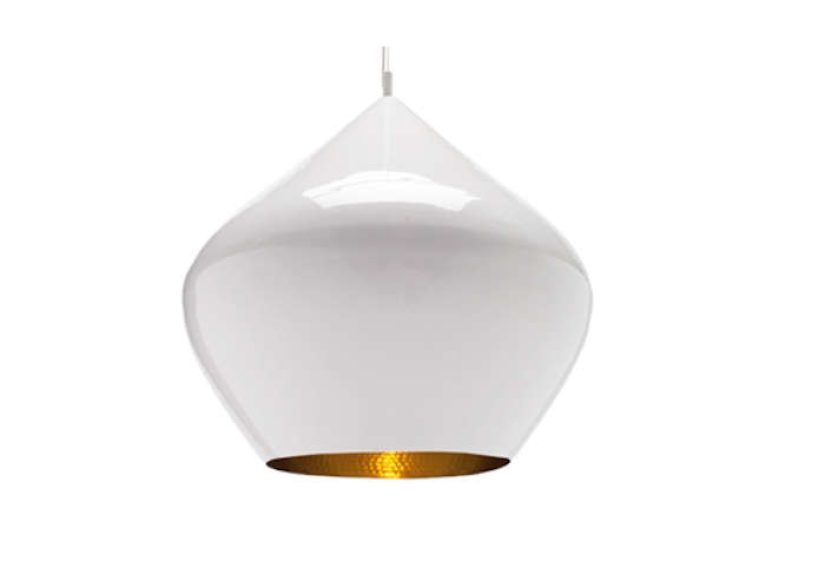
The Stout White version pairs a glossy white exterior with a warm metallic interior, creating that signature
“golden glow” effect people pay good money to pretend is natural sunlight.
What Is Beat Light – Stout White?
Beat Light – Stout White is part of the Beat lighting family designed by Tom Dixon and widely sold in the U.S.
It’s a large-format pendant light (the “Stout” shape is the bold, rounded one) crafted from brass and finished with a
glossy white exterior and a warm-toned interior that reflects light downward in a flattering way.
Think of it as a statement pendant that does two jobs at once: it functions as practical downlighting (for dining tables,
kitchen islands, and work surfaces) while also acting like a centerpiecewithout taking up any actual table space.
It’s the rare design object that says, “I’m dramatic,” and then backs it up with real illumination.
Design DNA: Why It Looks Like a Tiny Museum Piece
Inspired by traditional forms, not trendy moods
The Beat collection’s core idea pulls from traditional Indian cooking pots and water-carrying vesselssimple, iconic
silhouettes refined over generations. That’s why the shape feels timeless instead of “trending on Tuesday, cringe on Friday.”
The Stout form, in particular, reads like a modern artifact: rounded, weighty, and confident.
Handcrafted brass that keeps the “human” in the object
One of the Beat light’s biggest flex is how it’s made. These pendants are crafted using hand metalworking techniques,
with the inner surface shaped and finished to create a lively reflection pattern. That interior isn’t just decorative;
it’s the reason the light feels warm and dimensional instead of flat and clinical.
Translation: this isn’t the kind of pendant that looks identical in every house like it was stamped out by a machine that
hates joy. It’s intentionally artisanalsubtle variation included.
The “White + Gold” Trick That Makes Rooms Look Better
The glossy white exterior keeps it crisp
The white finish is a cheat code for modern interiors. It reads clean and architectural, especially in kitchens and dining areas,
and it blends into white ceilings without disappearing. You get the drama of a large pendant without the heaviness of a darker fixture.
The warm metallic interior does the flattering work
Inside, that golden/brass-toned surface catches the light and bounces it downward with a warm cast. The result is a glow that makes
a dining table feel inviting and makes your countertops look like they’re starring in their own home-renovation reveal.
It’s downlighting, but with ambiancelike lighting that actually wants you to have friends.
LED vs Bulb Versions: The Detail That Matters Before You Buy
In the U.S. market, you’ll see Beat Stout offered in different configurations depending on retailer and production generation.
Some versions use an E26 socket (you supply the bulb), while others ship with a dedicated LED engine.
Both aim for the same effect: warm, high-quality downlight that plays nicely with the reflective interior.
Here’s the practical takeaway:
-
If it’s socket-based: you control brightness, warmth, and dimming behavior by choosing a good bulb.
This can be great if you want very warm light or prefer specific smart bulbs. -
If it’s dedicated LED: you typically get a refined, consistent light quality and clean integration.
It’s more “designed as a system,” less “I’m at the hardware store squinting at bulb packaging.”
Either way, prioritize dimming compatibility if you want the full “golden interior” vibe at night. Bright, undimmed light is fine
but dimmed warm light is where this pendant earns its rent.
Where Beat Light – Stout White Looks the Best
Over a dining table (its natural habitat)
The Stout form is scaled to anchor a dining zone. It creates a defined “pool” of light and makes a table feel intentional,
even if the only thing on it is last night’s mail and a heroic bowl of snacks.
Styling tip: pair it with a wood table (oak, walnut) for warmth, or a stone/marble top for high contrast.
The brass interior harmonizes with bothlike it’s Switzerland, but shinier.
Over a kitchen island (statement + task lighting)
In a kitchen, the white exterior plays nicely with cabinetry, while the interior glow keeps the space from feeling sterile.
If you have an island that’s doing double duty as prep zone and hangout zone, this pendant is a strong contender.
For islands, designers often use multiple pendantseither matching Stout shapes for symmetry or mixing Beat silhouettes for a curated look.
If you want a “designed” vibe without remodeling your entire life, a small cluster is a fast win.
In an entryway or stairwell (instant “wow”)
If you’ve got height, use it. The Stout’s bold silhouette reads beautifully in a tall entry or over a stair landing where it can be seen from
multiple angles. This is where it becomes less “lighting fixture” and more “house jewelry.”
How to Style the Stout White Finish Without Overthinking It
Pair it with warm metals on purpose
Because the interior reads warm and metallic, it loves company: brass cabinet pulls, warm-toned faucets, bronze frames, or even leather accents.
You don’t need to match everything perfectly. Just give the pendant one or two allies in the room so it doesn’t feel like it showed up alone to prom.
Use contrast to make the shape pop
White-on-white looks clean, but white against darker walls (charcoal, deep green, navy) makes the silhouette stand out dramatically.
If you’re in a mostly neutral home, a single darker feature wall behind the dining area can make the pendant feel intentional and gallery-like.
Cluster it if your room needs a focal point
One Beat Stout is a statement. A pair or cluster is a conversation. If your space feels visually “flat,” multiple pendants create rhythm and depth.
The trick is spacing: keep enough room so each shade reads as its own shape rather than a chandelier traffic jam.
Planning & Practical Tips: Hanging Height, Spacing, and Light Quality
Scale matters more than you think
The Stout is a larger pendant, so it works best when it has breathing room. Over a small round café table, it can feel oversized.
Over a substantial dining table or big island, it looks right at home.
Hanging height: aim for comfort and clarity
You want the pendant low enough to create intimacy, but high enough that nobody has to do the limbo to see their dinner guests.
A reliable approach is to keep the bottom of the shade above normal sight lines when seated, and adjust based on ceiling height and table size.
If you install it and immediately think, “I could headbutt this,” raise it. Design should never require a helmet.
Bulb choice (if socket-based): don’t sabotage the glow
If your model takes a bulb, choose a high-quality warm LED with good color rendering so food looks appetizing and skin tones look human.
The reflective interior will amplify whatever you put in thereso “meh” bulbs become “meh, but brighter.”
Installation & Care: Keeping It Beautiful
Know what you’re mounting
This is not a featherweight paper lantern. It’s a brass pendant, and it should be installed with appropriate support.
If you’re unsure about junction box strength or ceiling conditions, use a qualified installerespecially in older homes.
Cleaning the exterior
The glossy white finish is forgiving, but kitchens are kitchens. For routine care, use a soft microfiber cloth and gentle cleaner.
Skip anything abrasive. The goal is “polished,” not “lightly sanded by regret.”
Protecting the interior glow
The interior finish is what creates that warm reflection, so treat it kindly. Dust with a soft cloth. Avoid harsh chemicals.
If you keep the interior clean, the light stays rich and luminous instead of dull.
Is Beat Light – Stout White Worth It?
If you’re shopping for a pendant purely by price-per-lumen, you can absolutely find cheaper fixtures.
But Beat Stout White isn’t competing with basic lightingit’s competing with objects that change how a room feels.
Reasons people love it
- Signature silhouette: sculptural without being fussy.
- Warm, flattering light: the interior reflection creates instant ambiance.
- Versatility: works in modern, transitional, and eclectic interiors.
- Material credibility: real brass, crafted look and feel.
Reasons it might not be for you
- It’s a statement: subtle minimalists may prefer something quieter.
- Scale is real: small spaces need careful planning.
- You’ll care about bulbs/dimming: to get peak vibe, details matter.
Bottom line: if you want one piece that instantly elevates a dining area or kitchen, this is a strong “yes.”
It’s lighting that looks intentional in daylight and feels cozy at nightlike it understands the assignment.
Real-World Experiences With Beat Light – Stout White
People who live with a statement pendant tend to describe the same moment: the first evening it’s installed, someone turns it on,
and the room feels differentmore finished, more “designed,” and somehow more welcoming. With Beat Stout White, that effect comes
from the contrast between the crisp exterior and the warm interior. In daylight, it reads clean and modern. At night, it’s a mood-setter
that makes even a Tuesday leftover dinner feel a tiny bit cinematic.
In kitchens, homeowners often notice how the light changes the “temperature” of the space. White cabinets and stone counters can look
sharpsometimes too sharpunder cool lighting. With the Stout White, the reflected warmth softens the room without turning it yellow.
The result is a kitchen that still looks bright and fresh, but doesn’t feel like a laboratory where you’re about to be assigned a safety badge.
It’s especially satisfying over an island where people naturally gather; the pendant creates a visual anchor that says, “Yes, this is the hangout spot.”
Over dining tables, the experience is even more dramatic. Because the Stout shape is generously sized, it frames the table and compresses the
visual space in a cozy waylike adding a ceiling-level centerpiece. Hosts often report that guests comment on it within minutes, which is the
design equivalent of someone noticing your haircut in a good way. And because the interior glow is flattering, it tends to make table settings
look richer: linens look creamier, wood looks warmer, and glassware picks up subtle reflections that feel expensive even if it came from a big-box store.
Designers and DIY renovators also talk about the “cluster effect.” One Stout White is bold, but pairing it with other Beat shapes can create a
custom composition that feels like a curated installation. The fun part is that it can look high-end and intentional without being overly complicated.
A mixed cluster works particularly well in double-height spaces or stairwells where you can enjoy the silhouettes from different angles. It turns
a transitional area into a destinationwithout adding furniture you’ll just bump into.
There’s also a practical side people appreciate: the fixture tends to hold its own visually even in busy rooms. In open-plan layouts, the dining area
can get lost between kitchen and living zones. A sculptural pendant gives the eye a “stop point,” helping each area feel defined. Homeowners often say
it’s the piece that makes an open space feel organizedlike putting punctuation in a long sentence.
Finally, long-term experiences usually come down to one simple truth: if you care for the finishes and make smart choices about dimming and bulb/LED
configuration, the Beat Stout White becomes a “forever” fixture. It doesn’t rely on a trend (like exposed-cage everything or farmhouse-anything);
it relies on form, material, and light quality. And those age well. The only consistent downside people mention is that once you install it,
you may start side-eyeing the rest of your lighting. The pendant raises the standard, and suddenly your hallway flush mount feels like it’s
apologizing for itself.
Conclusion
Beat Light – Stout White is what happens when a pendant light decides it’s not just here to helpyou knowsee things.
It’s here to shape the room, warm the atmosphere, and quietly prove that lighting is the most underrated design move in a home.
If you want a statement pendant that stays crisp in the daytime and glows like a candlelit dinner at night, the Stout White earns its spotlight.