Table of Contents >> Show >> Hide
- A Fishing Trip That Turned Into a History Lesson
- What Was the G.L. Newman?
- The Great Peshtigo Fire Connection
- How Experts Identified the Wisconsin Shipwreck
- Why the Discovery Matters
- The Great Lakes: America’s Freshwater Time Capsule
- Responsible Shipwreck Discovery: Look, Report, Don’t Pocket Souvenirs
- A Father-Daughter Story With a Perfect Twist
- Experiences and Reflections Inspired by the Discovery
- Conclusion
Some family fishing trips end with a cooler full of walleye, a sunburn, and a story about “the one that got away.” Tim Wollak and his young daughter, Henley, came home with something far stranger: a shipwreck hiding beneath the waters of Green Bay, near Green Island, Wisconsin. What first looked like an odd shape on a fish finder turned out to be the remains of the G.L. Newman, also widely referred to as the George L. Newman, a 19th-century wooden sailing vessel lost during one of the most devastating disasters in American history.
The discovery is the kind of story that feels custom-built for a history documentary: a father and daughter out on the water, a mysterious sonar image, a child’s imagination, and a long-lost ship connected to the Great Peshtigo Fire of 1871. Henley reportedly thought the shape might be a rare “Green Bay octopus.” Her dad suspected it might be a shipwreck. As it turns out, both reactions were understandable. When your fish finder suddenly shows a ghostly wooden structure on the lake floor, “octopus” is not the worst guess in the room.
Today, the story of this Wisconsin shipwreck discovery is more than a charming family adventure. It is a reminder that the Great Lakes are not just scenic vacation backdrops. They are enormous freshwater archives, holding the remains of commerce, tragedy, technology, immigration, weather disasters, and everyday people who made the Midwest what it became.
A Fishing Trip That Turned Into a History Lesson
Tim and Henley Wollak were fishing near Green Island in Green Bay when their sonar equipment picked up something unusual in shallow water. The image did not look like a typical rock pile or weed bed. It had structure. It had lines. It had the unmistakable look of something built by human hands and later surrendered to the lake.
At first, Tim believed the wreck might have been a known vessel in the area. Green Bay and Lake Michigan contain many shipwrecks, and not every shape under the water is a headline waiting to happen. But when he posted sonar images online, the pictures caught the attention of people who knew exactly how important such clues could be. The Wisconsin Historical Society’s maritime preservation experts began comparing the location and visible details with archival records of lost ships.
That digital breadcrumb trail eventually pointed to the G.L. Newman, a wooden three-masted vessel built in 1855 by shipwright Benjamin Flint in Black River, Ohio. Measuring just over 122 feet long, the ship carried cargo across the Great Lakes during an era when sail-powered vessels were the delivery trucks, freight trains, and floating warehouses of the inland seas.
What Was the G.L. Newman?
The G.L. Newman was not a luxury liner or a warship. It was a working vessel, the kind of ship that rarely becomes famous unless something goes wrong. And something did go very wrong.
Historical records describe the vessel as a wooden bark or barkentine-style sailing ship, with three masts and a career tied to Great Lakes commerce. During its years in service, it carried practical cargo: grain, flour, coal, salted fish, and lumber. In other words, it hauled the raw materials and everyday goods that helped build communities around the lakes. It may not sound glamorous, but lumber and grain were the 19th-century version of “critical infrastructure.” Without ships like the Newman, Midwest cities would have grown much more slowly.
By 1871, the ship was carrying lumber from Little Suamico, Wisconsin. That detail matters because lumber was not just cargo in northeast Wisconsin; it was the backbone of the regional economy. Forests were being cut, towns were expanding, and ships moved timber across the lakes to feed a fast-growing nation. The same logging economy that helped the region prosper also left behind dry slash, sawdust, and debris that would contribute to one of the deadliest fires in U.S. history.
The Great Peshtigo Fire Connection
The G.L. Newman sank during the Great Peshtigo Fire, which erupted on October 8, 1871. Many Americans know that date because of the Great Chicago Fire, but the Peshtigo disaster was deadlier. The fire swept through northeastern Wisconsin with terrifying speed, destroying communities and killing more than 1,200 people. Some estimates place the death toll even higher because records were incomplete and entire families disappeared.
Smoke from the inferno became so thick over Green Bay that navigation turned nearly impossible. The G.L. Newman, loaded with lumber, was sailing through the haze when it ran aground near the southeast side of Green Island. Imagine trying to steer a 122-foot wooden sailing vessel through darkness, smoke, and panic, with no GPS, no radar, and no helpful app cheerfully telling you to “proceed to the route.” The crew was sailing almost blind.
The Green Island lighthouse keeper, Samuel Drew, rescued the crew. They reportedly stayed at the lighthouse for about a week while trying to salvage what they could from the damaged vessel. Eventually, the ship was abandoned. Over time, storms, waves, and shifting sand hid the wreck from view. The G.L. Newman became one more ghost in the Great Lakesuntil a father, a daughter, and a fish finder brought it back into the story.
How Experts Identified the Wisconsin Shipwreck
Finding a shipwreck is exciting. Identifying it is the hard part. The Great Lakes contain thousands of wrecks, and many are made of similar materials, built in similar styles, and lost in similar places. Maritime archaeologists do not simply look at a sonar image and declare, “Mystery solved!” They compare evidence.
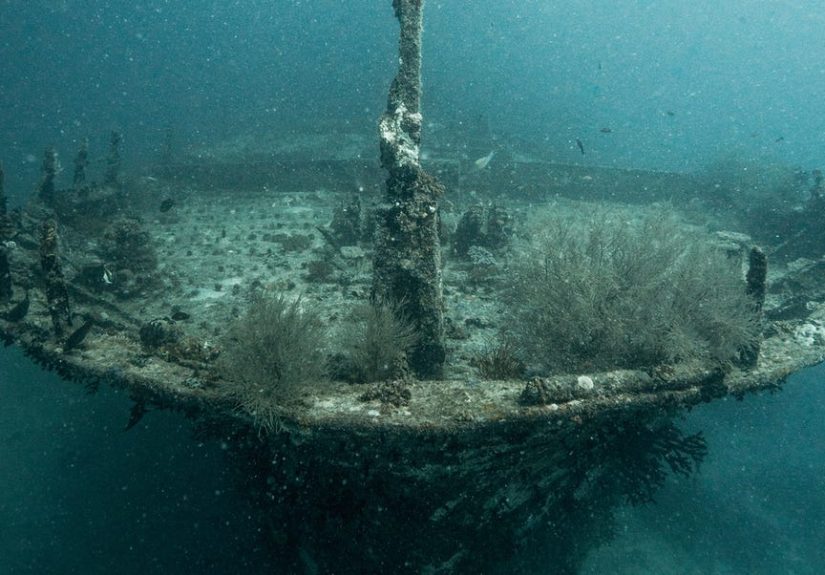
In this case, the Wisconsin Historical Society and the Wisconsin Department of Natural Resources helped investigate the site. A remotely operated vehicle, often called an ROV, was used to capture underwater images and video. Those visuals gave archaeologists more information about the wreck’s construction, size, location, and condition.
The location matched historical accounts of where the G.L. Newman ran aground. The size and structure fit the known details of the ship. The vessel’s story also aligned with the region’s maritime records. Together, the evidence supported the identification of the wreck as the long-lost G.L. Newman.
Why the Discovery Matters
At first glance, a shipwreck might seem like a curiosityinteresting, photogenic, and fun to mention at dinner. But this discovery matters for several reasons.
It Preserves a Piece of Wisconsin Maritime History
Wisconsin’s relationship with the Great Lakes is deep and practical. Ships carried lumber, grain, passengers, machinery, livestock, and manufactured goods. They linked small communities to national markets. A ship like the G.L. Newman helps historians understand how goods moved, how vessels were built, and how dangerous lake travel could be.
It Connects Local History to a National Disaster
The Great Peshtigo Fire is sometimes overshadowed by the Great Chicago Fire, even though it caused far greater loss of life. The wreck gives that disaster a physical connection beneath the water. It shows how the fire affected not only towns and forests but also navigation, commerce, and people on the lake.
It Shows the Power of Citizen Discovery
Tim and Henley were not conducting a formal archaeological survey. They were fishing. Yet their curiosity, photos, and willingness to share what they found helped professionals document a historic site. That is the perfect reminder that ordinary people can play an extraordinary role in preserving historyas long as they report finds responsibly and leave artifacts undisturbed.
The Great Lakes: America’s Freshwater Time Capsule
The Great Lakes are famous for their beauty, storms, fishing, and shoreline towns. But beneath the surface lies one of the richest collections of shipwrecks in the world. Cold freshwater can preserve wood, metal, cargo, and ship structures in remarkable condition. Unlike saltwater, which accelerates corrosion and supports marine organisms that consume wood, Great Lakes water often acts like a chilly museum case.
Wisconsin has become especially important in the field of underwater archaeology. The Wisconsin Shipwreck Coast National Marine Sanctuary, designated in 2021, protects historic wreck sites in Lake Michigan and supports research, education, and heritage tourism. The sanctuary includes dozens of known shipwrecks, many listed on the National Register of Historic Places, and experts believe more remain undiscovered.
The G.L. Newman was found outside the typical tourist imagination of shipwreck hunting. It was not discovered by a dramatic expedition with Hollywood lighting and suspenseful music. It appeared on a fishing sonar screen. That makes the story even better. History was not hiding behind a locked museum door. It was resting quietly under a family boat.
Responsible Shipwreck Discovery: Look, Report, Don’t Pocket Souvenirs
One important lesson from this story is that shipwrecks are protected cultural resources. They are not underwater yard sales. Removing artifacts, disturbing the structure, or anchoring directly into wreckage can damage fragile sites and erase information that researchers need.
If boaters, anglers, divers, or paddlers notice what may be a historic wreck, the responsible move is to document the location, take photos if it is safe, avoid disturbing the site, and report it to appropriate authorities or preservation organizations. That is essentially what made the Wollaks’ discovery so valuable. The wreck was not looted. It was shared with experts who could study it properly.
For readers who love adventure, that may sound less thrilling than grabbing a brass relic and yelling, “Treasure!” But the real treasure is context. A single artifact removed from a wreck loses much of its meaning. A documented site can tell a full story about shipbuilding, trade routes, weather, cargo, and the people connected to the vessel.
A Father-Daughter Story With a Perfect Twist
Part of the charm of this Wisconsin shipwreck discovery is the family angle. Henley’s “octopus” theory gave the story a spark of childhood wonder. Tim’s decision to take the sonar image seriously gave it direction. Together, they became accidental contributors to maritime history.
There is something wonderfully American about that combination: a local fishing trip, a piece of technology, a social media post, and a mystery solved through public curiosity and professional expertise. It is modern discovery with old-fashioned awe. No treasure map required. No pirate accent necessary. Though, frankly, a pirate accent would make most fishing trips more entertaining.
Experiences and Reflections Inspired by the Discovery
Stories like “Father and Daughter Discover 153-Year-Old Shipwreck in Wisconsin” make people look differently at ordinary outings. A lake is no longer just a lake. A fishing trip is no longer just a quiet morning with bait, snacks, and mild arguments about who forgot the sunscreen. It becomes a reminder that history is often closer than we think.
For families, the discovery offers a beautiful lesson: curiosity is worth encouraging. Henley saw something strange and imagined a creature. Tim saw something strange and followed the clue. Neither response was wrong. In fact, both mattered. Children often bring wonder to moments adults might overlook, while adults can help turn wonder into investigation. That is a pretty good recipe for learningand for a memorable weekend.
For anglers and boaters, the experience also highlights the value of paying attention to technology. Fish finders and sonar devices are designed to locate underwater features, but those features are not always fish. They can reveal rock formations, old pilings, submerged trees, or, once in a rare while, a lost 19th-century ship. The key is not to jump to conclusions, but to stay curious. Take screenshots. Mark the location. Compare with maps. Ask experts. The lake may be telling a story in pixels.
For history lovers, the G.L. Newman discovery is a reminder that the past is not frozen in textbooks. It shiftssometimes literally. Sand moves. Storms expose wreckage. Water levels change. New imaging tools reveal details that earlier generations could not see. A ship forgotten for more than a century can reappear because conditions finally allow it.
For parents, this story is also a gentle nudge to say yes to shared adventures. Not every trip will uncover a shipwreck, of course. Most will uncover mosquito bites, tangled fishing line, and a child asking for snacks six minutes after leaving shore. But shared experiences create the conditions for surprise. They teach patience, observation, and respect for nature. And sometimes, they create a family story that gets retold for decades.
Finally, this discovery encourages a deeper respect for the Great Lakes. These waters are beautiful, but they are also powerful, unpredictable, and historically significant. Every shoreline community has layers of memory: Indigenous history, shipping routes, storms, fires, industry, immigration, and recreation. When a wreck like the G.L. Newman is found, it invites people to see the lake not just as scenery, but as a living archive.
Conclusion
The discovery of the G.L. Newman by Tim and Henley Wollak is more than a feel-good headline. It is a rare meeting point of family adventure, Wisconsin maritime history, Great Lakes archaeology, and the haunting legacy of the Great Peshtigo Fire. A father and daughter went fishing and found a story that had been waiting underwater since 1871.
The shipwreck reminds us that history does not always announce itself with monuments and plaques. Sometimes it appears as a strange shape on a sonar screen. Sometimes a child calls it an octopus. Sometimes curiosity is the first step toward preserving something priceless.
For Wisconsin, the wreck adds another chapter to an already rich maritime record. For readers everywhere, it offers a simple invitation: pay attention. The past may be closer than you think, quietly resting beneath the surface.