Table of Contents >> Show >> Hide
- The Quick Answer: Has Completed vs. Had Completed
- What Does “Has Completed” Mean?
- What Does “Had Completed” Mean?
- Has Completed vs. Had Completed: Main Difference
- Easy Rule: Now vs. Then
- Common Time Words Used with “Has Completed”
- Common Time Words Used with “Had Completed”
- Has Completed vs. Have Completed
- Has Completed vs. Completed
- Had Completed vs. Completed
- Correct and Incorrect Examples
- Using “Has Completed” in Professional Writing
- Using “Had Completed” in Stories and Reports
- Simple Memory Trick
- Practice: Choose the Correct Phrase
- Experience-Based Notes: How These Phrases Actually Feel in Real Writing
- Conclusion
- SEO Tags
Wondering whether to write “has completed” or “had completed”? You are not alone. These two phrases look like grammar twins wearing slightly different hats. Both use a helper verb plus the past participle “completed,” both describe finished actions, and both sound perfectly serious in emails, reports, school assignments, and workplace updates. The trick is timing.
Use has completed when a completed action matters to the present. Use had completed when one completed action happened before another point in the past. That is the whole grammar cake. Now let’s slice it neatly, without making it taste like a dusty textbook.
The Quick Answer: Has Completed vs. Had Completed
“Has completed” is the present perfect tense. It connects a past action to the present moment.
Example: She has completed the report.
This means the report is finished now. The exact time may not matter. What matters is the current result: the report is done, everyone may now exhale, and the printer can begin its dramatic performance.
“Had completed” is the past perfect tense. It shows that something was finished before another past action or past time.
Example: She had completed the report before the meeting began.
This sentence has two past moments: first, she completed the report; later, the meeting began. “Had completed” helps the reader understand which event happened first.
What Does “Has Completed” Mean?
Has completed means that someone or something finished an action, and the result is still relevant now. It follows this structure:
Subject + has + past participle
Because “completed” is already the past participle of “complete,” the full phrase becomes has completed.
Use “has completed” with singular subjects
Use has completed with third-person singular subjects such as he, she, it, or a singular noun.
- She has completed the assignment.
- He has completed the training course.
- The company has completed the audit.
- My brother has completed his college application.
In each example, the action is finished, and the result matters now. Maybe the assignment can be submitted. Maybe the training certificate is ready. Maybe the audit is finally over and someone can stop living on coffee and spreadsheets.
Use “has completed” when the exact time is not important
The present perfect often avoids naming a specific finished time. It focuses on the result, not the date on the calendar.
- Correct: She has completed the project.
- Less natural: She has completed the project yesterday.
If you mention a specific finished time such as yesterday, last week, in 2020, or two days ago, the simple past is usually better.
- Correct: She completed the project yesterday.
- Correct: She has completed the project.
Think of “has completed” as saying, “It is done now.” Think of “completed” as saying, “It happened then.”
What Does “Had Completed” Mean?
Had completed means that an action was finished before another past action, event, or time. It follows this structure:
Subject + had + past participle
The helpful part is that had works with all subjects. Unlike “has,” it does not change for he, she, it, they, we, or I.
Use “had completed” to show the earlier past
- I had completed the form before the deadline arrived.
- They had completed dinner when the guests called.
- The team had completed testing before the product launched.
- She had completed her homework before she watched TV.
In these examples, “had completed” points backward from a past moment. It tells readers, “This was already finished before that other past thing happened.”
Use “had completed” when sequence matters
Sometimes the order of events is obvious without the past perfect. But when the order could be confusing, “had completed” saves the sentence from becoming a tiny time-travel puzzle.
Confusing: The manager reviewed the file after the assistant completed it.
Clear: The assistant had completed the file before the manager reviewed it.
The second version makes the order crystal clear: completion first, review second.
Has Completed vs. Had Completed: Main Difference
The biggest difference is the time relationship.
| Phrase | Tense | Main Meaning | Example |
|---|---|---|---|
| Has completed | Present perfect | Finished before now; relevant now | She has completed the form. |
| Had completed | Past perfect | Finished before another past event | She had completed the form before the office closed. |
Use has completed when you are standing in the present and looking back at a finished action. Use had completed when you are already talking about the past and need to go even further back.
Easy Rule: Now vs. Then
Here is the simplest way to remember the difference:
- Has completed = completed before now.
- Had completed = completed before then.
That one tiny difference, now versus then, is the key.
Examples with “now”
- The student has completed the test. Now the teacher can grade it.
- The technician has completed the repair. Now the machine works again.
- The writer has completed the article. Now the editor can review it.
Examples with “then”
- The student had completed the test before the bell rang.
- The technician had completed the repair before the shop opened.
- The writer had completed the article before the editor arrived.
When the sentence includes another past event, “had completed” often becomes the clearer choice.
Common Time Words Used with “Has Completed”
Writers often use present perfect phrases with time words that connect the past to the present. These include:
- already
- just
- recently
- so far
- yet
- this week
- today
Examples:
- She has already completed the survey.
- He has just completed the final chapter.
- The department has recently completed its review.
- The team has completed three phases so far.
These phrases usually tell us that the action is finished, but the present situation still matters.
Common Time Words Used with “Had Completed”
The past perfect often appears with words and phrases that show a relationship between two past moments. Common signals include:
- before
- after
- by the time
- already
- when
- prior to
Examples:
- She had completed the application before the deadline.
- By the time we arrived, they had completed the setup.
- The company had already completed the inspection when the client called.
- He had completed the course prior to applying for the job.
If your sentence is comparing one past action with another past action, “had completed” is probably waiting politely at the door.
Has Completed vs. Have Completed
Do not confuse has completed with have completed. Both are present perfect, but they match different subjects.
- I have completed the task.
- You have completed the task.
- We have completed the task.
- They have completed the task.
- She has completed the task.
- He has completed the task.
- It has completed the task.
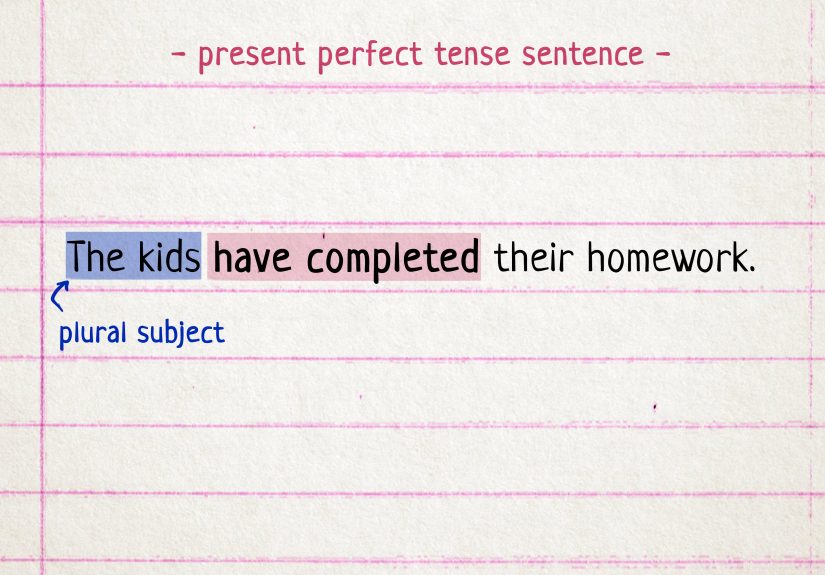
Use has with singular third-person subjects. Use have with I, you, we, they, and plural nouns.
Correct: The designer has completed the logo.
Correct: The designers have completed the logo.
One designer gets “has.” Multiple designers get “have.” Grammar likes to count heads.
Has Completed vs. Completed
Another common question is whether to use has completed or simply completed. The difference is similar to present perfect versus simple past.
Use has completed when the current result matters:
- She has completed the report, so we can send it today.
Use completed when you mention a specific finished time:
- She completed the report yesterday.
Do not usually combine “has completed” with a finished past time.
- Incorrect: She has completed the report yesterday.
- Correct: She completed the report yesterday.
- Correct: She has completed the report.
Had Completed vs. Completed
Use had completed when you need to show that one past action happened before another past action.
- She completed the report.
- She had completed the report before the meeting started.
The first sentence simply says the report was finished in the past. The second sentence shows a sequence: the report was finished first, and the meeting started later.
However, do not overuse past perfect when the order is already obvious.
- Natural: She finished breakfast and left for school.
- Possible but heavier: She had finished breakfast and left for school.
Past perfect is useful, but it is not seasoning you should dump over every sentence. A little goes a long way.
Correct and Incorrect Examples
Example 1
Incorrect: He has completed the assignment last night.
Correct: He completed the assignment last night.
Also correct: He has completed the assignment.
Because “last night” is a specific past time, the simple past “completed” works better.
Example 2
Incorrect: She had completed the form now.
Correct: She has completed the form now.
Because “now” connects the action to the present, use the present perfect.
Example 3
Incorrect: The team has completed the project before the client called yesterday.
Correct: The team had completed the project before the client called yesterday.
The client called in the past, and the project was finished before that past action. That is past perfect territory.
Example 4
Incorrect: The system had completed the update, so it is ready now.
Better: The system has completed the update, so it is ready now.
If the sentence focuses on the current result, “has completed” is smoother.
Using “Has Completed” in Professional Writing
In business emails, status updates, and reports, has completed is useful when you want to announce that a task is finished and relevant now.
- The finance team has completed the quarterly review.
- Our vendor has completed the installation.
- The applicant has completed all required documents.
- The software has completed the security scan.
This phrase sounds formal, clear, and polished. It is especially common in workplace communication because it emphasizes the current status of a task. In plain English, it says, “This is done, and you can act on that information.”
Using “Had Completed” in Stories and Reports
Had completed is especially useful in storytelling, case studies, incident reports, and project summaries. It helps explain what was already done before something else happened.
- The team had completed the safety checks before the event opened.
- The researcher had completed the interviews before analyzing the data.
- The driver had completed the delivery before the storm arrived.
- The school had completed the renovation before students returned.
Without “had completed,” readers may still understand the sentence, but the timeline may feel less precise. Past perfect acts like a traffic officer for past events. It points and says, “This happened first.”
Simple Memory Trick
Here is an easy grammar trick:
- If you can add “by now”, use has completed.
- If you can add “by then”, use had completed.
Example with by now: She has completed the course by now.
Example with by then: She had completed the course by then.
This quick test is not perfect for every sentence, but it works well for many everyday grammar decisions.
Practice: Choose the Correct Phrase
Try choosing between has completed and had completed.
- The employee ______ the training, so she can begin work today.
- The employee ______ the training before she began work last Monday.
- The app ______ the update and is ready to open.
- The app ______ the update before the phone restarted.
Answers:
- has completed
- had completed
- has completed
- had completed
Notice the pattern. Sentences 1 and 3 focus on the present result. Sentences 2 and 4 compare two past events.
Experience-Based Notes: How These Phrases Actually Feel in Real Writing
After seeing these phrases in countless emails, essays, resumes, project updates, and school assignments, one thing becomes clear: most mistakes happen because writers focus on whether the action is finished, but not on when that finished action matters. Both “has completed” and “had completed” talk about completed actions. The real question is whether the sentence is connected to now or to an earlier point in the past.
In professional emails, “has completed” often feels like a status update. For example, “The design team has completed the homepage layout” sounds like good news that affects the current workflow. It tells the reader that the next step can happen now. Maybe the developer can start coding. Maybe the client can review the mockup. Maybe the project manager can finally remove one sticky note from the wall of chaos.
On the other hand, “had completed” often appears when someone is explaining a timeline. Imagine a project report that says, “The design team had completed the homepage layout before the client requested new branding.” This does not simply say the layout was done. It explains that the layout was finished first, and then the client changed the plan. That timeline matters because it may explain delays, extra costs, or why the designer is staring silently into the distance.
Students also run into this problem when writing essays. A sentence like “The scientist has completed the experiment in 1998” sounds wrong because “in 1998” is a finished past time. The better sentence is “The scientist completed the experiment in 1998.” But if the sentence says, “The scientist has completed the experiment, and the results are now available,” the present perfect works beautifully because the result matters now.
In storytelling, “had completed” is one of the best tools for avoiding confusion. Consider this sentence: “Maria had completed her application before the scholarship deadline closed.” The order is clean. Application first, deadline second. Without the past perfect, the sentence might still make sense, but it may not feel as sharp. Past perfect gives the reader a clear timeline without forcing you to add a long explanation.
Another useful experience-based tip is to listen for the “current consequence.” When a sentence sounds like it is announcing news, use “has completed.” For example, “The school has completed construction on the new library” sounds like a public update. The library is ready now, or at least the completion matters now. When a sentence sounds like it is explaining what had already happened before another past event, use “had completed.” For example, “The school had completed construction before the new semester began” explains the order of two past events.
Writers sometimes overuse “had completed” because it sounds more formal. Formal does not always mean better. If there is no second past moment, “had completed” can feel unfinished, as if the reader is waiting for the rest of the story. “She had completed the form” may make readers ask, “Before what?” If you simply mean the form is finished now, write “She has completed the form.” Clear writing beats fancy writing every time, even if fancy writing arrives wearing a tiny grammar cape.
A final practical habit is to check the sentence for time clues. Words like “now,” “so far,” “already,” and “recently” often point toward “has completed.” Phrases like “before the meeting started,” “by the time we arrived,” and “when the office closed” often point toward “had completed.” These clues are not magic spells, but they are reliable enough to keep your grammar from wandering into the wrong timeline.
Conclusion
The difference between has completed and had completed is easier than it first appears. Use has completed when a singular subject finished something and the result connects to the present. Use had completed when something was already finished before another past event or past time.
Remember the simple rule: has completed means completed before now; had completed means completed before then. Once you understand that difference, your sentences become clearer, your timelines behave themselves, and your grammar stops acting like it needs its own detective series.