Table of Contents >> Show >> Hide
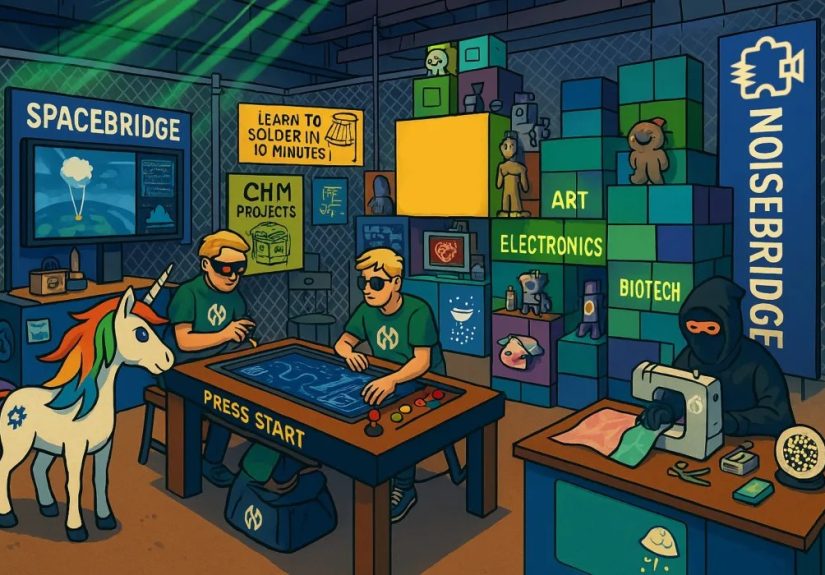
There is a special kind of magic in a makerspace. It smells a little like sawdust, a little like hot glue, and a lot like possibility. One table holds a half-built robot. Another has a sewing machine quietly plotting greatness. In the corner, someone is trying to make a laser cutter behave like a civilized adult. It is glorious.
But a makerspace is not just a room full of cool tools. It is a community engine. It helps people learn skills, test ideas, repair broken things, launch side hustles, meet collaborators, and remember that the internet is not the only place where humans can make something together. That is the good news. The other news is that makerspaces do not run on good vibes alone. They need members, volunteers, teachers, donors, mentors, rule-followers, and the occasional hero who wipes down a workbench without being asked.
If you want a makerspace to help you, the smartest move is to help it right back. That is the heart of this story. The strongest makerspaces are not vending machines for tools. They are shared ecosystems. When people treat them like a community resource instead of a personal garage with better equipment, everybody wins.
What a Makerspace Really Is
A makerspace can live in a library, school, university, nonprofit, community center, or independent workshop. Some are tiny and scrappy. Some look like a spaceship married a woodshop. Some focus on digital fabrication, with 3D printers, CNC tools, and laser cutters. Others mix low-tech and high-tech skills, from soldering and repair to sewing, printmaking, podcasting, or bicycle maintenance.
The common thread is access. Shared spaces give people a chance to use tools, materials, and knowledge they might never be able to afford individually. That matters more than it sounds. A 3D printer, laser cutter, embroidery machine, media lab, or electronics bench is exciting until you remember that all of them cost money, need maintenance, require training, and have an almost supernatural ability to break five minutes before closing time. Shared access lowers the barrier to entry and raises the odds that more people can learn by doing.
Why Shared Tools Matter
Many people do not need to own a laser cutter. They need to use one twice, mess up once, learn something valuable, and then come back with a better file next month. Makerspaces make that possible. They turn expensive equipment into community infrastructure. That is a huge deal for hobbyists, students, artists, job seekers, inventors, and small business owners who are long on ideas but short on budget.
Why Shared Knowledge Matters Even More
A good makerspace is not just a tool room. It is a knowledge exchange. You show up thinking you need a machine. What you actually need is a person who says, “Hey, that acrylic will melt if you do it that way,” and saves you three hours, twelve dollars, and a tiny emotional breakdown. Great spaces run on that kind of generosity.
That is why strong makerspaces build a culture of mentoring, workshops, documentation, and beginner-friendly guidance. Once people learn the basics safely, they become more independent. Then, with a little luck, they start helping the next new person. That is how a community grows instead of burning out.
How Makerspaces Help You
If you have only thought of makerspaces as places for hobby projects, you are underselling them. They do far more than help people build neat stuff for Instagram.
1. They Expand Access to Skills
Makerspaces let people learn with their hands. That sounds simple, but it is powerful. Reading about design is useful. Watching a video about soldering is useful. Actually soldering a connection badly, fixing it, and understanding why it failed is unforgettable. The same goes for 3D printing, sewing, woodworking, electronics, CAD, audio production, or repair work. Learning becomes practical, memorable, and much less abstract.
2. They Build Confidence
Many beginners walk into a makerspace feeling like impostors. Then they discover that half the room is still learning too, and the other half learned by making mistakes that were much funnier in retrospect. A well-run space turns intimidation into momentum. Training, staff support, and small workshops help people move from “I am not sure I belong here” to “I can make this.” That shift is no small thing.
3. They Create Real Community
Makerspaces are gathering places. People come for tools and stay for conversations. One person teaches laser cutting. Another teaches audio editing. Someone else knows how to repair a lamp, hem a pair of pants, or make a weird little sensor board work. Community makerspaces and library-based spaces often become local hubs for curiosity, collaboration, and practical problem-solving.
That community element is especially important because the best spaces do not serve only one kind of maker. They welcome students, retirees, artists, engineers, crafters, entrepreneurs, and absolute beginners. Some programs even reach people who were not previously using library or educational services much at all, simply because hands-on learning feels more inviting than a lecture ever could.
4. They Support Entrepreneurship
Not every project becomes a business, and that is perfectly fine. But makerspaces can help early-stage entrepreneurs prototype products, test packaging, produce small runs, learn fabrication workflows, and sharpen design skills without massive upfront costs. For someone building a side business in crafts, photography, custom goods, media production, or product design, access to professional-grade tools can be the difference between “nice idea” and “actual prototype.”
5. They Encourage Repair and Resourcefulness
A healthy maker culture is not only about building new things. It is also about fixing, adapting, and reusing what already exists. Makerspaces can support repair cafés, mending events, electronics troubleshooting, and practical household solutions. In a world that loves to sell you a replacement for everything, a room full of people asking, “Can we fix this instead?” feels quietly revolutionary.
Why Makerspaces Need Help Right Now
Here is the unglamorous truth: makerspaces are expensive to run. Machines cost money. Replacement parts cost money. Ventilation costs money. Insurance costs money. Staff time costs money. Safety gear costs money. Even the noble dream of “let’s just open a creative community workshop” eventually collides with rent, maintenance, consumables, scheduling, waivers, and the mysterious disappearance of every good hex key.
Some nonprofit and community-run spaces also face uneven funding, surprise expenses, volunteer shortages, and the constant challenge of staying accessible while covering operating costs. That is one reason support matters so much. When a makerspace struggles, the loss is bigger than one room closing. A whole local learning network gets weaker.
In other words, helping a makerspace is not charity in the abstract. It is practical self-interest with a community bonus. You are helping preserve a place where people can learn, teach, build, repair, and connect.
How to Help Makerspaces Help You
Become the Member You Wish Every Shared Space Had
Pay for a membership if the space offers one and you can afford it. Show up for orientations. Learn the rules. Reserve equipment correctly. Do not treat staff like search engines with legs. If the policy says a machine needs training first, that is not an insult to your genius. It is a way to keep you, the equipment, and everyone else intact.
Shared spaces run better when members respect time, tools, and process. That means arriving prepared, bringing the right files and materials, labeling your project, storing things properly, and not beginning a three-hour disaster masterpiece ten minutes before closing.
Volunteer Your Skills
Every makerspace needs more than money. It needs people who can teach, organize, document, repair, welcome newcomers, photograph events, manage supplies, write newsletters, or help with outreach. Maybe you cannot teach CNC routing, but you can run social media. Maybe you cannot solder neatly, but you can help plan a fundraiser. Maybe you cannot explain CAD, but you can absolutely help clean and sort donated materials like a champion.
Volunteer energy is often what turns a decent makerspace into a thriving one. It also deepens your own connection to the place. You stop being just a user and become part of the operating culture.
Teach What You Know
Makerspaces become stronger when knowledge does not bottleneck around one overworked staff member or one mythical volunteer who knows every machine by first name. Teaching a workshop, creating a cheat sheet, writing setup notes, recording a quick tutorial, or helping someone through their first project all make the space more resilient.
Documentation is wildly underrated. A simple guide that explains machine settings, cleanup expectations, material limits, or common beginner mistakes can save hours of confusion. In makerspace terms, documentation is love with formatting.
Respect Safety Like a Grown-Up
Safety is not the boring part of making. Safety is what allows making to continue. The best spaces require training, tool-specific authorization, appropriate protective equipment, cleanup, and supervision for certain machines for a reason. If you treat those rules seriously, you help protect the people, equipment, and trust that keep the place open.
Want to help your makerspace help you? Wear the goggles. Tie back your hair. Clean the bench. Report the broken clamp. Ask before using unfamiliar materials. If the laser cutter says no, it is not being dramatic. It is probably preventing a very memorable fire.
Support Accessibility and Inclusion
A makerspace should not only be open. It should feel usable and welcoming. That means thinking about physical access, clear instructions, varied learning styles, supportive signage, beginner-friendly programming, respectful culture, and the voices of people who have historically been left out of technical spaces. Inclusive design is not an extra feature. It is part of what makes a community space actually communal.
If you are a member, help by noticing barriers. Is the language too technical? Are events only appealing to one type of user? Are there enough intro workshops? Are disabled makers included in design decisions, not just invited after the fact? The more accessible the space, the stronger and smarter the space becomes.
Donate Strategically, Not Randomly
Before you haul in a trunk full of mystery cables and a printer from the Jurassic period, ask what the space actually needs. Some makerspaces want cash, not clutter. Others need consumables, sponsorships, scholarships, grant support, or volunteer hours. The point is to help with intention. Random donations can create more sorting work than value.
The most useful support is often boring in the best possible way: filament, blades, lumber, safety gear, software support, maintenance funds, event sponsorship, snack money for an all-day workshop, or scholarships so more people can participate.
What Makerspaces Need From You Besides Money
Use the space regularly. Bring friends to public events. Sign up for workshops. Share success stories. Mention the makerspace when someone asks where to learn a skill. Celebrate the people who keep it running. A community resource becomes more sustainable when more of the community actually knows it exists.
There is also value in patience. Community spaces serve many skill levels, not just experts in a hurry. Sometimes you will wait for a machine. Sometimes a class will fill up. Sometimes staff will say no to your chosen material, your ambitious timeline, or your plan to “just eyeball it.” Try not to take it personally. Shared spaces work because they are shared.
The Best Makerspace Mindset
The healthiest way to approach a makerspace is this: do not ask only, “What can I make here?” Ask, “What can I contribute so more people can make here?” That single shift changes everything.
When members contribute time, care, skills, respect, and support, a makerspace becomes more than a workshop. It becomes a living network of practical creativity. It can teach a teenager to use design software, help a retiree repair a keepsake, give an artist access to new tools, help an entrepreneur prototype a product, and create room for strangers to become collaborators.
That is a remarkable thing. It deserves more than casual appreciation. It deserves participation.
Experience: What It Feels Like When a Makerspace Really Works
Walk into a healthy makerspace on a normal afternoon and you can feel the difference almost immediately. Nobody is pretending to be the smartest person in the room, because the room itself is the smart part. One person knows textiles. Another knows electronics. Someone else understands how to make a file behave for laser cutting. A beginner is learning how to clamp material correctly, and instead of being embarrassed, they are being shown the trick by someone who learned it the hard way last month.
That is the experience people remember. Not the machine alone. Not the tool list on the website. The feeling that it is okay to be curious in public.
You might come in with a very practical goal. Maybe you want to print a part for a home repair, engrave signage for a school event, sew a costume, scan an object, build a prototype, or record audio for a project. At first, you are focused on the task. Then the space starts working on you a little. You hear how other people think through a problem. You notice that mistakes are treated as part of the process rather than proof that you should go home and never touch a screwdriver again. You realize that learning in community is faster, calmer, and much more human.
Over time, the experience changes again. You stop arriving as a nervous visitor and start arriving as a participant. You know where the tape lives. You know which machines need extra cleanup. You know that closing time is real, not a philosophical suggestion. You start leaving notes for the next user, answering beginner questions, or reminding somebody to wear eye protection without sounding like a hall monitor with a power complex.
That evolution matters. The makerspace helped you once, and now you are helping create the conditions for someone else to succeed. This is how shared culture is built: one orientation, one workshop, one saved project, one kind correction, one donated hour at a time.
Some of the best experiences in makerspaces are not dramatic at all. They are small moments. A teenager sees their design become a real object for the first time. A parent and child finish a project together instead of staring at separate screens. A would-be entrepreneur finally makes a prototype sturdy enough to show a customer. A shy newcomer teaches a workshop six months later. A broken item gets repaired and stays out of the trash. A room full of strangers starts sounding less like strangers.
That is why supporting makerspaces is worth it. They do not just produce objects. They produce confidence, relationships, local knowledge, practical skill, and the kind of optimism that comes from making something with your own hands. In a noisy world full of passive consumption, a makerspace reminds people that they can still shape things. Better yet, they can shape things together.
Conclusion
Makerspaces help people access tools, learn faster, connect with others, and turn ideas into reality. But they can only keep doing that when communities show up with more than curiosity. Memberships, volunteering, teaching, safe habits, thoughtful donations, and inclusive participation all help keep these spaces alive and useful.
So yes, absolutely use your local makerspace. Learn there. Build there. Fix things there. Meet people there. Just remember the deal: the more you help the space thrive, the more it can help you thrive too. That is not only good community practice. It is the real maker spirit.