Table of Contents >> Show >> Hide
- The Quick Answer (So You Can Get Back to Your Life)
- Why Timing Matters (And Why Shampoo Isn’t Conditioner)
- How Long to Leave Regular Shampoo In Your Hair
- When You Should Leave Shampoo On Longer: Medicated & Dandruff Shampoos
- Does Leaving Shampoo In Longer Make Hair Shinier?
- The “Perfect” Shampoo Routine for Shinier, Healthier Hair
- How Timing Changes by Hair Type and Scalp Situation
- Common Shampoo Timing Mistakes (That Make Hair Look Worse)
- Pro Tips for Shinier Hair (Beyond Shampoo Timing)
- Real-World Experiences: What People Notice When They Change Shampoo Timing (Extra )
- Conclusion: The Best Shampoo “Leave-In Time” Is the One That Matches Your Product
If you’ve ever stared at your shower wall like it’s about to reveal the meaning of life, you’re not alone.
One of the most common “wait… am I doing this right?” questions is surprisingly specific:
How long should you leave shampoo in your hair?
The short version: for most everyday shampoos, you don’t need to let it “marinate” like barbecue.
But for some medicated shampoos (hello, dandruff), timing actually mattersa lot.
Let’s break it down in a way your scalp will appreciate and your schedule can tolerate.
The Quick Answer (So You Can Get Back to Your Life)
- Regular shampoo: Massage on the scalp for about 30–60 seconds, then rinse well.
- Oily scalp or lots of product buildup: Consider a second wash (the first loosens grime, the second actually cleans).
- Medicated/dandruff shampoo: Often needs 2–10 minutes on the scalpfollow the label because ingredients differ.
Why Timing Matters (And Why Shampoo Isn’t Conditioner)
Shampoo’s main job is to clean your scalpwhere oil, sweat, dead skin, and product buildup live.
Most shampoos work by using surfactants (cleansing agents) that surround oil and debris so water can rinse them away.
That process is helped more by thorough wetting, gentle scalp massage, and complete rinsing than by letting shampoo sit forever.
Conditioner, on the other hand, is meant to coat and smooth the hair shaft (especially mid-lengths and ends),
helping with softness, detangling, and shine. Confusing shampoo timing with conditioner timing is a classic shower plot twist.
How Long to Leave Regular Shampoo In Your Hair
For a typical daily or weekly shampoo, think of the “leave it in” time as the time you spend
working it into your scalpnot the time you stare into the abyss while it sits there.
A good everyday rule: 30–60 seconds of scalp massage
Apply shampoo primarily to your scalp (not the full length), then massage with your fingertipsno nails, no frantic scrubbing.
This gives the cleanser time to lift oil and buildup while the massage helps distribute it across the scalp.
Let the suds run through the lengths as you rinse; your ends usually don’t need a direct shampoo attack.
When 60–90 seconds is helpful
You might benefit from a little extra massage time if:
- You use styling products, dry shampoo, or heavy leave-ins often
- Your scalp gets oily quickly
- You only wash once or twice a week and buildup has time to accumulate
Even then, the key is still massage + rinse, not “leave it on and hope for magic.”
When You Should Leave Shampoo On Longer: Medicated & Dandruff Shampoos
This is where timing becomes real. Medicated shampoos aren’t just cleansingthey’re delivering active ingredients
to the scalp (antifungal, anti-inflammatory, keratolytic/exfoliating). Those ingredients often need
contact time to do their job.
Common medicated shampoo timing ranges
- Selenium sulfide: commonly 2–3 minutes before rinsing (often used for dandruff/seborrheic dermatitis).
- Ketoconazole: often around 5 minutes before rinsing (used for dandruff/seborrheic dermatitis and related issues).
- Other dandruff shampoos (varies by ingredient): sometimes 5–10 minutes for best effect.
The most important rule is boring but powerful: read the bottle and follow it.
Different actives (and different strengths) have different ideal contact times.
If you rinse a medicated shampoo immediately, you may be washing away the part you actually needed.
A practical “medicated shampoo” routine
- Wet hair and scalp thoroughly with lukewarm water.
- Apply the medicated shampoo to the scalp and lather.
- Set a timer for the label’s recommended minutes (yes, really).
- Rinse very well.
- Condition the lengths and ends if needed (many medicated shampoos are drying).
Does Leaving Shampoo In Longer Make Hair Shinier?
Sometimes people swear that leaving shampoo in longer makes their hair shinier. What’s often happening is one of these:
- Better scalp cleansing: a longer massage (not necessarily soaking) removes buildup that makes hair look dull.
- Less residue: when you slow down, you typically rinse more thoroughlyleftover product can make hair look flat.
- Improved follow-up: people who “take their time” tend to apply conditioner correctly and avoid rough towel drying.
For regular shampoo, leaving it on for several minutes can be a mixed bag:
some formulas may be fine, but others can leave your scalp feeling dry or irritatedespecially if you already have dryness.
If you want more shine, technique usually beats extra time.
The “Perfect” Shampoo Routine for Shinier, Healthier Hair
If you want your hair to look like it has a ring light and a supportive social circle, focus on the fundamentals:
1) Start with a real rinse
Spend a solid 30 seconds fully saturating hair and scalp. Shampoo spreads and lathers better on thoroughly wet hair,
and water alone loosens surface oil and debris. If you have thick hair, lift sections so water reaches the scalp.
2) Use the right amount (more isn’t cleaner)
Many people use too much shampoo, then wonder why it’s hard to rinse out.
Start with a dime-to-quarter-sized amount depending on hair length and density.
You can always add a bit more if needed.
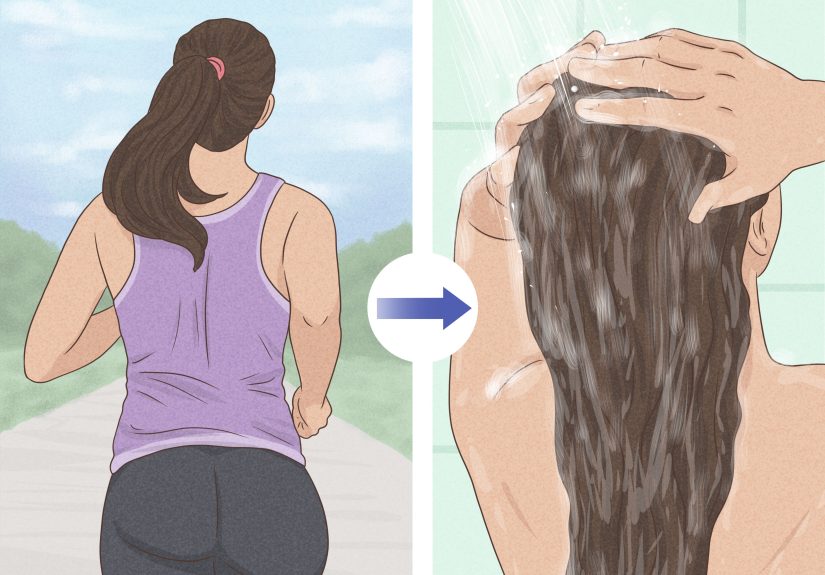
3) Apply to the scalp first (your ends didn’t sweat at the gym)
Your scalp is where oil is produced and buildup happens. Concentrate shampoo there.
The lengths get cleansed as suds pass through during rinsing.
4) Massage gently for 30–60 seconds
Use fingertips, not nails. Think “scalp facial,” not “panic scrub.”
Overly aggressive friction can rough up the hair cuticle, causing frizz and breakage.
5) Rinse like you mean it
Leftover shampoo can make hair dull, itchy, or weighed down.
Rinse until the hair feels cleannot coated or slippery.
Pay attention to the nape and behind the ears, where product loves to hide.
6) Condition strategically
Conditioner generally belongs on mid-lengths and ends (unless your scalp is very dry and the product is designed for scalp use).
Leaving conditioner on for a minute or two can help, but again: follow the label and rinse well.
How Timing Changes by Hair Type and Scalp Situation
Fine hair
Fine hair can look oily quickly, but it also gets weighed down easily by residue.
Keep shampoo time focused: 30–60 seconds of scalp massage, then rinse thoroughly.
If buildup is common, a second quick wash may work better than leaving shampoo on longer.
Thick hair
Thick hair often needs more time in the “wetting” and “distribution” phases.
Make sure water and shampoo reach your scalp.
You may benefit from 60–90 seconds of gentle massage simply to cover the whole scalp evenly.
Curly/coily hair
Curly and coily hair tends to be drier along the lengths because oils don’t travel down the hair shaft as easily.
Focus shampoo on the scalp, keep contact time moderate, and prioritize conditioning.
Over-shampooing the ends is a common reason curls lose definition and shine.
Color-treated or chemically processed hair
These hair types are often more porous and prone to dryness.
Choose gentler shampoos, avoid extra-long shampoo contact time, and don’t skip conditioner.
If you use medicated shampoos, consider alternating with a moisturizing shampoo on non-treatment days.
Dandruff, seborrheic dermatitis, or itchy scalp
Here, timing can matter more than almost anything else.
Many dandruff shampoos work best when left on the scalp for several minutes.
If symptoms persist or worsen, a dermatologist can help determine whether it’s dandruff, psoriasis, eczema, or something else.
Common Shampoo Timing Mistakes (That Make Hair Look Worse)
- Not wetting hair enough: shampoo won’t spread well, and you’ll overuse product.
- Scrubbing the lengths: increases tangles, frizz, and breakage.
- Using nails: can irritate the scalp and cause inflammation.
- Rinsing too fast: leaves residue that dulls shine and can trigger itchiness.
- Leaving medicated shampoo on too briefly: reduces effectiveness of the active ingredients.
- Leaving harsh formulas on too long: can dry out scalp and hair, especially if you’re already prone to dryness.
Pro Tips for Shinier Hair (Beyond Shampoo Timing)
Use lukewarm water, not lava
Hot water can leave scalp and hair feeling stripped. Lukewarm is a safer default.
If you love a hot shower, consider lowering the temp during the rinse.
Clarify occasionally, not constantly
Clarifying shampoo can remove stubborn buildup, but overdoing it can make hair feel dry and rough.
If your hair gets dull easily, a periodic clarify (based on your needs) can help restore bounce and shine.
Don’t confuse “squeaky clean” with “healthy”
Hair that feels overly squeaky may be stripped, which can lead to frizz and a dry scalp.
Healthy shine usually comes from a balanced routine: clean scalp, conditioned lengths, minimal residue.
Real-World Experiences: What People Notice When They Change Shampoo Timing (Extra )
In the real world, most people don’t overhaul their routine because they read a scientific paper.
They do it because something feels offhair looks flat by noon, the scalp gets itchy after washing,
or the ends feel like straw no matter how expensive the conditioner is.
When people start paying attention to how long they shampoo (and how they shampoo),
a few patterns show up again and again.
First, a lot of folks realize they were basically doing a “drive-by shampoo.”
They’d apply product, do three heroic swipes, then rinse immediately.
When they switch to 30–60 seconds of gentle scalp massage, they often notice
their hair feels cleaner for longerwithout having to increase washing frequency.
The surprising part is that the hair can look less greasy over time, because they’re not leaving behind residue
and they’re not panic-washing twice a day to compensate.
Another common experience: people who use styling products (pomade, hairspray, dry shampoo, texture spraybasically anything fun)
often find that doing two shorter shampoos beats one long shampoo.
The first wash loosens product and oil; the second wash lathers better and makes the scalp feel genuinely clean.
Many describe the second wash as the moment their hair finally feels “light” againlike it’s not wearing a winter coat indoors.
People dealing with flakes or itch often have the biggest “aha” moment with timing,
especially if they’re using a medicated dandruff shampoo.
A very typical story goes like this:
“I tried the dandruff shampoo for weeks and nothing happened.”
Then they realize they were rinsing it out almost immediately.
Once they start leaving it on for the recommended minutes (and yes, some literally set a timer),
they often report the scalp feels calmer within a couple of washes.
Not always instantly, not always perfectlybut noticeably better.
It’s less about magical shampoo and more about actually letting the active ingredients do their job.
On the flip side, some people experiment with leaving regular shampoo on for a long time,
hoping for extra shine, and end up with a dry, tight scalp that feels like it’s filing a complaint.
That’s usually the point where they learn the difference between “cleansing” and “conditioning.”
They switch to a gentler shampoo, keep shampoo contact time reasonable, and put the patience into conditioner or a hair mask instead.
Finally, there’s the underrated experience: the rinse.
When people slow down and rinse thoroughlyespecially around the hairline, behind the ears, and at the nape
they often notice fewer “mystery” issues like dullness, heaviness, and random itchiness.
A lot of “my shampoo isn’t working” problems turn out to be “my shampoo is still here.”
The takeaway from these everyday experiences is refreshingly unglamorous:
shine and scalp comfort usually come from small, repeatable habits.
If you want a simple experiment, try this for one week:
fully wet hair, shampoo the scalp for 60 seconds, rinse thoroughly, and condition the ends.
If you use medicated shampoo, follow the label’s minutes like it’s a recipe you don’t want to ruin.
Your hair won’t become a movie star overnightbut it might stop acting like it’s in a soap opera.
Conclusion: The Best Shampoo “Leave-In Time” Is the One That Matches Your Product
For most people, the sweet spot is simple: massage regular shampoo on the scalp for 30–60 seconds,
then rinse thoroughly. If you’re using a medicated shampoo, leaving it on the scalp for
a few minutes (or longer, depending on the label) can be the difference between “meh” and “finally.”
Want shinier, healthier hair? Don’t just watch the clockwatch your technique.
Your scalp is the foundation, your ends need kindness, and your rinse deserves more respect than it currently gets.