Table of Contents >> Show >> Hide
- The Great Chaco Canyon Timber Mystery
- Meet the Pack Rat: Nature’s Accidental Archivist
- What Pack-Rat Middens Revealed About Chaco
- The Timber Trail: From Middens to Mountains
- How Did People Move Huge Logs Without Wheels or Draft Animals?
- What the Pack Rats Really Solved
- Why This Discovery Changed the Story of Chaco
- Chaco Was Not “Abandoned” in the Simple Sense
- The Science Behind the Rodent Time Capsule
- Lessons From the Chaco Pack-Rat Mystery
- Experience Notes: Walking Through the Mystery Today
- Conclusion
In the long list of unlikely detectives, pack rats deserve a promotion. Sherlock Holmes had a pipe. Hercule Poirot had his mustache. The pack rat had, well, a nest glued together with crystallized urine. Not glamorous, no. Useful? Absolutely.
For decades, one of the biggest questions about Chaco Canyon in northwestern New Mexico was simple to ask and surprisingly hard to answer: Where did the builders get all that wood?
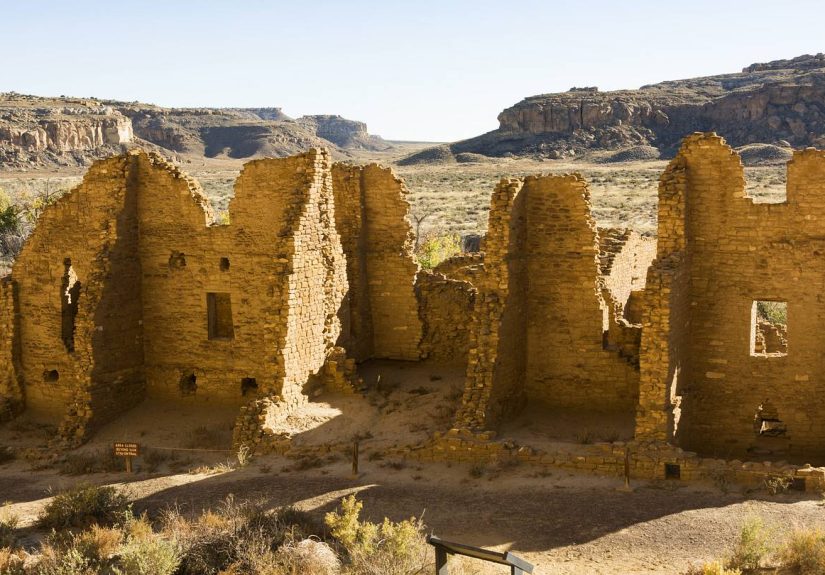
Chaco Canyon, now protected as Chaco Culture National Historical Park, was one of the most extraordinary centers of Ancestral Puebloan life in the ancient Southwest. Between roughly 850 and 1150 CE, people planned and built massive stone structures known as great houses. Pueblo Bonito, the most famous of them, eventually rose several stories high and contained hundreds of rooms, kivas, plazas, and carefully arranged architectural spaces. It was not a casual desert neighborhood. It was a monumental, organized, spiritually powerful world.
But there was a problem. Chaco Canyon is dry, open, and not exactly famous for towering forests. Yet its buildings required enormous quantities of timber for roofs, doorways, lintels, and structural supports. Archaeologists have estimated that Chacoan builders used more than 200,000 large wooden beams over several centuries. Some studies place the number closer to 240,000. Either way, that is not a weekend lumber run.
For years, researchers debated whether Chaco once had a local forest that ancient builders cut down, or whether the wood was hauled from faraway mountains. Then a tiny desert hoarder entered the chat. Pack-rat middens, those sticky, dusty time capsules made by woodrats, helped reveal what plants once grew in and around Chaco. The answer changed the way researchers understood Chaco Canyon, its environment, and the astonishing effort behind its architecture.
The Great Chaco Canyon Timber Mystery
To understand why pack rats mattered, we first need to picture Chaco at its height. The canyon was not just a cluster of stone buildings. It was a regional center connected to a broad cultural landscape across the San Juan Basin and beyond. Roads linked Chaco to outlying communities. Buildings were often aligned with solar, lunar, and cardinal directions. Goods, ideas, people, and ceremonial traditions moved across a wide network.
The great houses were engineering marvels. Builders quarried sandstone, shaped blocks, raised thick walls, and laid heavy beams across rooms to support roofs. Pueblo Bonito alone covered about three acres at its peak and included more than 600 rooms. Chetro Ketl, Una Vida, Pueblo Alto, Peñasco Blanco, and other great houses added to the scale of the Chacoan world.
That scale raised a stubborn question. The buildings needed long, straight, strong timbers, especially ponderosa pine, spruce, fir, and Douglas fir. Those species do not grow in abundance on the canyon floor today. So what happened?
One older explanation suggested that Chaco Canyon may once have supported nearby forests that were later destroyed by heavy logging. This idea fit a dramatic story: people built too much, cut too much, damaged the environment, and eventually had to leave. It was tidy. It was powerful. It was also too simple.
Archaeology rarely rewards simple stories. Chaco was not a cartoon about “people versus nature.” It was a complex society operating in a challenging arid landscape, using local resources, distant resources, agriculture, ritual authority, trade connections, and social organization. The timber question needed evidence from several directions. Tree rings and strontium isotope studies eventually helped pinpoint mountain sources. But pack-rat middens played a key role in showing what the local vegetation looked like through time.
Meet the Pack Rat: Nature’s Accidental Archivist
Pack rats, or woodrats of the genus Neotoma, are small rodents famous for collecting things. They gather twigs, leaves, seeds, bones, dung, cactus pieces, shells, bits of human material, and whatever else seems useful or interesting. If a pack rat could start a thrift store, it would probably overprice the shiny objects.
Their nests are called middens. In dry caves, rock shelters, and protected crevices, these middens can survive for thousands of years. The magic ingredient is amberat, a hardened material created when pack-rat urine crystallizes and cements the nest debris together. It sounds like a nightmare for a house cleaner, but for scientists it is a treasure chest.
Because pack rats collect plants from a small local area around their homes, a fossil midden can preserve a remarkably detailed snapshot of nearby vegetation. Leaves, seeds, twigs, pollen, and plant fragments can remain identifiable long after the plants themselves disappeared from the landscape. Researchers can radiocarbon-date organic material in a midden, identify the species inside it, and reconstruct what grew in that place at a particular time.
In short, pack rats accidentally created some of the best environmental archives in the American Southwest. No filing cabinet. No app subscription. Just rodent behavior plus dry air.
What Pack-Rat Middens Revealed About Chaco
Pack-rat midden research in Chaco Canyon showed that the region’s plant communities changed significantly over thousands of years. During the early Holocene, around 11,000 years ago, the area supported cooler, woodier plant communities than it does today. Over time, as the climate became warmer and drier, those communities shifted. Pinyon-juniper woodland became more common in the broader region, while large stands of tall construction-quality trees were not available near the canyon during the main Chacoan building period.
This mattered because it challenged the idea that Chaco’s great houses were built from a lush local forest that disappeared only because Chacoans chopped it down. Pack-rat evidence suggested that the canyon had not been covered with abundant ponderosa pine, spruce, fir, or Douglas fir during the height of great-house construction. In other words, the missing forest was probably not missing because it had just been destroyed. It had not been there in the needed form.
That did not mean people had no impact on local woodlands. They absolutely used nearby pinyon and juniper for fuel, tools, food resources, and everyday needs. Later research has argued that long-term harvesting affected local woodland density and may have contributed to erosion and environmental stress. But the enormous roof beams for the great houses were another matter. Those timbers had to come from somewhere else.
The Timber Trail: From Middens to Mountains
Once pack-rat middens weakened the local-forest theory, researchers turned to other methods to track Chaco’s beams. Tree-ring dating had already been central to Southwestern archaeology. Dendrochronology, the study of tree rings, can reveal when a tree was cut. Chacoan beams helped researchers build some of the most important tree-ring chronologies in North America.
But dating wood is one thing. Locating its source is another. Scientists used strontium isotope analysis to compare chemical signatures in Chaco beams with signatures from surrounding mountain ranges. Plants absorb strontium from local soils and rocks, so wood can carry a geological fingerprint of where the tree grew. These studies pointed to distant sources, including the Chuska Mountains and the San Mateo Mountains, roughly 50 to 70 miles from Chaco.
Later, dendroprovenance research added another layer. By comparing the ring-width patterns in ancient beams with tree-ring patterns from surrounding forests, researchers found that many timbers likely came from the Zuni and Chuska Mountains. One major study of 170 timbers from seven great houses concluded that about 70 percent of the sampled beams most likely came from the Chuska and Zuni Mountains, each more than 75 kilometers away. The same research suggested a shift through time: before about 1020 CE, the Zuni Mountains were an important source; by about 1060 CE, Chuska sources became dominant.
That shift is fascinating because it lines up with other changes in Chacoan life. Around the same time, construction expanded, masonry styles changed, and Chuskan pottery and stone tools became more common in the archaeological record. The timber was not just wood. It was part of a larger relationship between Chaco and surrounding landscapes.
How Did People Move Huge Logs Without Wheels or Draft Animals?
Here is where the story becomes even more impressive. Chacoan builders did not have horses, oxen, wheeled carts, railroads, or suspiciously affordable delivery from a big-box hardware store. They had human labor, skill, organization, and deep knowledge of the landscape.
The timbers were probably cut in mountain forests, trimmed, and transported by people across long distances. Some beams may have weighed well over 100 pounds after trimming; earlier estimates for certain beams were much higher, though recent work has questioned those calculations. Even at the lighter end, moving thousands upon thousands of beams across desert terrain was an extraordinary achievement.
Researchers have tested possible transport methods, including the use of tumplines. A tumpline is a strap placed across the head or forehead and attached to a load. It allows a person to carry weight using the alignment of the neck, spine, and body rather than relying only on arm strength. Tumplines have been used by many cultures around the world, and archaeological evidence suggests similar carrying technologies were known in the ancient Southwest.
Experimental work has shown that people can carry long logs using head-supported techniques. That does not prove exactly how Chacoan workers moved every timber, but it demonstrates that human transport over long distances was physically possible. The bigger point is social: moving timber at Chaco required planning, cooperation, knowledge of routes, and probably strong cultural motivation.
What the Pack Rats Really Solved
So did pack rats single-handedly solve the Chaco Canyon mystery? Not exactly. Science is rarely a solo performance, even when one of the performers is a rodent with questionable bathroom habits.
Pack-rat middens solved a key part of the puzzle. They helped show that Chaco Canyon did not have the kind of local forest needed to supply the massive construction beams during the great-house era. That finding pushed researchers away from a simple local-deforestation explanation and toward a broader view of Chaco as a regional system connected to distant mountain forests.
Other evidence completed the picture. Tree rings helped date the beams. Strontium isotopes helped identify geological source regions. Dendroprovenance helped refine those source areas and track changes through time. Archaeological studies of roads, ceramics, tools, masonry, water systems, and settlement patterns added cultural context. Pack rats provided the environmental receipts.
The result is a richer story: Chaco Canyon was not merely a place where people used whatever happened to be nearby. It was a central place that drew resources, labor, and meaning from a large sacred and social landscape.
Why This Discovery Changed the Story of Chaco
The pack-rat evidence helped archaeologists avoid an easy but misleading conclusion. If Chaco had once been surrounded by large forests, then the great houses could be explained mainly as local construction projects that exhausted nearby resources. But if the major beams came from distant mountains, then Chaco becomes something larger and more complicated.
Long-distance timber procurement suggests strong organization. Someone had to know where suitable trees grew. Workers had to cut and prepare them. Routes had to be known, maintained, or at least remembered. Labor had to be coordinated. Food and water had to be managed. The effort may have carried spiritual significance as well, especially because mountains remain sacred in many Indigenous traditions of the Southwest.
The beams were not just building materials. They may have embodied relationships with distant places. Bringing timber from mountains to Chaco could have been both practical and symbolic: a way of connecting architecture, ceremony, landscape, and community.
Chaco Was Not “Abandoned” in the Simple Sense
One of the most important things to say about Chaco Canyon is that its people did not simply vanish. Popular writing often loves vanished civilizations because mystery sells. But descendant communities exist. Many Pueblo peoples, including communities in New Mexico and the Hopi in Arizona, maintain ancestral ties to Chaco through oral traditions, cultural memory, and clan histories. Navajo traditions are also connected with Chacoan places.
By the 1100s and 1200s, Chaco’s role changed. Drought, environmental pressure, resource stress, social transformation, religious change, political reorganization, and migration likely all played roles. People moved, traditions continued, and the wider Pueblo world reorganized. Chaco’s great houses became quieter, but Chaco did not become meaningless. It remains a sacred and deeply personal place for many Indigenous peoples today.
That distinction matters. The pack-rat story should not be used to flatten Chaco into a disaster tale. It should help us appreciate the intelligence, adaptability, and complexity of the people who lived in and around the canyon.
The Science Behind the Rodent Time Capsule
Pack-rat middens are powerful because they preserve local detail. Pollen records can be useful, but pollen may travel long distances by wind. A midden is often more neighborhood-specific. If a midden contains certain leaves, twigs, or seeds, those materials were probably gathered close to the nest. This gives researchers a fine-grained view of past vegetation.
Scientists carefully collect midden samples from protected settings, separate plant remains, identify species, and date the material. In Chaco, this work allowed researchers to compare plant communities across time. They could see that vegetation in the canyon had shifted long before the great-house building boom. That made the ancient timber economy look less like local overcutting of tall forests and more like planned regional procurement.
It is a reminder that big historical questions sometimes depend on tiny evidence. A twig stuck in a rat nest can reshape the story of a civilization. A seed can correct an assumption. A crusty lump of amberat can tell us more than a dramatic theory.
Lessons From the Chaco Pack-Rat Mystery
Small Evidence Can Answer Big Questions
The Chaco Canyon mystery shows why archaeology depends on patience. The answer was not carved into a wall. It was hidden in plant fragments, chemical signatures, annual growth rings, and old nests tucked into dry places.
Environment and Culture Are Intertwined
Chacoan people lived in a challenging landscape, but they were not passive victims of the desert. They engineered buildings, managed water, farmed, traded, traveled, and built relationships across long distances. Environmental stress mattered, but so did culture, belief, leadership, and social organization.
Ancient Engineering Was Deeply Human
When we look at a Chaco great house, it is easy to admire the stone walls. But behind those walls were people: cutters, carriers, planners, builders, farmers, cooks, ceremony leaders, children, elders, travelers, and storytellers. Every beam represents labor. Every room represents decisions.
Experience Notes: Walking Through the Mystery Today
To experience Chaco Canyon with the pack-rat mystery in mind is to see the place differently. At first, the landscape may look empty. The horizon is wide, the vegetation is low, and the light can feel almost too sharp. Then you step closer to a great house, and the emptiness vanishes. Stone walls rise in patterns that are both massive and precise. Doorways line up. Kivas open like circles of memory. Wooden beams still rest in places where hands set them nearly a thousand years ago.
That is when the question becomes personal: How did people do this here?
Standing near Pueblo Bonito, it is easy to imagine the logistics. A beam begins as a tree in a distant mountain range. Someone selects it. Someone cuts it with stone tools, a slow and demanding task. Branches are removed. Bark is stripped. The log is shaped. Then people carry it across miles of rugged country toward a canyon where it will become part of a roof, a room, a sacred space, or a public building. Multiply that by thousands. Then multiply it by generations.
The experience is humbling because it breaks modern assumptions. We often equate technology with machines, but Chaco reminds us that organization is technology too. Knowledge is technology. Memory is technology. A road across the desert is technology. A carrying strap, a seasonal plan, a shared purpose, and a community capable of coordinating labor across distance are all forms of engineering.
Pack-rat middens add another layer to that experience. They teach visitors to look down, not just up. The grand walls are obvious. The tiny clues are not. Somewhere in protected rock shelters, generations of woodrats gathered plant fragments without knowing they were documenting environmental history. Their middens preserved evidence that later helped scientists understand what the canyon could and could not provide.
There is something wonderfully funny about that. A rodent with a collecting habit helped explain one of North America’s greatest ancient architectural achievements. But the humor does not make the science less profound. It makes it more memorable.
For writers, travelers, students, and history lovers, the Chaco pack-rat story offers a useful way to think about mysteries. The best answer is rarely the flashiest one. It is usually the one that connects different kinds of evidence. In this case, old nests, tree rings, isotopes, roadways, architecture, and Indigenous continuity all matter. Leave one out, and the story becomes thinner.
If you visit Chaco Canyon, go with respect. It is not just an archaeological attraction. It is a sacred landscape with living cultural significance. Bring water, patience, sun protection, and the humility to understand that ruins are not empty. They are places where memory remains active.
And when you see a beam set into an ancient wall, pause for a moment. That piece of wood may have traveled farther than many modern commuters would willingly drive without complaining. It may have come from a mountain forest many miles away. It may have been carried by people whose names are not recorded but whose work still shapes the canyon skyline. And somewhere, in a dry shelter, a pack rat may have saved the clue that helped us understand the journey.
Conclusion
The mystery of Chaco Canyon’s timber was not solved by one discovery alone. It was solved by a chorus of evidence, and pack rats sang one of the strangest but most important parts. Their middens showed that the canyon’s local vegetation could not fully explain the enormous supply of construction beams used in Chaco’s great houses. That insight helped researchers look outward to distant mountain ranges, where tree rings and isotope studies confirmed that many timbers came from places such as the Chuska, Zuni, San Mateo, and related upland forests.
The result is a more impressive picture of Chacoan society. The people of Chaco were not simply building with whatever lay nearby. They were organizing labor, connecting landscapes, moving materials across great distances, and creating architecture that expressed power, ceremony, planning, and belonging. Pack rats did not intend to become archaeologists, but their ancient garbage piles helped reveal the scale of human achievement in the desert.