Table of Contents >> Show >> Hide
- Why Baking Soda and Hydrogen Peroxide Can Work on a Couch
- First, Check the Couch’s Cleaning Code
- What You Need
- How to Clean a Couch With Baking Soda and Hydrogen Peroxide
- What This Method Works Best For
- What It Does Not Do Well
- Common Mistakes to Avoid
- How Often Should You Clean a Couch This Way?
- When to Call a Professional
- Final Thoughts
- Experiences With Cleaning a Couch Using Baking Soda and Hydrogen Peroxide
If your couch has reached that awkward life stage where it looks “lived in” in the least flattering way possible, don’t panic. You do not need to haul it to the curb, hide it under fourteen throw blankets, or pretend the mystery stain is part of the pattern. In many cases, you can freshen a fabric couch with two humble household staples: baking soda and hydrogen peroxide.
This method has become popular for a reason. Baking soda helps absorb odors, loosen grime, and tackle oily buildup, while hydrogen peroxide can brighten dingy fabric and help lift certain organic stains. Together, they can make a tired couch look noticeably better without turning your living room into a chemistry lab. That said, this is not a one-size-fits-all miracle. Some upholstery fabrics love a gentle DIY cleanup. Others will punish you with water rings, fading, or discoloration the second you get overconfident.
So before you go full cleaning influencer, here is the smart way to do it. This guide walks you through when the baking soda and hydrogen peroxide method works, when it does not, how to use it safely, and how to get your couch looking fresher without making things worse.
Why Baking Soda and Hydrogen Peroxide Can Work on a Couch
Baking soda is the quiet overachiever of home cleaning. It is mildly abrasive, which means it can help loosen surface grime without being as harsh as stronger scrubbers. More importantly for upholstery, it is excellent at absorbing odors. If your couch smells faintly like popcorn, wet dog, takeout, or the ghosts of a hundred movie nights, baking soda can help calm things down.
Hydrogen peroxide, usually the standard 3% kind found at the drugstore, is useful because it can help break down certain stains and brighten dull-looking fabric. It tends to perform best on light-colored, water-safe upholstery and fresh or moderate stains. Think coffee drips, food splashes, body oils, or general dinginess on synthetic fabrics. Think less “solves every problem known to humanity.”
Used correctly, the combination can deodorize, refresh, and lift light staining. Used carelessly, it can bleach dark fabric, leave water marks, or create that awful patchy look that says, “I tried to help, and now I need professional help.”
First, Check the Couch’s Cleaning Code
This is the step people skip right before they create a bigger problem. Most couches have a tag under the cushions or frame with a cleaning code. That tiny label is basically your sofa’s legal disclaimer.
What the upholstery codes mean
- W: Water-based cleaners are generally okay.
- WS: Water-based or solvent-based cleaners may be used.
- S: Solvent-only cleaners. Skip water-heavy DIY methods.
- X: Vacuum only. No water, no DIY stain remover, no optimism.
If your couch is marked W or WS, you may be able to use baking soda and hydrogen peroxide carefully. If it is marked S or X, stop right there. This method is not your couch’s friend.
You should also avoid this technique on leather, suede, silk, wool, velvet unless the manufacturer specifically says it is safe, and most dark or richly dyed natural fabrics. Hydrogen peroxide can lighten color, and upholstery is not the place to test your luck.
What You Need
The actual ingredient list is refreshingly short. For the cleaning itself, you mainly need:
- Baking soda
- 3% hydrogen peroxide
And for the process, you will also want a few practical helpers:
- A vacuum with an upholstery attachment
- A soft brush or clean microfiber cloth
- A spray bottle or small bowl
- Warm water
- White towels or plain cloths for blotting
Yes, the active cleaning stars are baking soda and hydrogen peroxide, but a vacuum and a cloth are doing a lot of emotional labor here.
How to Clean a Couch With Baking Soda and Hydrogen Peroxide
Step 1: Vacuum the couch thoroughly
Before you treat stains or odors, vacuum the entire couch. Get the cushions, seams, creases, under the cushions, and all those crumb-hiding corners where snacks go to retire. Cleaning over loose dirt only creates muddy grime, and nobody needs that plot twist.
Step 2: Deodorize with dry baking soda
Sprinkle a light but even layer of baking soda over the couch, especially on the cushions and arms. Let it sit for at least 20 to 30 minutes. If the couch smells especially funky, let it sit for a few hours. Then vacuum it up thoroughly.
This step alone can make a surprising difference. Many couches are not deeply stained so much as generally stale. Baking soda helps reset the situation before you bring in any liquid.
Step 3: Mix a fresh cleaning solution
For light overall cleaning or spot treatment on a water-safe fabric couch, mix:
- 1 cup hydrogen peroxide
- 2 cups warm water
- 3 tablespoons baking soda
Mix only what you need and use it right away. Hydrogen peroxide loses strength over time, especially when exposed to light and air. In other words, this is not a meal-prep situation.
Step 4: Spot test like a responsible adult
Apply a small amount to a hidden area, such as the back edge or underside of a cushion. Wait until it dries completely. Not “looks probably fine after three minutes.” Completely dry. If you see fading, discoloration, roughness, or a ring, do not proceed.
Step 5: Mist, do not soak
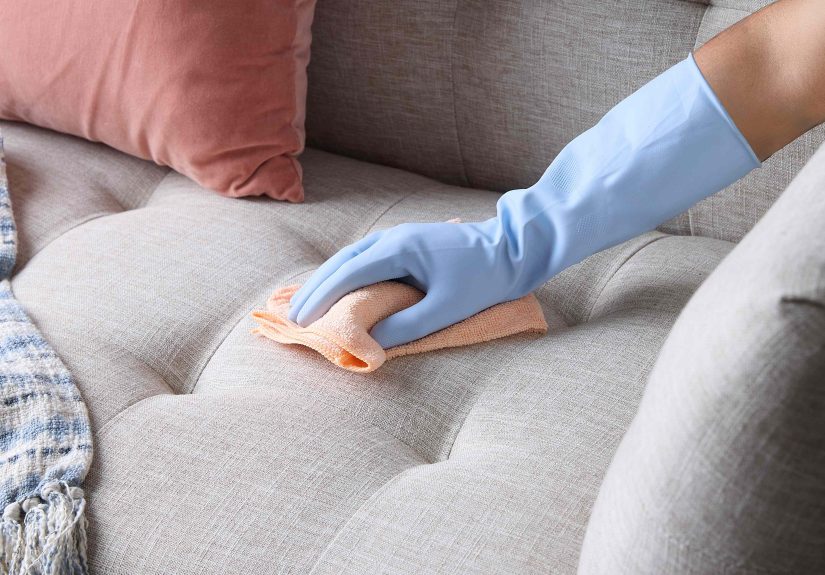
Lightly mist the stained or dingy area. The fabric should be damp, not wet, and definitely not dripping. Oversaturating upholstery can push grime deeper into the cushion, leave water marks, and increase drying time.
If you are nervous about spraying directly onto the couch, spray the solution onto a clean white cloth and blot that way instead. This gives you more control and lowers the risk of over-wetting the fabric.
Step 6: Let it sit briefly
Allow the solution to work for about 10 minutes. This gives the peroxide and baking soda time to loosen dirt and address mild stains.
Step 7: Blot gently
Use a clean white towel or microfiber cloth to blot the area. Work from the outside of the stain toward the center so you do not spread it. Avoid aggressive scrubbing. Scrubbing can rough up fibers, distort the fabric’s texture, and drive the stain deeper. Blotting is slower, yes, but it is also far less likely to betray you.
Step 8: Let it air dry fully
Open windows, run a fan, and let the couch dry completely before you sit on it again. Once dry, vacuum or lightly brush the area to lift the nap and remove any baking soda residue.
What This Method Works Best For
The baking soda and hydrogen peroxide couch-cleaning method is best for:
- General deodorizing
- Light overall dinginess
- Mild food and drink spots
- Body-oil buildup on arms and headrests
- Fresh stains on light-colored, water-safe upholstery
It can be especially helpful on synthetic fabrics that have gotten dull from normal life: kids, pets, snacks, naps, and whatever else your living room has been through lately.
What It Does Not Do Well
This method is not the answer to every couch emergency. It is not ideal for:
- Set-in pet urine odors deep in the cushion
- Ink stains
- Heavy grease
- Dye transfer from jeans or blankets
- Water-sensitive fabrics
- Antique or delicate upholstery
For pet accidents, especially old ones, an enzymatic cleaner is often better because it is designed to break down the proteins causing the odor. For delicate or expensive furniture, professional upholstery cleaning is often the cheaper choice compared with accidentally wrecking the couch yourself.
Common Mistakes to Avoid
Using too much hydrogen peroxide
More is not better. Hydrogen peroxide can lighten fabric, especially darker upholstery. Stick to the standard 3% solution and use a light hand.
Skipping the spot test
This is how people go from “small stain” to “large pale cloud.” Always test first.
Soaking the cushion
If liquid seeps deep into the insert, it can take forever to dry and may leave odors, mildew, or rings behind.
Scrubbing like you are fighting for your life
Gentle blotting and light brushing win here. Upholstery fibers are not impressed by aggression.
Mixing hydrogen peroxide with vinegar
Do not mix these in the same container. Keep your DIY cleaning simple and safe.
Using it on the wrong fabric
If the couch says solvent-only, vacuum-only, or “please stop experimenting on me,” believe it.
How Often Should You Clean a Couch This Way?
For routine freshening, using dry baking soda every few months is reasonable for many homes. A hydrogen peroxide treatment should be occasional, not weekly. Save it for visible dinginess or targeted stain treatment. Regular vacuuming, quick spill response, and rotating cushions will do more for the long-term look of your couch than dramatic rescue missions every other weekend.
When to Call a Professional
Call a professional upholstery cleaner if:
- The couch is vintage, expensive, or delicate
- The stain is large, dark, or deeply set
- The odor seems to be inside the cushion, not just on the surface
- You see color transfer during spot testing
- The couch is labeled S or X
Sometimes the most budget-friendly move is admitting that your couch is outside DIY territory.
Final Thoughts
Cleaning a couch with baking soda and hydrogen peroxide can absolutely work, but the magic is in the method, not just the ingredients. Start with the care code, vacuum first, deodorize with dry baking soda, test the peroxide mixture in a hidden spot, and keep moisture to a minimum. When used carefully on the right fabric, this simple combo can freshen upholstery, lift mild stains, and make your couch look a lot less like it has seen things.
The best part is that this method is affordable, straightforward, and realistic for busy households. The worst part is that it can tempt people into reckless confidence. Do not let a viral cleaning hack turn your sofa into a science project. Be patient, be gentle, and let the couch keep its dignity.
Experiences With Cleaning a Couch Using Baking Soda and Hydrogen Peroxide
One of the most common experiences people have with this method is surprise at how much better the couch smells before it even looks cleaner. That is usually the baking soda doing its job. A couch can carry odors quietly for months, especially in homes with pets, kids, takeout dinners, or open-plan living rooms where cooking smells drift everywhere. After a simple sprinkle-and-vacuum session, many people notice the room feels fresher overall, even if the fabric still has a few cosmetic flaws. It is the kind of result that makes you think, “Wait, was the couch the problem this whole time?”
Another very real experience is realizing that the grossest part of the process is not the stain treatment. It is the vacuuming. Once people remove the cushions and get into the creases, they tend to discover a full archaeological record of their living room habits: cracker dust, popcorn kernels, hair ties, receipts, puzzle pieces, pet fur, and enough crumbs to suggest the couch has been hosting secret meals. That deep vacuum alone can make the furniture look noticeably better before any peroxide ever appears.
When the peroxide mixture is used carefully, the results are often best on light beige, gray, cream, or off-white couches that have developed that vague “why does this look tired?” problem. The fabric may not have one dramatic stain; it just looks dull, slightly grimy, or shadowed around the arms and seat edges. In those cases, a light misting and blotting can brighten the fabric enough that the couch looks a year younger. Not brand-new, not showroom perfect, but definitely more respectable.
Of course, not every experience is glowing. Some people learn the hard way that hydrogen peroxide is not the right choice for darker fabrics or delicate fibers. The most common regret is skipping the spot test because the stain looked urgent or the hack looked easy online. That can leave a faded patch that is cleaner, yes, but also more obvious than the stain was. It is the cleaning equivalent of getting a haircut you instantly know was a mistake.
There is also the patience factor. People expecting instant transformation are often disappointed. This method works best when you go slowly, blot carefully, and let everything dry fully before judging the outcome. A damp couch can temporarily look worse, streaky, or blotchy, and then even out once dry. That waiting period feels long when your cushions are lined up like patients in recovery, but it matters.
In homes with pets, experiences are more mixed. For surface smells and light messes, baking soda can be a hero. For deep urine odors, not so much. Many homeowners report that the couch seems better for a day or two, then the smell creeps back because the source was inside the cushion core. That is usually the moment people graduate from DIY hope to enzyme cleaner reality.
Overall, the most successful experiences come from realistic expectations. This method is excellent for refreshing, deodorizing, and improving a couch that is dirty in a normal-life kind of way. It is less effective when the couch has major staining, fragile fabric, or a backstory involving years of pets and chaos. Used with care, though, it can be one of the simplest ways to make a hardworking couch look and smell far more civilized.