Table of Contents >> Show >> Hide
- Peanut Butter Tree Basics (Harlequin Glorybower)
- Where to Plant a Peanut Butter Tree
- How to Plant a Peanut Butter Tree (Step-by-Step)
- Watering and Feeding
- Pruning, Training, and Sucker Control
- Winter Care and Cold-Climate Strategies
- Common Problems (and How to Fix Them)
- Pollinators and Landscape Uses
- Is the Peanut Butter Tree Invasive?
- Propagation (If You Want More… Carefully)
- Bonus: Growing the Tropical Peanut Butter Fruit Tree (Bunchosia glandulifera)
- Conclusion
- of “What Gardeners Learn the Hard Way” About Peanut Butter Trees
If you’ve never met a peanut butter tree, here’s the quickest introduction: it’s a plant that smells like peanut butter when you crush a leaf. Not “open a fresh jar” peanut butter. More like “unsweetened, earthy, waitis that actually peanut butter?” peanut butter. And yes, people absolutely lean in and sniff it. (You will too.)
In American gardens, “peanut butter tree” usually means Harlequin glorybower (Clerodendrum trichotomum)a large shrub/small tree with fragrant late-summer flowers and electric-blue berries. Confusingly, the name is also used for peanut butter fruit (Bunchosia glandulifera), a tropical tree grown mainly in the warmest parts of the U.S. because its fruit tastes like peanut butter. This guide focuses on the hardy, ornamental peanut-butter-scented one (Clerodendrum), with a bonus section for the tropical fruit tree.
Peanut Butter Tree Basics (Harlequin Glorybower)
What it looks like (and why people plant it anyway)
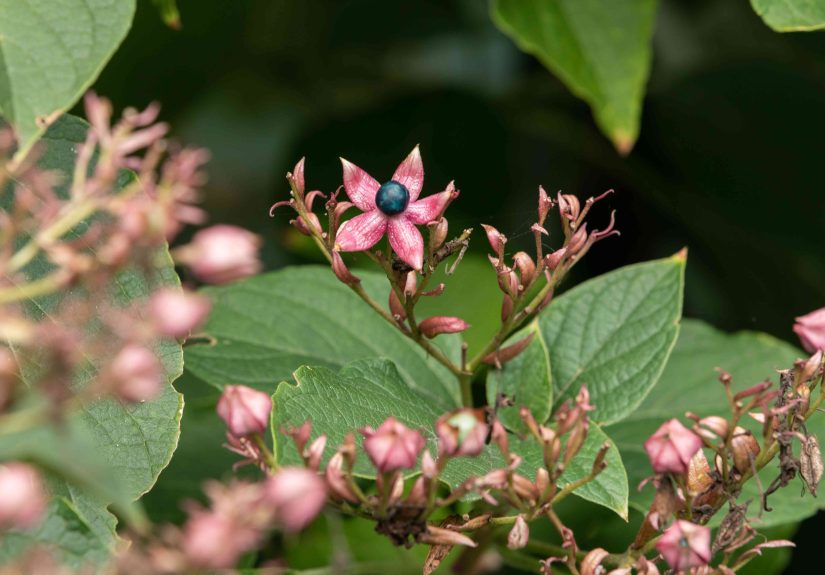
Clerodendrum trichotomum is often described as “coarse” or “a little unkempt,” which is polite gardener code for: “It won’t win a haircut contest in May.” But then late summer shows up and the plant flips the scriptclusters of fragrant white flowers appear, followed by showy red calyxes that open to reveal metallic blue fruit. It’s one of the best “end-of-season” performers you can grow, especially when many shrubs are already clocking out for the year.
Size and growth habit
Expect a mature plant around 10–20 feet tall with a similar spread, depending on your climate and how you prune. It naturally wants to be a multi-stemmed shrub, but you can train it into a small tree if you’re consistent. One big personality trait: it can send up suckers from the base and even a bit away from the main plant. If you love a tidy yard, you’ll want a plan for that (don’t worrywe’ll get you one).
Hardiness in the U.S.
In many areas it’s reliably hardy around USDA Zone 7. In colder spots (often north of Zone 7), it may freeze back in winter and regrow from the roots like a large perennial. Some gardeners successfully grow it in Zone 6 with winter dieback and spring regrowththink of it as “tree-ish” rather than “tree, no questions asked.”
Where to Plant a Peanut Butter Tree
Sunlight
For the biggest flower-and-berry show, give it full sun (at least 6 hours). It can handle partial shade, but shade often means fewer blooms and a looser, leggier habit. In very hot regions, a little afternoon shade can keep it from looking stressed during peak summer heat.
Soil and drainage
Aim for rich, well-drained soil that holds some moisture without staying soggy. This is not a plant that enjoys “wet feet.” If your yard has spots where water sits after heavy rain, plant somewhere else or raise the planting area with a berm. Mixing in compost at planting time is usually the easiest upgrade you can give your soil.
Spacing and placement (designing around its quirks)
Give it room. A cramped peanut butter tree becomes a “peanut butter thicket,” and while that sounds like a dessert, it’s mostly an access problem. Also, the lower portion can look a bit leggy for much of the year, so consider underplanting with smaller shrubs, ornamental grasses, or perennials to camouflage the base and keep the planting looking intentional.
How to Plant a Peanut Butter Tree (Step-by-Step)
Best time to plant
In most of the U.S., spring or early fall is ideal. You want mild weather so the roots can settle in before extreme heat or hard freezes.
Planting steps
- Pick the site: full sun to part shade, decent airflow, and good drainage.
- Dig the hole: about 2–3 times the width of the root ball, and no deeper than the root ball’s height.
- Set the plant: keep the top of the root ball level with (or slightly above) the surrounding soil.
- Backfill gently: use native soil mixed with a little compost if your soil is poor.
- Water deeply: soak thoroughly right after planting to settle soil around the roots.
- Mulch: add 2–3 inches of mulch, keeping it a few inches away from the stems (no mulch “volcanoes”).
Watering and Feeding
Watering in year one
The first growing season is when you’re teaching the plant where the “water buffet” is. Water deeply when the top inch or two of soil feels dry. During hot spells, that may be weekly. During mild weather, it may be less. The goal is to encourage roots to grow down and outnot to keep the soil constantly wet.
Watering once established
A mature peanut butter tree is fairly drought tolerant, but it flowers and fruits best with consistent moisture during late spring and summer. A common guideline is roughly about an inch of water per week during dry periods, adjusted for your soil (sandy dries faster, clay holds longer) and rainfall.
Fertilizing (less is more)
If your soil is decent, you may not need much fertilizer. A light top-dressing of compost in spring can be plenty. If growth is weak or flowering is disappointing, use a balanced, slow-release fertilizer in springthen stop once the plant moves into its flowering window. Over-fertilizing can push leafy growth at the expense of blooms and may increase the “unkempt shrub” vibe.
Pruning, Training, and Sucker Control
Shrub form vs. tree form
You get to choose your adventure:
- Shrub form: easiest, most natural. Let multiple stems develop and keep it thinned so light can enter.
- Tree form: more formal. Select 1–3 strong trunks and remove competing stems and basal shoots over time.
When to prune
Do your main pruning in late winter to early spring while the plant is dormant (or just as buds begin to swell). Remove dead, damaged, or crossing branches, and thin for structure. If you’re in a colder zone where it freezes back, you can cut it down hard and let it regrow.
How to deal with suckers (without losing your mind)
Suckers are the plant’s way of saying, “I like it here and I brought friends.” If you want fewer friends:
- Remove suckers early by cutting as close to their origin as possible. If you can trace a sucker to a root, a sharp spade can sever it below soil level.
- Mow nearby lawn regularly if your tree is planted in a spot where mowing is an option (this can suppress some wandering shoots).
- Mulch and edge planting beds to make sucker “escape attempts” easier to spot.
Preventing unwanted seedlings
The berries are gorgeousno argument. But if you’re concerned about self-seeding, you can snip off spent flower clusters before fruit fully develops. That reduces seed drop and keeps the plant focused on growth rather than reproduction.
Winter Care and Cold-Climate Strategies
Mulch like you mean it
In colder parts of its range, protect the root zone with a thicker mulch layer (still not touching stems). This helps prevent freeze-thaw stress and supports spring regrowth if the top dies back.
If it freezes back, don’t panic
In Zone 6 and marginal Zone 7 sites, it may die back to the ground in winter. Many gardeners simply treat it like a big shrub/perennial: cut it back in late winter and let it rebound. You may still get late-season flowers, even if it’s shorter than a “true tree” that year.
Common Problems (and How to Fix Them)
Root rot and soggy soil
The number-one avoidable issue is poor drainage. If leaves yellow, growth stalls, and the soil stays wet, don’t keep “helping” with more water. Improve drainage, reduce irrigation, and consider relocating the plant if the site stays boggy.
Pests: usually minor, occasionally annoying
Peanut butter trees are often relatively trouble-free, but you may see typical sap-suckers like aphids, mealybugs, or whiteflies, especially in stressed conditions. Start with the simplest fixes: rinse foliage with water, encourage beneficial insects, and use insecticidal soap if needed. Good airflow and avoiding over-fertilizing also help.
The leaf smell is… a feature
Some people love the peanut-butter scent. Others say it’s more “funky nut butter left in a hot car.” Either way, the aroma is strongest when leaves are crushedso if you plant it right beside a narrow walkway where everyone brushes by, you’re basically installing a free scent exhibit. Choose placement based on your household’s enthusiasm for botanical weirdness.
Pollinators and Landscape Uses
One reason gardeners keep forgiving this plant’s messy phase is what happens later: fragrant flowers in late summer can attract pollinators when nectar sources are scarcer. It also works as a specimen plant, a shrub-border anchor, or a “surprise!” feature near patiosclose enough to enjoy the flowers, far enough that you’re not constantly managing suckers in your favorite lawn chair.
Is the Peanut Butter Tree Invasive?
Here’s the honest answer: it depends on where you live. In some regions, Clerodendrum trichotomum can spread by suckers and seed and has naturalized beyond gardens. In Florida, it has been assessed as a high invasion risk. In parts of the Southeast, it’s also noted as strongly naturalized and increasingly invasive.
If you’re in a region where it’s considered a concern, the most responsible move is to choose an alternative shrub/tree with late-season flowers and wildlife value. If you already have one and local guidance allows it, manage it responsibly: remove suckers, deadhead to limit fruiting, pull seedlings promptly, and avoid planting near natural areas.
Propagation (If You Want More… Carefully)
Propagating from suckers
If your plant produces suckers, you can dig one with a good chunk of roots attached and transplant it. This is also a handy way to “turn a problem into a present,” assuming your recipient has been fully warned.
Semi-hardwood cuttings
Another common method is taking semi-hardwood cuttings in late spring or summer. Use a clean pruner, remove lower leaves, dip in rooting hormone (optional but helpful), and root in a well-draining medium under high humidity.
Seeds (the “proceed with caution” option)
Seeds can be grown, but if invasiveness is a local issue, seed-starting is basically you volunteering to run a tiny nursery of future rule-breakers. If you’re trying to be a good garden citizen, skip seeds and focus on containment.
Bonus: Growing the Tropical Peanut Butter Fruit Tree (Bunchosia glandulifera)
If your “peanut butter tree” goal is actually edible fruit, you’re looking for peanut butter fruit (Bunchosia glandulifera), sometimes called monk’s plum. This is a different plant entirely: an evergreen tree that produces small orange-red fruits with a sweet aroma and flavor reminiscent of peanut butter.
Where it grows in the U.S.
This tropical tree is best suited to USDA Zones 10A–11Bthink warm pockets of Florida, southern California, and similar frost-free areas. In cooler regions, it’s a greenhouse or large-container experiment, not an in-ground landscape plant.
Care basics
- Sun: bright light and warmth; full sun outdoors in suitable climates.
- Water: regular watering with good drainage; avoid prolonged sogginess.
- Size: often around 10–15 feet, but can be kept smaller with pruning.
- Pruning: prune to maintain a manageable shape and encourage new growth.
Conclusion
The peanut butter tree (Clerodendrum trichotomum) is a late-season showstopper with fragrant flowers, stunning blue fruit, and foliage that smells like a snack aisle dare. Grow it in sun, give it well-drained soil, water sensibly, and prune with a clear planespecially if you want a tree form or need to keep suckers in check. And before you plant, do the responsible thing: check local guidance on invasiveness so your “fun garden quirk” doesn’t become your neighborhood’s next invasive headache.
of “What Gardeners Learn the Hard Way” About Peanut Butter Trees
People don’t fall for the peanut butter tree because it’s perfect. They fall for it because it’s dramaticin the best wayright when the rest of the garden starts looking a little tired. If you talk to folks who’ve grown it for a few seasons, a handful of patterns show up again and again.
First, the smell is real, but it’s not a candle. Most gardeners report the “peanut butter” note is strongest when the leaves are bruisedafter pruning, on windy days, or when a curious kid/pet gets involved. Some people love it. Some people say it’s more “nutty funk” than “PB&J.” The practical takeaway: don’t plant it where you’ll constantly brush against it (like a tight side-yard path) unless you’re 100% sure your household enjoys surprise aromatherapy.
Second, patience pays. In many landscapes, the plant spends spring and early summer looking… fine. Not bad, not great. Then late summer arrives and it suddenly acts like it’s auditioning for a garden magazine cover. Experienced growers often place it where that end-of-season performance matters mostvisible from a patio, near a seating area, or as a background plant that “turns on” when perennials fade. In other words: treat it like a seasonal headliner, not a year-round topiary.
Third, sucker management is either a small chore or an ongoing hobby, depending on your site. In looser, richer soils, gardeners often notice more adventurous shoots. The best trick is consistency: remove suckers when they’re young. Small shoots snap or cut cleanly; older ones become woody and turn a five-minute job into a sweaty negotiation. Many gardeners also edge beds sharply and keep a mulch ring so new shoots stand out like little green flags waving, “Hi, I’m trying something.”
Fourth, flowering and fruiting are tied to light and stress. Growers who move it from partial shade to a sunnier location often report better bloom and berry display. But they also learn the plant isn’t a fan of soggy soil. “More water” doesn’t fix a drainage problemimproving drainage does. Once established, a deep soak during dry stretches tends to outperform frequent shallow watering.
Finally, experienced gardeners keep their local ecosystem in mind. In areas where it can naturalize, the most responsible growers either skip it entirely or manage it with deadheading, sucker removal, and quick seedling cleanup. The peanut butter tree is funbut the best kind of fun is the kind that stays politely inside your yard.