Table of Contents >> Show >> Hide
- Why Commissioned Portraits Are Still Thriving
- My Portrait Commission Process
- Here Are 13 of My Recent Portrait Commissions
- 1) “Sunday Suit” Grandfather Portrait (Oil on Canvas)
- 2) “Two Sisters, One Couch, Infinite Opinions” (Acrylic)
- 3) “Rain on the Wedding Day, Sun in the Portrait” (Digital + Archival Print)
- 4) “Captain Noodles” Pet Portrait (Gouache)
- 5) “Welcome Home” Newborn Family Portrait (Pencil + Wash)
- 6) “Chef at 6 A.M.” (Mixed Media)
- 7) “Neon Rehearsal” Musician Portrait (Oil)
- 8) “Caps, Gowns, and Side-Eye” Double Graduation Portrait (Digital Painting)
- 9) “Always in the Garden” Memorial Portrait (Graphite)
- 10) “Founder Mode” Professional Portrait (Acrylic)
- 11) “Three Generations on One Porch” (Oil)
- 12) “Private Victory” Self-Portrait Gift to Self (Charcoal)
- 13) “Anniversary Do-Over” (Oil + Gold Leaf Accent)
- What These 13 Portraits Taught Me
- Extended Studio Experience: From the Real Commission Life
- Conclusion
If you’ve ever wondered what happens between “Can you draw my family?” and “Wow, that actually looks like my uncle,” welcome to my studio life. Commissioned portrait artwork is part storytelling, part psychology, part color theory, and part detective work. (Because yes, I can usually tell from your reference photos who blinks in every group shot.)
Over the last year, I’ve worked on custom portrait art for birthdays, memorials, weddings, new babies, and one surprisingly emotional “my dog turned ten” celebration. This article shares my portrait commission process, practical lessons for clients and artists, and the stories behind 13 recent portrait commissions. If you’re searching for how commissioned portraits work, what makes a hand-drawn portrait feel personal, and how to turn a photo into meaningful wall art, you’re in the right place.
And yes, I’ll keep this useful, honest, and fun. Because art is serious work, but it should still feel alive.
Why Commissioned Portraits Are Still Thriving
In a world where everyone has 14,000 photos on a phone and 13,996 of them are screenshots, commissioned portrait artwork gives people something rare: intentional memory. A custom portrait isn’t just an image of a person; it’s a decision to remember them in a specific way.
Clients usually come to me for one of four reasons:
- Milestone gifts: anniversaries, graduations, retirements, first homes.
- Family legacy: portraits of grandparents, multi-generation pieces, heritage moments.
- Memorial work: honoring someone (or a pet) with tenderness.
- Personal identity: “I want art of me that feels like me, not like a filter.”
For artists, the commission model also creates a practical career path. It combines creative craft with client service, project management, and repeat referrals. In other words: brush strokes plus business skills.
My Portrait Commission Process
1) Discovery call and brief
Every custom portrait starts with questions. Who is this for? Where will it hang? What mood should it carryclassic, playful, cinematic, minimalist, warm? I ask for context first and photos second. The story matters as much as likeness.
2) Reference curation
I request 10–30 photos when possible. Why so many? Because one image may have perfect lighting, another has the true smile, and another reveals posture and personality. For family portrait commissions, I often combine references to create one cohesive scene.
3) Concept sketch and composition
I send a rough sketch to confirm pose, crop, wardrobe details, and background simplicity. This prevents heartbreak later. It is much easier to move an arm in sketch phase than repaint it after 18 hours of blending skin tones.
4) Color and medium decision
For an oil portrait commission, I prioritize depth and atmosphere. For graphite or charcoal, I focus on emotional clarity and value structure. For digital portrait commissions, I build layered flexibility and cleaner revision cycles.
5) Milestone approvals
I share updates at key points: line block-in, mid-tone development, near-finish pass. This keeps the client involved without turning the process into a 24/7 live stream of me arguing with the left eyebrow.
6) Final delivery and care instructions
Every finished portrait comes with framing suggestions, placement tips, and simple care notes. If the client wants print licensing or social media use details, we define that in writing in advance.
Here Are 13 of My Recent Portrait Commissions
1) “Sunday Suit” Grandfather Portrait (Oil on Canvas)
This commission came from three siblings who wanted to surprise their dad on his 70th birthday. They sent me old photos with wildly different lighting and one iconic image where he stood in his navy suit, half-smiling like he knew a good joke nobody else did. I built the composition around that expression and used a warm neutral background so his face carried the narrative. The final piece felt dignified but not stiffformal clothing, familiar warmth.
2) “Two Sisters, One Couch, Infinite Opinions” (Acrylic)
The client asked for “joyful, not posed,” which I love. We used candid references where the sisters were laughing mid-conversation. I leaned into motion and asymmetryslight shoulder turns, imperfect hand placements, bright textiles. The painting felt like a freeze-frame from real life rather than a staged studio portrait. Their mom reportedly cried, then said, “They’re still arguing in the painting,” which I’m taking as a compliment.
3) “Rain on the Wedding Day, Sun in the Portrait” (Digital + Archival Print)
The couple’s wedding photos were beautiful but dim because of weather. They wanted a luminous version for their hallway. I preserved their real pose but lifted the atmosphere with soft highlights and subtle color grading. The bride’s veil was the technical challenge: transparent, layered, reflective. I spent an unreasonable amount of time on it and regret nothing. The result looked romantic without becoming sugary.
4) “Captain Noodles” Pet Portrait (Gouache)
Every artist should paint at least one dog who refuses to cooperate in photos. This golden retriever had tongue-out blur in 80% of references. We selected the clearest frame and I stylized the fur rhythm to keep it lively. The owner requested his favorite bandana and “the exact amount of chaos in his eyes.” Mission accomplished. This is one of my most shared custom pet portraits because it feels specific and hilarious.
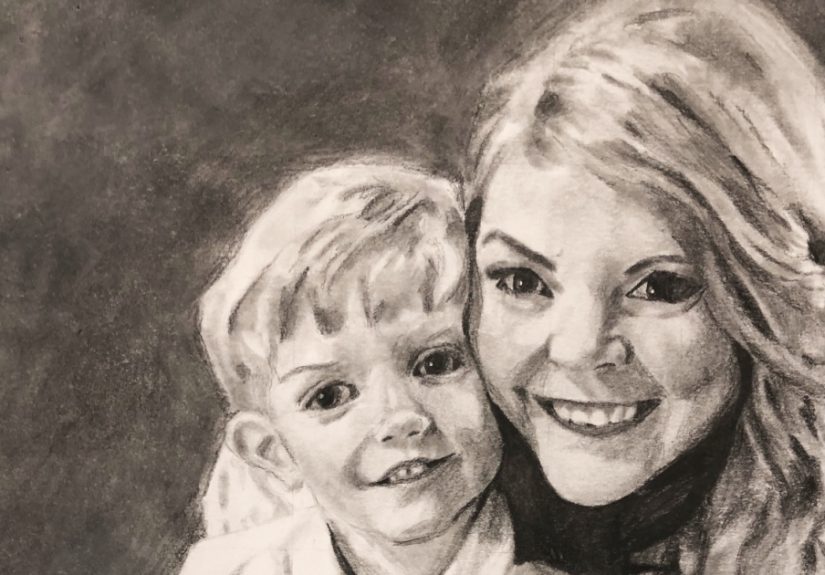
5) “Welcome Home” Newborn Family Portrait (Pencil + Wash)
For this piece, the parents wanted tenderness over detail density. So instead of hard realism everywhere, I emphasized gesture and touch: the way the mother’s hand cradled the baby, the father’s bowed posture, the quiet triangle composition. Light values and restrained contrast made it feel intimate. This is where drawing skills really mattersubtle structure, minimal overrendering, maximum emotion.
6) “Chef at 6 A.M.” (Mixed Media)
Commissioned by restaurant staff for their retiring head chef, this portrait included flour smudges, forearm tattoos, and his famous skeptical eyebrow. We combined portrait likeness with tiny symbolic details from the kitchenknife roll, copper pan reflection, and a handwritten recipe edge. It became less “headshot” and more “career in one frame.” He laughed when he saw it and said, “You made me look patient.” I did not correct him.
7) “Neon Rehearsal” Musician Portrait (Oil)
A guitarist wanted a contemporary portrait that felt like stage rehearsal, not performance. We used moody purple-blue tones and directional side lighting to capture concentration rather than showmanship. I intentionally left some brushwork visible in the background to echo sound texture. The final painting hangs in his studio and, according to him, “makes me practice longer because I feel judged by my painted self.” Art can be motivational.
8) “Caps, Gowns, and Side-Eye” Double Graduation Portrait (Digital Painting)
Two cousins graduating the same week wanted a shared portrait gift for their grandmother. Their references had different camera lenses and perspective distortions, so I rebuilt anatomy and scale before painting. We kept the mortarboards, replaced distracting backgrounds, and added subtle school colors into shadows. The result looked unified and celebratory, not collage-like. A great example of why good commissioned artwork often starts with technical problem-solving.
9) “Always in the Garden” Memorial Portrait (Graphite)
This was a delicate commission. The client wanted a portrait of her mother surrounded by implied floralsnot literal bouquet overload, just gentle suggestion. I used soft edge control and negative space to keep the piece breathable. Memorial portrait work requires restraint; over-detail can feel performative. The goal is recognition, grace, and quiet dignity. This piece remains one of the most meaningful projects I’ve done.
10) “Founder Mode” Professional Portrait (Acrylic)
Yes, hoodies can absolutely be portrait-worthy. The client was a startup founder who hated conventional corporate headshots. We designed a relaxed seated composition with strong eye contact and clean geometric background shapes. The portrait is now used in office branding and event collateral (with licensed usage terms agreed in advance). This project highlights a big trend: commissioned portraits are increasingly used for personal branding, not just private walls.
11) “Three Generations on One Porch” (Oil)
This family wanted one painting with grandparents, parents, and two kidseven though nobody could meet for one photo session. I composited from multiple references and unified perspective, horizon line, and lighting direction. The biggest challenge was interaction: I repainted hand placement several times so the relationships felt natural. Final feedback: “It looks like Sunday afternoon.” Exactly what we aimed for.
12) “Private Victory” Self-Portrait Gift to Self (Charcoal)
One client commissioned a portrait of herself after completing cancer treatment. She wanted strength without theatrical symbolism. We chose a close crop, neutral background, and intentional gaze. Charcoal was perfect for high-contrast storytelling and emotional directness. This piece reminds me that portrait commissions are not always for others; sometimes they are a personal marker of survival, identity, and new beginnings.
13) “Anniversary Do-Over” (Oil + Gold Leaf Accent)
A couple celebrating 25 years asked for a portrait “that feels like day one with day twenty-five wisdom.” Their old wedding album had color shifts, so I corrected skin tones and preserved period details while modernizing composition. A tiny gold-leaf accent in the background tied into their home decor and anniversary theme. The final piece landed between nostalgia and present-day confidenceexactly where they wanted it.
What These 13 Portraits Taught Me
Commissioned portrait art is 50% painting, 50% communication
Clients are not art directors, and they shouldn’t have to be. It’s my job to translate feelings into visual choices: pose, light, color, crop, and texture. The best projects happen when expectations are clear early and revisions are defined kindly.
Contracts protect creativity, not just payments
A clear art commission contract reduces stress for everyone. Scope, timeline, revision rounds, payment milestones, delivery format, and usage rights should be written before the first sketch. Ambiguity is the fastest route to frustration.
Copyright and usage rights matter
Many clients assume full ownership automatically after payment. In practice, usage rights can vary depending on agreement terms. If a portrait will be used for marketing, merchandise, or commercial publication, specify that in writing from day one.
Good pricing reflects labor you don’t see
A commission fee includes consultation, reference cleanup, sketching, painting time, revisions, finishing, packaging, and communication. The visible final image is only the tip of the workload iceberg.
Archival care and shipping are part of the art service
Portraits last longer when clients avoid extreme humidity, direct harsh sunlight, and low-quality framing. Shipping also needs thoughtful packaging and realistic handling assumptions. Beautiful work deserves safe travel.
Extended Studio Experience: From the Real Commission Life
If you want the honest version of portrait commissions, here it is: the painting is the glamorous part; the process is where character gets built. People imagine an artist waiting for inspiration under dramatic window light. In reality, I’m managing calendars, color charts, courier delays, and a folder named “final_final_THISone_reallyfinal.”
One of my biggest lessons came from a portrait where the likeness was objectively strong, but the client felt something was off. Not wrongjust not them. We paused and talked. It turned out the issue wasn’t anatomy; it was energy. In the reference, they were tired after work. In real life, they were playful and sharp. I adjusted the mouth corners, opened the eyes by millimeters, warmed the color temperature, and shifted posture forward slightly. Suddenly: “That’s me.” Tiny decisions, huge emotional difference.
Another time, a client asked for a family portrait with a loved one who had passed away years earlier. The available photos were low resolution and inconsistent. Instead of pretending it was easy, I explained exactly what could be accurate and what would be interpretive. That transparency built trust. During the reveal call, the client smiled through tears and said, “It feels like he walked back into the room.” I still think about that sentence on hard studio days.
Revisions used to scare me because I interpreted them as failure. Now I treat them as collaboration. If someone says, “Can we soften the expression?” they’re not rejecting the workthey’re trying to align memory with image. The key is boundaries. Unlimited revisions drain both artist and client. Defined rounds, clear feedback windows, and examples (“more like photo 6, less like photo 2”) keep projects healthy.
Let’s talk about the unromantic skills that changed my business: file naming discipline, invoice templates, packing checklists, and backup drives. Not sexy. Extremely useful. Good systems protect creative energy. When logistics are organized, I can spend brainpower on brushwork and storytelling instead of hunting for that one missing reference titled “IMG_4837.”
Emotionally, commissions taught me to listen for what people don’t directly say. “Can you make this for my mom?” often means “We’ve had a rough year and I want to give her something that feels permanent.” “Can you draw my dog?” may mean “He got me through grief.” Portraits are memory devices, yes, but they’re also care in visual form.
And after all the deadlines, all the edits, and all the moments where I question whether that ear is attached to reality, there is the reveal: someone seeing themselvesor someone they loverendered with attention. That moment never gets old. It’s why commissioned portrait artwork still matters, and why I keep saying yes to the next blank canvas.
Conclusion
Commissioned portrait artwork is not just about likeness; it’s about meaning, memory, and craft meeting human story. These 13 recent portraits taught me that great results come from clear communication, technical discipline, and respect for both artistry and logistics. Whether you want a custom family portrait, a hand-drawn memorial piece, a professional branding portrait, or a pet portrait full of personality, the best commissions start with a strong brief and end with a piece that feels unmistakably personal.