Table of Contents >> Show >> Hide
- A Quick, Spoiler-Light Snapshot
- My Franchise Ranking (And Where Chapter 2 Lands)
- Category Scorecard: Chapter 2, Ranked by What It Does Best
- The Set Pieces, Ranked (Because Yes, We’re Doing This)
- Worldbuilding: The Secret Ingredient (And Why It Doesn’t Feel Like Homework)
- Performances: Keanu Reeves as Physical Storytelling
- The Criticisms (Because Even Bullet Ballets Can Be Long)
- So… Is Chapter 2 “Better” Than Chapter 1?
- Final Opinion: My Verdict and Who I Recommend It For
- Extra: Experiences Related to “John Wick: Chapter 2 Rankings And Opinions” (About )
Some sequels try to be “bigger.” John Wick: Chapter 2 tries to be bigger, sharper, louder, sleeker, and (somehow) more politely deranged.
It takes the lean revenge engine of the first film and bolts on a fully operational assassin ecosystemcomplete with etiquette, currency, and rules
that are treated with the seriousness of a Supreme Court hearing… held in a nightclub… during a gunfight.
This is a rankings-and-opinions piece, so we’re doing two things at once: (1) ranking what Chapter 2 does best (and where it stumbles),
and (2) giving a clear take on where it sits in the overall “John Wick-iverse.”
No keyword confetti. No copy-paste vibes. Just a fun, in-depth breakdown of why this movie works so welland why it occasionally trips over its own
very expensive shoes.
A Quick, Spoiler-Light Snapshot
John Wick: Chapter 2 picks up shortly after the first film, when John is trying (again) to retire. Unfortunately, retirement in the Wick
universe is less “quiet cabin in the woods” and more “you owe a guy a favor from 10 years ago, and now he’s here with paperwork.”
That paperwork is a blood markeran underworld IOU that even John can’t ignore without consequences.
The job drags him out of New York and into Rome, where the movie expands the series’ signature blend of crisp action choreography and stylized
criminal mythology. Along the way, we get new allies, new threats, new rules, and one of the most memorable “customer service” sequences in modern
action cinema (yes, the tailor and the sommelier are icons).
The tone stays serious-facedalmost formalbut the movie absolutely knows how ridiculous it is. That contrast is part of the charm: it’s a bullet
ballet performed with the expression of a man choosing tiles at a hardware store.
My Franchise Ranking (And Where Chapter 2 Lands)
Ranking the John Wick films is like ranking types of lightning. They’re all dangerous. They’re all bright. The main differences are the
shapes and how close they strike to your soul.
Overall Franchise Ranking (Personal Take)
- John Wick: Chapter 4 the epic, operatic “everything bagel” of the series
- John Wick: Chapter 2 the best blend of worldbuilding + tight momentum
- John Wick (2014) the clean, emotionally grounded origin that still hits hard
- John Wick: Chapter 3 – Parabellum gorgeous chaos with a thinner story spine
Why is Chapter 2 my #2? Because it’s the sequel that expands the world without losing the “point” of the franchise:
elegant clarity in action staging, simple motivations that keep the story moving, and a relentless commitment to craft.
It’s arguably the moment the series fully becomes its own subgenresleek, rule-bound, almost mythic “assassin noir,” but with enough wink in its
eye that you never feel lectured.
Category Scorecard: Chapter 2, Ranked by What It Does Best
Let’s rank Chapter 2 the way it begs to be ranked: by the stuff you actually feel while watching it.
Scores are out of 10, because this movie lives in a world where everything is measured in coins, favors, and how many people you can take down
before your tie gets crooked.
- Action Choreography: 10/10 “gun-fu” precision with readable geography and rhythm
- Visual Style & Lighting: 9/10 neon noir that still lets you see what’s happening
- Worldbuilding & Lore: 9/10 coins, markers, rules, and a hidden society that feels consistent
- Sound, Music, and Momentum: 8.5/10 propulsive without turning into noise soup
- Performances: 8.5/10 Keanu’s physical acting does half the dialogue
- Story Drive: 8/10 simple setup, strong cause-and-effect, minimal wandering
- Emotional Core: 7/10 less tender than the first film, more “professional obligation”
- Villains & Antagonists: 7/10 fun, stylish, but not all equally memorable
The key takeaway: Chapter 2 is a craft-forward action movie. It’s not trying to out-plot a prestige drama. It’s trying to deliver
cleanly staged action, expand the mythos, and make it all feel like a coherent world where consequences matter.
And for the most part, it succeeds with a straight face and a slight smirk.
The Set Pieces, Ranked (Because Yes, We’re Doing This)
The series is famous for action that feels choreographed like dancebrutal dance, sure, but still dance. Chapter 2 doubles down on that,
stacking set pieces like a DJ stacking tracks: each one has its own flavor, each one escalates, and by the end you’re sweating even though you
haven’t moved.
1) Rome: The “Business Trip” That Turns Into a Full-Scale War
Rome is where the sequel announces itself. The locations are opulent, the pacing tightens, and the action becomes a showcase of technique:
close-quarters gunplay, grappling, reload choreography, and tactical movement that’s filmed with respect for the performer.
It feels like the movie is saying, “Welcome to the expanded worldplease keep your hands and feet inside the choreography at all times.”
2) The Museum/Mirrors Mayhem
If the Rome action is about momentum and geometry, the museum sequence is about perception. Reflective surfaces, clean lines, and shifting
silhouettes create a stylish “where is he?” tension without turning into confusion.
It’s a great example of the franchise’s visual intelligence: it doesn’t just show actionit frames it like a design problem.
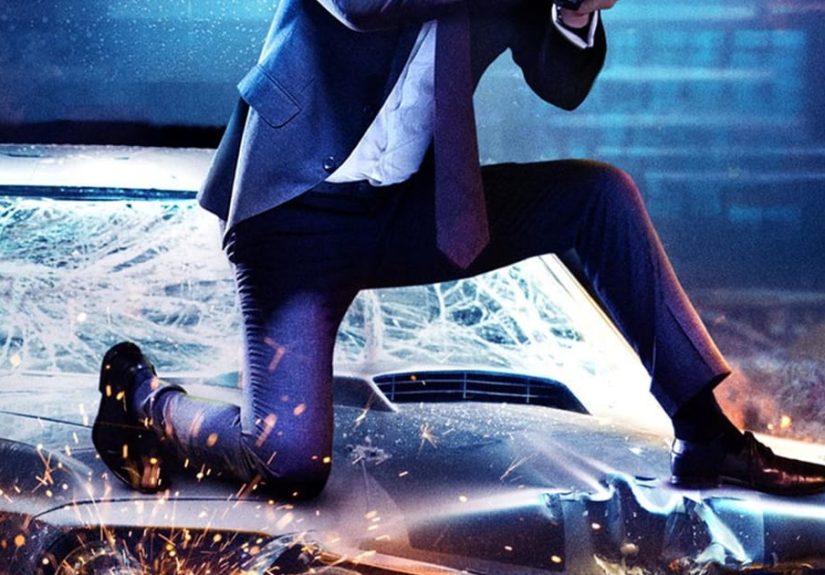
3) New York “Car-Fu” and the Chase Energy
The franchise loves “tools as choreography,” and Chapter 2 leans into that with vehicular chaos that still reads clearly.
This is the kind of action that makes you appreciate stunt coordination: you’re watching motion, timing, and impact arranged like a machine.
4) The Subway/Station Encounters
These scenes are a masterclass in tension-by-etiquette: the movie plays with the idea that violence is hiding in plain sight, performed with
a kind of underworld professionalism. It’s stylish and slightly absurd in the best waylike everyone signed a contract agreeing not to be surprised.
Ranking these is subjective, but the pattern is consistent: Chapter 2 builds action sequences around distinct ideas, not just “more people,
more bullets.” That’s why it replays so wellyou remember the shape of each set piece, not only the body count.
Worldbuilding: The Secret Ingredient (And Why It Doesn’t Feel Like Homework)
A lot of sequels “expand the universe” by dumping information on you like a wiki page fell off a truck. Chapter 2 does it differently:
it teaches you the world through behavior. The coins matter because people treat them as sacred. The rules matter because characters obey them
even when it hurts. The marker matters because refusing it isn’t just rudeit’s existential.
That’s what makes the underworld feel real: it has social consequences. The Continental isn’t simply a cool hotelit’s a governance system.
And Winston isn’t just a managerhe’s a calm, tailored embodiment of institutional power, the kind that can ruin you while still wishing you a
pleasant evening.
This is also where the film’s humor lives. The funniest moments aren’t jokes; they’re formalities applied to absurd circumstances.
Like ordering weapons the way you’d order wine. Like discussing suit lining as if it’s a moral choice.
The movie laughs without breaking tone, which is harder than it sounds.
Performances: Keanu Reeves as Physical Storytelling
Keanu Reeves’ John Wick works because he communicates through posture, timing, and exhaustion. He’s not a quippy superhero.
He’s a man who looks like sleep is a rumor and grief is a permanent climate. That heaviness makes the action land harderevery movement feels earned.
The supporting cast adds texture:
- Ian McShane (Winston): smooth authority with a smile that can absolutely ruin your life
- Laurence Fishburne (Bowery King): charismatic, theatrical, and instantly mythic
- Common (Cassian): a cool, credible foil who feels like Wick’s professional mirror
- Ruby Rose (Ares): stylish menace with a comic-book silhouette
- Riccardo Scamarcio (Santino): smug entitlement that makes you want to see consequences arrive early
- Lance Reddick (Charon): deadpan professionalism that elevates every scene he’s in
Nobody is over-explaining. That’s crucial. The movie trusts you to pick up the vibe, the rules, and the relationships without a tutorial.
It’s a confident sequel, and the performances match that confidence.
The Criticisms (Because Even Bullet Ballets Can Be Long)
For all its strengths, Chapter 2 isn’t perfectand honestly, the critiques usually come from a fair place.
It’s Less Emotional Than the First Film
The original John Wick had a simple, devastating emotional hook. Chapter 2 trades some of that for mythology and momentum.
That’s not “bad”it’s a deliberate shiftbut it does mean the movie sometimes feels like a professional obligation story more than a personal one.
The Middle Can Feel Like “One More Fight” (Then Another)
If you’re not fully on board with the franchise’s rhythm, the constant escalation may feel repetitive.
The flip side is: fans love it exactly because it refuses to stall. Your tolerance for nonstop action will determine whether you call it “relentless”
or “a lot.”
Some Villain Choices Are More Vibe Than Depth
The movie’s antagonists are stylish, but not all of them are layered. The series tends to treat villains like design elementsstrong silhouettes,
clear motivations, quick impact. If you prefer character-heavy conflict, Chapter 2 may feel lightly sketched in places.
None of these issues break the movie. They just explain why some viewers rank the first film higher (for heart) or the fourth film higher
(for scale and ambition).
So… Is Chapter 2 “Better” Than Chapter 1?
Here’s my honest answer: Chapter 1 is the cleaner story. Chapter 2 is the more satisfying action-world experience.
If you value emotional motivation and tight narrative economy, the first film may remain your favorite. But if you watch John Wick
primarily for choreography, style, and underworld lore, Chapter 2 is where the franchise levels up.
It refines the “house style” and establishes the rules that later movies build into full mythology.
It’s also the installment that convinces you this series is not a one-off fluke. This is a franchise with a craft identity.
The action isn’t there to fill time; it’s the pointand it’s executed with uncommon discipline.
Final Opinion: My Verdict and Who I Recommend It For
My overall rating: 9/10.
John Wick: Chapter 2 is a masterclass in modern action designstylish, coherent, and confident enough to expand its world without losing
its rhythm. It’s hyper-violent, yes, but also strangely elegant, like a choreographed storm.
Watch it if you like:
- Action scenes you can actually follow (no shaky-cam chaos soup)
- Worldbuilding that’s shown through rules and behavior, not endless exposition
- Keanu Reeves doing physical acting like it’s an Olympic event
- Stylized noir vibes with occasional dry, absurd humor
Skip it (or brace yourself) if you’re sensitive to prolonged violence. This movie is rated R for a reason, and it does not apologize.
It just adjusts its cufflinks and keeps walking.
Extra: Experiences Related to “John Wick: Chapter 2 Rankings And Opinions” (About )
One of the funniest “real world” experiences around John Wick: Chapter 2 is how quickly it turns casual viewers into
extremely confident action-film critics. People don’t walk out saying, “That was good.” They walk out saying things like,
“The reload timing was clean,” or “The blocking in the museum sequence was better than most movies’ entire third act,”
as if they’ve been secretly grading choreography spreadsheets their whole lives.
That’s the power of a movie that makes its craft visible. You can feel the planning. Even if you don’t know the term “stunt coordination,”
your brain recognizes when action has logic: where bodies are positioned, how the camera respects distance, how movement has rhythm instead of
random flailing. It’s the kind of film that makes you more aware of action grammarsuddenly you notice when other movies cut too fast or hide
impact behind shaky frames. After Chapter 2, a messy action scene can feel like someone trying to play piano with oven mitts.
It’s also a wildly rewatchable “group movie.” In a watch party setting, the reactions tend to follow a pattern: the first big sequence gets the
“okay, we’re doing this” laughs; the concierge-style moments get the delighted groans; and the most stylized set pieces cause people to go quiet
not because they’re bored, but because they’re tracking the choreography like it’s a sport. Then, right after, everyone starts talking at once:
“Did you see that transition?” “The way he moved through the room!” “How did the camera keep up?” It’s a conversation starter because it gives
you specific things to point at, not vague “cool stuff.”
Rankings and opinions also shift depending on when you watch it. If you saw it in 2017, it likely felt like a jolt of fresh energya sequel
that respected practical stunts and crisp editing at a time when many action movies leaned heavily on frantic cutting. If you watch it now, after
the franchise has expanded and influenced the wider genre, it can feel like a blueprint: the moment the Wick “language” becomes fully formed.
Some viewers even find themselves ranking it higher over time because it hits a sweet spotbigger than the first, but still tighter than later,
more sprawling entries.
And then there’s the “detail rewatch” experience: noticing how often the movie uses formality as comedy, how frequently characters follow rules
even when it’s inconvenient, how wardrobe and lighting make characters read instantly (ally, threat, institution, outsider).
These details don’t shout; they accumulate. It’s the kind of film where your second viewing can be more satisfying than your first, because you’re
no longer just reactingyou’re appreciating the design. That’s why rankings for Chapter 2 are so lively: the movie gives people enough
structure to argue about it like it’s a sport, but enough style that the argument stays fun.