Table of Contents >> Show >> Hide
- Epilepsy 101 (The Version Parents Actually Need)
- When the Patient Is Seven, the Diagnosis Hits the Whole House
- Why “A Million Dollars” Isn’t a Meme Number
- Introducing: The Million-Dollar Bear (A Fundraiser With Fur)
- How to Do This Ethically (Because Epilepsy Is Not a Marketing Prop)
- What We’re Actually Funding: Today’s Epilepsy Treatment Landscape
- Seizure Safety: The Practical Stuff That Saves Your Sanity
- SUDEP, Fear, and the Art of Living Anyway
- “Okay, I Can’t Buy a Million-Dollar Bear. How Else Can I Help?”
- The Point of the Bear
- From the Trenches: What It Feels Like to Fundraise While Parenting a Child With Epilepsy
The first time my daughter had a seizure, time did that thing where it both slowed to a crawl and sprinted a marathon.
One minute we were arguing about whether glitter counts as a “neutral color,” and the next minute I was learning a whole new vocabulary:
neurologist, EEG, rescue med, seizure threshold, postictal. (Also: insurance prior authorization, which is somehow the scariest phrase of all.)
After the diagnosis, the world didn’t stop. Lunches still needed packing. Homework still needed doing. Stuffed animals still needed tucking in.
But everything got a quiet, constant overlay of “What if?”and that’s where her teddy bear comes in.
It’s the one she clutches when she’s nervous, the one she talks to when she doesn’t want to talk to us, the one that has absorbed more tears than our entire linen closet.
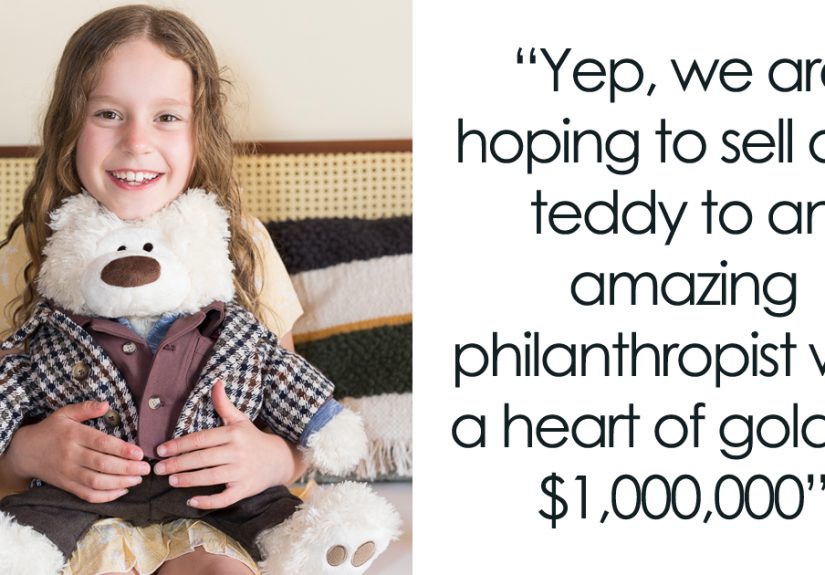
So yes: I’m trying to sell a fancy, collectible, glow-up version of that teddy bear for a million dollars to fund epilepsy research.
Is it an absurd plan? Absolutely. Is it also the most logical idea I’ve had since my brain started living in emergency-prep mode?
Also yes. Because when a kid has epilepsy, you quickly learn two truths:
you can’t control everything, but you can build something that helpswhether that’s a safer school day, a clearer action plan, or a fundraising campaign with a ridiculous (and lovable) mascot.
Epilepsy 101 (The Version Parents Actually Need)
Epilepsy isn’t “one seizure.” It’s a neurological condition where the brain has a tendency to produce recurrent seizures.
Clinically, epilepsy is commonly diagnosed after two unprovoked seizures more than 24 hours apart, or after one unprovoked seizure when the risk of more is high.
In plain English: the brain has shown a pattern, not just a one-time glitch.
It’s also far more common than most people realize. In the U.S., millions of adults live with active epilepsy, and hundreds of thousands of children do too.
That means epilepsy is not some rare, faraway medical triviait’s your neighbor, your coworker, your kid’s classmate, your kid.
What seizures can look like (and why Hollywood has misled us)
Many people think “seizure” means a dramatic fall and full-body shaking. That can happen (often called tonic-clonic seizures),
but seizures can also look like staring spells, brief confusion, sudden drops, rhythmic jerks, or subtle movements that are easy to miss.
There are two broad categories: focal seizures (starting in one area of the brain) and generalized seizures (involving both sides).
If you’re a parent, this can be maddening. You don’t get a giant flashing sign that says:
THIS WAS A SEIZURE, PLEASE PRINT RECEIPT.
Sometimes you get a “spacing out” moment that lasts a few seconds and then a kid who insists she’s totally fine and can we please have waffles now.
When the Patient Is Seven, the Diagnosis Hits the Whole House
Pediatric epilepsy is its own universe. You’re not only managing the seizuresyou’re protecting development, learning, sleep, friendships, confidence,
and the fragile little sense of “I’m normal” that kids deserve to keep as long as possible.
The hidden logistics nobody puts on a brochure
- Medication schedules that do not care about birthday parties, field trips, or daylight savings.
- School planning so staff know what to do, what not to do, and when to escalate.
- Sleep protection because sleep deprivation can lower seizure threshold for some people.
- Trigger detective work (illness, stress, flashing lights for some, missed meds, hormones as kids grow).
- Emotional whiplash: relief after a seizure-free streak, fear after a breakthrough seizure.
The goal is always the same: fewer seizures, fewer side effects, more life. Many people can achieve strong seizure control with anti-seizure medications,
and some respond well to the first medication tried. Others need combinations, dosage adjustments, or different approaches.
And then there’s the group that keeps families up at nightdrug-resistant epilepsy, where seizures don’t come under control even after trying appropriate medications.
Why “A Million Dollars” Isn’t a Meme Number
A million dollars sounds like an internet stuntuntil you look at what it takes to move epilepsy science forward.
Research isn’t just “someone has a clever idea.” It’s:
lab time, specialized staff, equipment, patient recruitment, data safety monitoring, regulatory steps, manufacturing standards for any new therapy,
and years of follow-up.
Epilepsy is also not one single condition. It’s a family of disorders with different causes: genetic syndromes, structural brain differences,
immune-related conditions, injuries, infections, unknown causes, and combinations of these.
That complexity is exactly why research matters: better diagnostics, better targeted therapies, better prediction tools, and better prevention of complications.
So what does a million actually do?
Depending on how it’s deployed, a million dollars can:
- Fund early-stage grants that help researchers prove a concept and qualify for larger federal funding.
- Support patient registries or biobanks that accelerate discovery, especially in rare pediatric epilepsies.
- Back clinical trial infrastructure at children’s hospitals (coordinators, data systems, study visits).
- Underwrite novel approaches like neurostimulation research, dietary therapy optimization, or precision-medicine pipelines for genetic epilepsies.
In other words: it’s not a vanity number. It’s a “this could materially speed something up” number.
Introducing: The Million-Dollar Bear (A Fundraiser With Fur)
Let’s be honest: if I said, “Please donate to epilepsy research,” people would nod, feel sad, maybe share a link, and move on.
But if I say, “I’m auctioning a one-of-a-kind luxury teddy bear inspired by my kid’s comfort bearhandcrafted, artist-collabbed, and designed to raise one million dollars,”
suddenly people lean in. They ask questions. They tell friends. They want to see it.
That’s not manipulation. That’s storytelling. Fundraising works when it’s humanand when it offers a clear, tangible symbol that people can rally around.
The bear isn’t the point. The bear is the banner.
What makes a teddy bear “fancy” enough for a serious auction?
If you’re going to swing for seven figures, you need more than a cute plush and a prayer. You need a collectible strategy:
- Limited edition craftsmanship (artisan materials, impeccable build, museum-level presentation case).
- Artist collaborations (a known illustrator, designer, or contemporary artist creating a signature look).
- Provenance (documentation, certificates, behind-the-scenes creation story).
- Auction legitimacy (a reputable auction house or charity platform with transparent accounting).
- Corporate matching (a sponsor agrees to match the winning bid up to a set amount).
Think “heirloom meets high design,” not “I hot-glued rhinestones to a stuffed animal and called it couture.”
(No disrespect to hot glue. It’s gotten me through many school projects. But we’re aiming for a different tier here.)
How to Do This Ethically (Because Epilepsy Is Not a Marketing Prop)
If you’re fundraising around a child’s condition, you owe that childand the communityreal integrity.
That means:
1) Be radically clear about where the money goes
Name the institution(s) or research fund. Explain how proceeds are transferred. Publish receipts or third-party confirmation.
Avoid vague promises like “for research” with no mechanism behind it.
2) Don’t oversell outcomes
Research is hopeful, not guaranteed. The honest pitch is: “You’re speeding up the odds of breakthroughs,” not “This will cure my child next Tuesday.”
3) Protect your child’s privacy
You can share a story without turning your kid into a public case file.
Your child is a person, not campaign content.
What We’re Actually Funding: Today’s Epilepsy Treatment Landscape
The current standard of care is typically anti-seizure medication. Many people can achieve seizure control with medicine and/or surgery,
but a substantial minority continue to have seizures despite treatmentoften described as drug-resistant epilepsy.
That’s one major reason research funding remains urgent.
Beyond medication: options families may hear about
- Dietary therapy (like the ketogenic diet), often considered for difficult-to-control seizures and managed medically with careful monitoring.
- Neuromodulation (such as vagus nerve stimulation), which can reduce seizure frequency in some patients.
- Epilepsy surgery for select patients where seizures originate from a specific, removable brain region.
- Clinical trials exploring new medications, devices, and targeted approaches (including treatments for specific genetic epilepsies).
The point isn’t that every patient needs every tool. The point is that epilepsy is diverse, and the tool belt should be bigger.
Research makes the tool belt biggerand smarter.
Seizure Safety: The Practical Stuff That Saves Your Sanity
Fundraising can be flashy. Safety is not. But safety is what lets parents sleep and lets kids go to school and lets a family leave the house without feeling like it’s a high-stakes expedition.
Seizure first aid basics (the short version)
- Gently guide the person to the ground if they’re standing or falling.
- Turn them on their side to help keep the airway clear.
- Move hard objects away, cushion the head, loosen tight clothing around the neck.
- Time the seizure. If it lasts more than about 5 minutes, treat it as an emergency and call 911.
- Don’t put anything in their mouth, and don’t restrain them.
I used to think the “don’t swallow your tongue” line was just something adults said to scare children. Then I learned it’s a myth
and that putting something in someone’s mouth during a seizure can actually cause injuries.
Parenting is basically a long series of unlearning myths.
The Seizure Action Plan: the single most underrated document in your life
If your child has epilepsy, you want a written plan that explains:
what seizures look like for your child, what to do during them, what medications exist (including rescue meds),
and when to call for emergency help. Schools benefit massively from clear instructions, and so do substitute teachers,
babysitters, grandparents, and the friend’s parent who just agreed to host a playdate and now looks mildly panicked.
SUDEP, Fear, and the Art of Living Anyway
There’s a complication called SUDEPsudden unexpected death in epilepsythat nobody wants to talk about, but many families deserve to understand.
The risk is higher in people with poorly controlled seizures, especially generalized tonic-clonic seizures.
This isn’t a “live terrified” paragraph; it’s a “knowledge reduces helplessness” paragraph.
What helps, according to expert guidance and patient-education organizations, is focusing on seizure control, consistent treatment,
and having a planbecause the best-known risk reducer is fewer uncontrolled seizures.
If you’re a parent reading this, please hear this clearly:
you are not “negative” for learning about risk. You’re brave for building a safer life with the information available.
“Okay, I Can’t Buy a Million-Dollar Bear. How Else Can I Help?”
First of all: same. My own budget has looked at my plan and laughed.
The good news is you don’t need to be a hedge fund to help the epilepsy community.
High-impact ways to support epilepsy research and families
- Donate to reputable epilepsy research funds or hospital programs.
- Support local walks/events that fund services and advocacy.
- Offer practical help: rides, meal trains, sibling babysitting during appointments.
- Learn seizure first aid and normalize itlike CPR, but for the brain.
- Advocate for school readiness and inclusive policies so kids are supported, not sidelined.
The Point of the Bear
The million-dollar teddy bear is not a magic trick. It’s a megaphone.
It says: pediatric epilepsy is real, common, complicated, and worth serious scientific investment.
It says: parents will get creative when the stakes are their child.
It says: the world can be both heartbreaking and ridiculousand sometimes the ridiculous part is how we keep going.
My daughter still sleeps with her original teddy bear. The fancy version is for the world.
The original is for her. And in a way, that’s the whole lesson:
we build the public things to move science forward, so our kids can keep the private thingssleep, school, friends, confidenceintact.
From the Trenches: What It Feels Like to Fundraise While Parenting a Child With Epilepsy
Here’s the part nobody prepares you for: you can be grateful and furious in the same minute. Grateful for modern medicine, furious that it still isn’t enough.
Grateful for a neurologist who listens, furious at the paperwork maze that stands between a child and a refill.
Epilepsy turns your emotional life into a blender with no “pulse” setting.
Our days have two tracks. Track One is normal-kid life: spelling tests, Lego arguments, and the eternal debate over whether a backpack can be “too sparkly.”
Track Two is the invisible schedule: morning meds, sleep routines, subtle check-ins that look like casual parenting but feel like constant monitoring.
I’ve learned to read my daughter’s face the way you read weathertiny shifts that suggest a storm, even when the sky looks clear.
Fundraising entered our life because helplessness is heavy. I didn’t want our story to be only about fear.
I wanted my daughter to see that we can do something that points outward, that turns anxiety into action.
That’s when the teddy bear idea started to feel less like a stunt and more like a symbol: comfort, yes, but also visibility.
A stuffed animal is disarming. People will approach it. They’ll ask why it exists. And then they’ll learn.
The weirdest part is becoming an accidental educator. I’ve explained seizures more times than I’ve explained multiplication,
and honestly the seizure explanations have better audience retention. I’ve corrected myths gentlyno, you don’t hold someone down; no, they don’t swallow their tongue
and I’ve watched people’s faces shift from awkward fear to practical understanding. That shift matters. It makes the world safer for my child and for other kids.
School planning was its own rite of passage. Walking into a classroom meeting with a Seizure Action Plan feels like showing up with a fire-escape map:
you hope it never gets used, but you’d rather have it than wish you did. The best teachers don’t treat my daughter like fragile glass.
They treat her like a whole kid with one extra safety protocollike an inhaler for asthma, like an EpiPen for allergies.
That normalizing is a gift.
And yes, there are days when the fundraiser feels ridiculous. When you’re tired, everything sounds ridiculous.
“Hello, I’m here to pitch a couture teddy bear to fund brain science” is not a sentence I expected to say in adulthood.
But then my daughter squeezes her worn, beloved bear, takes a deep breath, and does the brave thinggoes to school, tries again, lives her life anyway.
So I do my brave thing too. I make calls. I write pitches. I ask people to care.
Because hope isn’t a mood. In this house, hope is a project planwith stitching.