Table of Contents >> Show >> Hide
- What Exactly Is the Lobmeyr Gold Candy Dish?
- The Brand Behind the Shine: Why Lobmeyr Still Matters
- Oswald Haerdtl, Paris 1925, and the Magic of Muslin Glass
- Why the Gold Version Feels So Fresh
- How to Style a Lobmeyr Gold Candy Dish Without Making Your Home Look Like a Fancy Hotel Lobby
- Is It Worth Buying?
- Care and Handling: Because Panic Is Not a Cleaning Strategy
- Final Verdict
- Experience: Living With a Lobmeyr Gold Candy Dish
- SEO Tags
Some home objects whisper. Others politely clear their throats. The Lobmeyr Gold Candy Dish strolls into the room like it already knows the good champagne has been chilled. It is elegant without being stiff, glamorous without trying too hard, and just odd enough in silhouette to make people ask, “Wait, what is that?” In a world of mass-produced tabletop pieces that all seem to have graduated from the same beige finishing school, this dish feels like a delightful little rebel.
That is part of its charm. The Lobmeyr Gold Candy Dish is not merely a container for chocolates, candied almonds, or the emergency stash of very expensive caramels you pretend you are “saving for guests.” It is a design object with real pedigree. The form traces back to Viennese architect and designer Oswald Haerdtl, and the candy dish family was first presented in Paris in 1925. Today, the gold-lustre versions revive that early modern glamour in a way that feels surprisingly current.
So yes, this is technically a candy dish. But calling it just a candy dish is a little like calling the Empire State Building “a useful place to put offices.” True, but wildly incomplete.
What Exactly Is the Lobmeyr Gold Candy Dish?
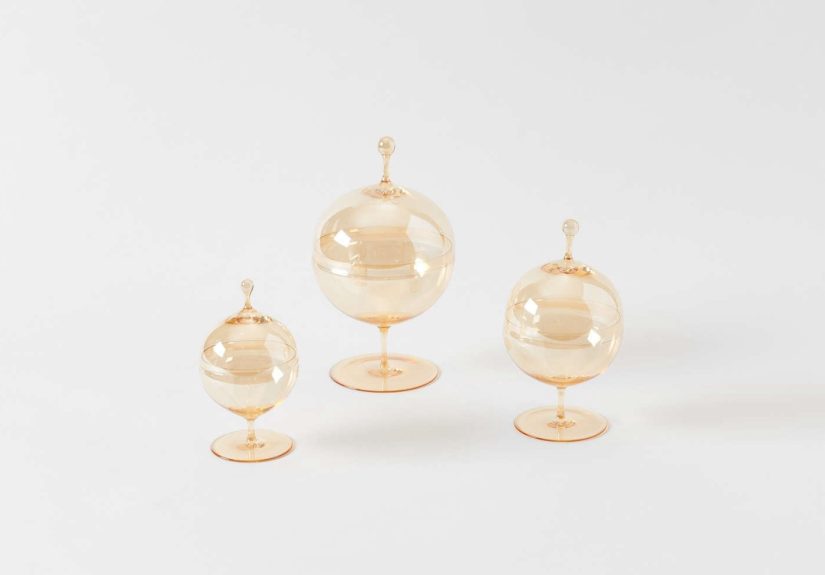
The name sounds singular, but in practice the Lobmeyr Gold Candy Dish refers to a family of sculptural crystal dishes offered in several sizes and proportions. Lobmeyr presents the series in five shapes, including taller, narrower forms and a flatter version, all sharing the same airy, bulb-like geometry. The gold-lustre finish gives the dishes a soft metallic glow rather than a loud, mirror-ball flash. Think candlelight, not casino.
That balance matters. The dish looks lavish, but it does not tip into vulgarity. The gold treatment warms the crystal and makes the object feel richer, moodier, and more theatrical than the clear version. It is the tabletop equivalent of putting on a velvet dinner jacket instead of a plain blazer. Same function, far better entrance.
Because the collection comes in multiple shapes, buyers can choose based on function as much as aesthetics. A taller piece can work beautifully for wrapped sweets or as a decorative accent on a console, while the flatter version lends itself to after-dinner chocolates, sugar cubes, or a tiny arrangement of objects on a bar cart. This flexibility is part of why the piece has stayed relevant instead of becoming a period curiosity.
The Brand Behind the Shine: Why Lobmeyr Still Matters
To understand why this dish gets design people a little weak in the knees, it helps to know the name behind it. J. & L. Lobmeyr was founded in Vienna in 1823, and the company built its reputation through extraordinary hand craftsmanship, elite commissions, and long collaboration with important designers. Lobmeyr became a purveyor to the Imperial Court and remains a family-run business more than two centuries later.
That history is not just marketing perfume sprayed on an ordinary product. Lobmeyr has genuine design gravity. Its work has appeared in major museum collections and exhibitions, including MoMA, The Metropolitan Museum of Art, and Cooper Hewitt. American design institutions have treated Lobmeyr not as luxury fluff, but as a serious contributor to modern glass design. When a brand keeps showing up in museums, collectors’ inventories, and high-end design editorials, that is usually a clue that it is doing something more interesting than merely being expensive.
Lobmeyr also occupies a rare sweet spot. It is steeped in old-world craftsmanship, but it has never been trapped by nostalgia. The company’s archive includes historic classics, yet the brand continues to collaborate, reinterpret, and reintroduce pieces in ways that keep them alive for contemporary homes. The Gold Candy Dish is a perfect example of that ongoing relevance.
Oswald Haerdtl, Paris 1925, and the Magic of Muslin Glass
The design story here is half the fun. Oswald Haerdtl, the designer behind the candy dishes, was part of the Viennese modern tradition that valued clarity, proportion, and refined decoration over fussiness. These candy dishes were first shown at the 1925 Paris Exposition des Arts Décoratifs, the blockbuster event that helped define the visual language of Art Deco and spread modern decorative arts across Europe and beyond.
That origin explains why the dish feels both sleek and dramatic. It comes from a moment when designers were stripping away needless clutter but still loved luxury, elegance, and a little bit of visual seduction. The shape is simple, yet the silhouette has movement. It reads as modern sculpture, but it still feels inviting and domestic. That is a very hard trick to pull off, and Haerdtl pulled it off with style.
Then there is the material: mouth-blown muslin glass. Lobmeyr is famous for this ultra-thin, delicate-looking crystal, named after muslin fabric because of its sheer, feather-light quality. The result is glass that appears almost improbably fine. It looks as if a bubble and a sketch had a very glamorous child. Lobmeyr’s muslin glass is one of the company’s signatures, and it gives the candy dish its airy, almost floating presence.
That lightness is essential to the design. If the same shape were made in thick, clunky glass, it would lose its wit. In muslin glass, the dish looks nearly weightless, which makes the gold-lustre finish feel even more magical. You are not just seeing a metallic object; you are seeing color and light skim across a form that barely seems to occupy space.
Why the Gold Version Feels So Fresh
Gold can be risky. Done badly, it shouts. Done well, it glows. The Lobmeyr Gold Candy Dish lands firmly in the second category. Lobmeyr describes the finish as a gold lustre, and the effect is softer than polished brass and less brassy than many metallic home accessories. It reads as warm, luminous, and slightly dreamlike.
There is also a practical design reason the gold works so well. Because the form is already unusual, the metallic surface does not need to perform circus tricks. It simply amplifies the silhouette. The finish catches light beautifully at dinner, on a shelf, or near a window, and it gives the dish enough visual weight to stand alone even when it is empty. That matters more than people admit. Plenty of bowls and dishes look sad without contents. This one looks like it is keeping secrets.
The gold-lustre edition also taps into a broader decorating shift. Many homeowners are tired of cold minimalism and want pieces with warmth, personality, and a hint of eccentricity. The Lobmeyr Gold Candy Dish fits perfectly into that mood. It offers historical depth, artisan craft, and a little theatrical flair without becoming kitsch. In short, it is decorative, but it is not desperate.
How to Style a Lobmeyr Gold Candy Dish Without Making Your Home Look Like a Fancy Hotel Lobby
The easiest mistake with a statement piece like this is overdoing the scene. The dish does not need twelve supporting actors and a spotlight. It works best when given room to breathe. On a dining table, it can serve as a small centerpiece filled with wrapped chocolates, citrus peel confections, or sugared nuts. On a console, it can sit empty as a sculptural object beside a stack of books and a lamp. On a bar cart, it adds a bit of shimmer that plays beautifully against bottles and glassware.
If your space is modern, the dish adds softness and historical character. If your space leans traditional, it introduces a slightly surreal silhouette that keeps things from feeling too expected. That versatility is one of its biggest strengths. It can mingle with antiques, minimalist furniture, lacquered surfaces, marble, dark wood, and even playful contemporary pieces. The dish is fancy, yes, but it is surprisingly social.
For holiday entertaining, it is almost unfairly effective. Fill it with truffles, candied orange slices, or tiny foil-wrapped sweets, and suddenly your table looks as if it knows the difference between “hosting” and “having people over.” The piece can also work beyond food: think place cards for a dinner party, sugar packets at a coffee station, or even a curated group of small decorative objects. Just maybe do not toss in loose coins unless your aesthetic goal is “European princess meets parking meter.”
Is It Worth Buying?
If you want a purely practical candy bowl, there are cheaper options everywhere. Many of them are perfectly nice. Some of them are even cute. None of them, however, bring the same combination of design history, craftsmanship, and sculptural presence. The Lobmeyr Gold Candy Dish is worth considering if you care about objects that do more than perform a task. It is for people who like their tabletop pieces with a side of story.
It also has collector appeal. Vintage Lobmeyr glass and Oswald Haerdtl pieces continue to circulate through respected design-market platforms, which suggests long-term interest from buyers who appreciate historical modern design. That does not mean you should treat the dish like a stock portfolio with candy in it. It does mean the object has a cultural and aesthetic life beyond trend cycles.
In other words, this is not an impulse buy for someone who just realized they forgot to buy a snack bowl before guests arrive at seven. It is a deliberate purchase for someone who enjoys beautiful objects, knows craftsmanship when they see it, and gets a little thrill from owning something rooted in a real design lineage.
Care and Handling: Because Panic Is Not a Cleaning Strategy
Pieces this refined deserve gentle treatment. The gold-lustre versions are best treated as special glassware rather than everyday dishwasher fodder. Hand washing is the safest approach. Use mild soap, lukewarm water, and a soft cloth, then dry carefully. No aggressive scrubbing, no mystery sponges from the back of the sink, and absolutely no “I’ll just let it soak and see what happens.” That sentence has ended many great love stories.
Storage matters too. Give the dish breathing room. If it shares a cabinet with heavy ceramics that enjoy casual violence, that is not a good match. This is a piece to display, use with intention, and handle like the fragile beauty it is.
Final Verdict
The Lobmeyr Gold Candy Dish succeeds because it is more than the sum of its glittery parts. It combines a serious design heritage, a memorable 1925 pedigree, remarkable muslin-glass craftsmanship, and a finish that makes the piece feel luxurious without becoming gaudy. It is useful, yes, but usefulness is not the headline here. Presence is.
For collectors, decorators, and anyone building a home with objects that tell richer stories, this dish earns its place. It is witty. It is graceful. It catches light like a show-off, but an elegant one. And in the often dreary landscape of “nice home accessories,” that is enough to make it feel like a minor miracle in crystal.
Experience: Living With a Lobmeyr Gold Candy Dish
Living with a Lobmeyr Gold Candy Dish is a little like living with a guest who is impossibly well dressed and somehow never annoying about it. The first thing you notice is how much the piece changes depending on the light. In the morning, it can look soft and almost misty, with the gold reading as a warm whisper over crystal. By evening, especially near candles or shaded lamps, it becomes dramatically luminous. It does not merely reflect light; it edits it. Everything around it looks a touch more intentional.
That shifting personality is what makes the dish so satisfying over time. Plenty of decorative objects make a strong first impression and then flatten into background scenery. The Lobmeyr dish keeps finding new ways to earn attention. Empty, it looks sculptural and slightly surreal, like a design-school thought experiment that accidentally turned out gorgeous. Filled with candy, it becomes playful and hospitable. Filled with nothing at all, it still feels complete. That is rarer than it should be.
There is also something unexpectedly emotional about using an object with this much history. You become aware, in a quiet way, that you are not just interacting with a contemporary luxury item. You are using a form that reaches back to 1925, through a company whose identity has been shaped over generations of glassmaking and design collaboration. That awareness changes the ritual. Setting out sweets for guests feels less like random decorating and more like participating in a long conversation about beauty, craft, and domestic pleasure.
In everyday life, the dish proves more flexible than its glamorous appearance suggests. It works at a dinner party, obviously, but it is just as effective on an otherwise ordinary Tuesday when you drop in a few wrapped chocolates and leave it on the dining table for no reason other than the fact that the room deserves something lovely. It can hold bonbons, but it can also hold memory. A shell from a trip, a folded note, a tiny heirloom, a few pieces of citrus at breakfastsomehow it makes even small things feel ceremonious.
And then there is the social effect. People notice it. They ask about it. They pick it up carefully, almost reverently, and usually say some version of, “This is incredible.” That reaction is part of the pleasure. The dish starts conversations without trying too hard. It does what the best design objects do: it turns everyday use into a moment of curiosity and delight.
Perhaps that is the most persuasive thing about the Lobmeyr Gold Candy Dish. It makes a home feel less improvised and more composed, but never stiff. It adds sparkle without noise, history without heaviness, and luxury without smugness. You do not need to redesign an entire room around it. You just place it somewhere with decent light, give it something sweet now and then, and let it perform its quiet magic. Honestly, that is a pretty good deal for a candy dish.