Table of Contents >> Show >> Hide
- Why Open House Etiquette Matters
- Before You Go: Set Yourself Up Like a Serious Buyer
- Open House Rules the Moment You Arrive
- How to Tour the Home Respectfully
- What You Should Look For While You Are There
- Questions to Ask at an Open House
- What Not to Do at an Open House
- If You Already Have an Agent, Handle That Clearly
- What to Do After the Open House
- The Golden Rule of Open Houses
- Real-World Experiences: What Buyers Learn From Open Houses
- Conclusion
Walking into an open house can feel a little like speed dating with drywall. You have a short window to make an impression, ask smart questions, and figure out whether this charming three-bedroom is actually your future home or just a very well-staged trap with throw pillows. That is why open house etiquette matters.
Good manners are not just about being polite. They help you see the property clearly, keep the showing smooth for everyone, and prevent you from looking like the buyer equivalent of a raccoon in a snack cabinet. The best home buyers know how to be observant without being intrusive, interested without oversharing, and thorough without behaving like they have been hired by a reality TV demolition crew.
In this guide, you will learn exactly how to behave at an open house, what to do, what not to do, how to evaluate the property respectfully, and how to leave with useful information instead of awkward memories. Whether you are a first-time buyer or a seasoned house hunter, these tips will help you tour like a pro.
Why Open House Etiquette Matters
An open house is still someone’s home, even when it is staged to look like no one has ever cooked, slept, or dropped a charger behind the nightstand. Sellers have usually cleaned, decluttered, and temporarily erased normal life so buyers can imagine themselves living there. The least a buyer can do is return the favor with basic respect.
Etiquette also has a practical side. Listing agents notice who is serious, organized, and easy to work with. Sellers may hear feedback afterward, and in some cases they may even have security devices or neighbors who report back about visitor behavior. If you are genuinely interested in the property, there is no upside to acting careless, rude, or overly aggressive.
Just as important, proper etiquette helps you. When you show up prepared, move through the home thoughtfully, and save the right questions for the right moment, you gather better information. You are less likely to miss red flags, less likely to annoy the host, and more likely to leave with a clear picture of whether the home deserves a second look.
Before You Go: Set Yourself Up Like a Serious Buyer
Research the listing first
Do not stroll into an open house knowing only that the kitchen looked cute online. Review the listing details before you arrive. Check the price, square footage, number of bedrooms and bathrooms, lot size, HOA information if applicable, property taxes, days on market, and any photos or disclosures already available. That way you can spend your time evaluating what the listing does not show.
Know your budget
Open houses are fun, but touring homes far above your price range can waste time and distort your expectations. It is smarter to focus on homes you could realistically pursue. If the house is a stretch, go in knowing whether you are just gathering ideas or actually preparing to compete.
Bring the right tools
You do not need a clipboard and a laser pointer, but a few basics help. Bring your phone for notes, a short checklist, your agent’s contact information if you have representation, and a realistic list of must-haves versus nice-to-haves. Wear shoes that are easy to remove in case the seller requests it. This is not the day for lace-up boots that require a wrestling match.
Talk to your agent ahead of time
If you already have a buyer’s agent, let them know which open houses you plan to visit. They may be able to give you background on the home, flag pricing concerns, or suggest questions to ask. They can also advise you on how to introduce yourself to the listing agent without creating confusion about representation.
Open House Rules the Moment You Arrive
Arrive during the posted time window
Showing up too early or too late is one of the simplest etiquette mistakes to avoid. If the open house runs from 1:00 to 3:00 p.m., do not roll in at 12:35 with big “I’ll just be quick” energy. The seller may still be leaving, and the agent may still be setting up. Likewise, arriving right before the end can rush everyone.
Greet the host and sign in
Say hello to the listing agent or host when you enter. If there is a sign-in sheet or digital check-in, complete it honestly. This is not the time to suddenly become “Mickey Mouse” with a fake email address. Sign-ins are often used for safety, follow-up, and visitor tracking. A polite introduction also makes later questions easier and more productive.
Follow house rules immediately
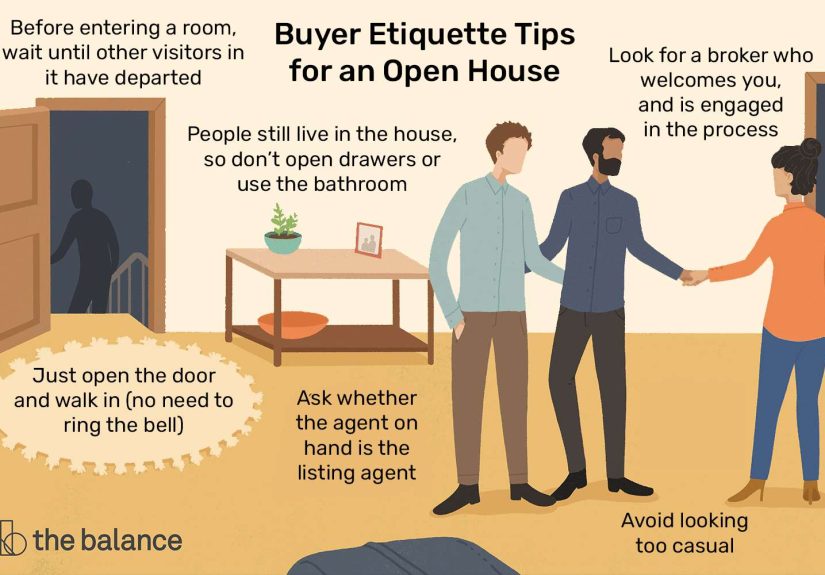
If the entryway says shoes off, shoes off. If booties are provided, wear them. If the seller asks visitors not to use a bathroom, do not test that boundary as a character-building exercise. House rules are not decorative suggestions. They exist to protect the property and keep the showing organized.
How to Tour the Home Respectfully
Treat the property like a home, not a museum gift shop
You should absolutely look closely at the property, but do it carefully. Open closets, pantries, cabinets, and built-ins if they are clearly part of the house and relevant to storage or function. Buyers need to assess those spaces. What you should not do is open dressers, medicine cabinets full of personal items, desks, laundry baskets, or anything obviously private.
Keep your hands, snacks, and giant coffee outside
Food and drinks do not belong at an open house. Neither do sticky fingers, dripping cups, or crumbs near a white sofa that probably cost more than your first car. Even if you are touring with kids, keep the visit clean and simple. The goal is to inspect the house, not host a mobile picnic.
Stay aware of other buyers
Open houses are shared spaces. Do not block narrow hallways, hover in a bedroom doorway, or monopolize a room while others are waiting. If someone is already inspecting a bathroom or closet, give them a moment. You will see the space better once you are not trying to perform a polite two-person shuffle in six square feet.
Keep children close
Children are not banned from open houses, but they do need supervision. Running upstairs, jumping on beds, or testing every door handle like a tiny home inspector is not acceptable. If you can attend without kids, that is often easier. If you bring them, keep the visit calm, brief, and focused.
What You Should Look For While You Are There
Good etiquette does not mean acting passive. You are there to evaluate the home. The trick is to inspect with purpose while staying respectful.
Focus on the bones of the house
Do not get hypnotized by trendy paint colors, scented candles, and a bowl of lemons doing emotional support on the kitchen island. Pay attention to the structure and condition of the home instead. Look for wall cracks, uneven floors, sticking doors, aging windows, roof condition, signs of water damage, and anything that feels patched rather than properly repaired.
Use your senses
Listen for traffic noise, barking dogs, and loud HVAC systems. Smell for mildew, pet odors, smoke, or heavy fragrance that may be hiding a problem. Notice how the light works in each room. Step outside and pay attention to the street, nearby properties, and overall neighborhood feel. A pretty living room cannot cancel out a location that does not fit your life.
Inspect storage and function
Check closet size, cabinet layout, pantry depth, bathroom storage, and laundry setup. Gently open windows and doors if appropriate. Look under sinks for leaks or rust. These details matter because daily frustration rarely comes from a photogenic backsplash. It comes from realizing your vacuum has nowhere to live and your bedroom closet has the storage capacity of a cereal box.
Questions to Ask at an Open House
The listing agent is there to answer questions, but timing matters. Wait until they are free rather than interrupting another conversation. Keep your questions focused and strategic.
Smart questions include:
- How long has the home been on the market?
- Has the price changed?
- Are disclosures available?
- What updates or renovations have been completed?
- Are there any known issues the seller has addressed?
- What is the seller’s preferred timeline?
- Have there been other offers?
If you are already represented, avoid revealing too much about your budget, urgency, or emotional attachment. Enthusiasm is fine. Broadcasting “I would sell a kidney for this breakfast nook” is less strategic. Let your agent handle deeper negotiations and sensitive questions later.
What Not to Do at an Open House
Do not insult the house out loud
Yes, the wallpaper may be a crime scene. Yes, the carpet may have seen things. But resist the urge to narrate every flaw at full volume. Sellers may not be present, but agents remember comments, and devices may capture more than you think. Take notes privately and save blunt analysis for your post-tour debrief.
Do not take photos or videos without permission
Some listings already provide professional photos, floor plans, or virtual tours. If you want to capture something specific, ask first. Sellers may have privacy concerns, and some areas of the home may contain personal information, family photos, or valuables.
Do not overstay
An open house is not your weekend co-working lounge. Once you have seen the property, asked your questions, and taken notes, make room for others. If you need more time, request a private showing through the proper channel.
Do not shop with five opinionated relatives
Bringing one helpful person can make sense. Bringing a full committee can turn the visit into a noisy group project with no clear leader. Too many voices can distract you, annoy other buyers, and make it harder to focus on whether the home actually works for you.
If You Already Have an Agent, Handle That Clearly
One of the most overlooked parts of open house etiquette for home buyers is representation. If you already have a buyer’s agent, say so when you arrive. You do not need to be awkward about it. A simple “I’m already working with an agent, but I wanted to stop by the open house” is enough.
This avoids confusion and keeps professional boundaries clear. It also helps prevent mixed messages later if you decide to make an offer. If you are unrepresented, an open house can be a good chance to observe how the listing agent communicates, but remember that the listing agent represents the seller’s interests, not yours.
What to Do After the Open House
Write down impressions immediately
After you leave, capture your thoughts while they are fresh. What stood out? What worried you? How did the home compare with others you have seen? Did the layout work? Was the street quieter or busier than expected? What repairs might be needed?
Separate staging from substance
It is easy to fall for styling tricks. That airy dining room may owe half its charm to furniture scaled for elves. Review your notes with a cool head and ask yourself whether the home truly matches your priorities, budget, and timeline.
Follow up the right way
If you are interested, contact your agent promptly. In competitive markets, hesitation can cost you. If you are not represented, you can ask the host for disclosures, next steps, or how to schedule a private showing. Just keep communication professional and concise.
The Golden Rule of Open Houses
If you remember only one thing, let it be this: act like you are visiting someone else’s home because you are. The best buyers combine curiosity with courtesy. They ask good questions, inspect smartly, respect boundaries, and leave the property exactly as they found it.
Open house etiquette is not about being stiff or overly formal. It is about showing that you are serious, considerate, and capable of navigating the home-buying process with common sense. In a market where first impressions matter, that can help you more than you think.
Real-World Experiences: What Buyers Learn From Open Houses
The most useful lessons about open house etiquette usually come from actual experience, because open houses have a funny way of revealing both the house and the people walking through it. Ask almost any buyer who has toured more than a few homes, and they will have a story. Usually, it begins with excitement and ends with a note that says something like, “Loved the kitchen, hated the smell, agent weirdly intense.”
One common experience is realizing how different a home feels in person compared with the listing photos. A buyer might arrive expecting a bright, open floor plan and discover that the “spacious living area” is really one room, one lamp, and one heroic wide-angle lens. Buyers who stay calm, take notes, and keep their commentary private get more out of the visit than the ones who loudly announce, “This place looked bigger online.” Everyone already knows.
Another frequent lesson involves noise. A house can seem perfect until buyers pause long enough to hear the traffic behind the backyard fence, the barking dog next door, or the upstairs footsteps from a nearby unit. Savvy buyers learn not to rush. They stand still in the kitchen. They open a window if appropriate. They step outside and listen. Etiquette helps here too, because a respectful buyer moves carefully and notices more.
Many buyers also learn the value of watching other people at the open house. If visitors are lingering, measuring walls with their eyes, and asking detailed questions, that can signal strong interest. If people walk in and back out in under three minutes, the home may have issues the listing did not mention. This does not mean following strangers around like a detective with a mortgage preapproval, but it does mean paying attention to the room.
There are also cautionary tales. Buyers have watched other visitors open clearly private drawers, let children jump on furniture, criticize the seller’s taste at full volume, or treat the event like a social mixer. Those moments tend to make one thing clear: manners stand out. A buyer who greets the host, follows the rules, and asks thoughtful questions looks more credible instantly. Real estate is emotional, and sellers often prefer offers from people who seem likely to make the transaction smoother.
Experienced buyers often say the best open houses are the ones where they leave with clarity, not just excitement. Sometimes the lesson is that a home they loved online is wrong in person. Sometimes it is the opposite. A house with boring photos may feel warm, functional, and surprisingly right once they walk through it. That is why etiquette and observation go hand in hand. When buyers are not distracted by chaos, they can actually evaluate the home.
In the end, open houses teach buyers to be part investigator, part strategist, and part decent human being. Show up prepared. Respect the space. Notice what matters. Ask smart questions. Then leave, compare your notes, and decide with a clear head. That is how experienced buyers get better every time they walk through the door.
Conclusion
Open house etiquette for home buyers is simple in theory and powerful in practice. Arrive prepared, respect the property, follow house rules, keep your observations thoughtful, and ask smart questions without oversharing. When you combine good manners with a sharp eye for condition, layout, and neighborhood fit, you get more value from every showing.
That approach does more than make you look polished. It helps you avoid emotional mistakes, gather better information, and move faster when the right home appears. In other words, good etiquette is not just classy. It is useful. And in real estate, useful wins.