Table of Contents >> Show >> Hide
- What Osteochondritis Dissecans Is (and What It Isn’t)
- Radiology’s Main Job: Answer the Questions That Change Treatment
- Step 1: Radiographs (X-rays) The Classic First Look
- Step 2: MRI The Modality That Explains the “So What?”
- CT When Bone Detail (and Surgical Planning) Takes the Lead
- “Honorable Mentions”: Other Imaging You May See
- OCD by Joint: Where Radiology Findings Get Specific
- What a Great Radiology Report Should Include
- Follow-Up Imaging and Post-Treatment Evaluation
- Radiology Meets Reality: How Clinicians Decide What to Order
- Real-World Experiences: What OCD Radiology Often Looks Like in Practice (Extra )
If your joint could talk, osteochondritis dissecans (OCD) would be the chapter where it says,
“So… part of my bone and cartilage is trying to break up with me.” Radiology is how clinicians
figure out where the problem is, how big it is, andmost importantlywhether the
osteochondral fragment is stable, healing, or plotting an escape as a loose body.
This article breaks down the key imaging tests (X-ray, MRI, CT, and a few honorable mentions),
the classic findings by joint, and what a strong radiology report should include. It’s educational
information, not personal medical adviceif you have symptoms, a clinician who can examine you and
review your images is the real MVP.
What Osteochondritis Dissecans Is (and What It Isn’t)
Osteochondritis dissecans is a condition affecting the osteochondral unit
the subchondral bone and the overlying articular cartilage. A region of subchondral bone becomes
injured and can weaken; over time, an osteochondral fragment may partially separate. If the fragment
becomes unstable, it can detach and become a loose body, causing catching, locking,
swelling, or pain with activity.
Juvenile vs. Adult OCD: Why Radiology Cares
Imaging interpretation is shaped by skeletal maturity. In younger patients (often called “juvenile”
OCD), open growth plates and active healing potential change both prognosis and how certain MRI
instability signs behave. In older adolescents and adults, lesions are more likely to behave like
true osteochondral separation problems, and treatment may shift sooner toward operative strategies
if instability is present.
Radiology’s Main Job: Answer the Questions That Change Treatment
Radiology isn’t just trying to “spot a defect.” A useful OCD imaging workup aims to answer:
- Where is the lesion (exact surface and location)?
- How large is it (length, width, depth, estimated surface area)?
- Is it stable or unstable (and what signs support that)?
- Is the cartilage intact, fissured, or breached?
- Are there loose bodies in the joint?
- Is there associated injury (meniscus, ligament, edema, cysts, marrow change)?
That’s why OCD imaging often starts with X-rays, then escalates to MRIand sometimes CTdepending on
what’s seen and what decision needs to be made.
Step 1: Radiographs (X-rays) The Classic First Look
X-rays are usually the first imaging test because they are fast, accessible, and good at showing
subchondral bone changes. On radiographs, OCD may appear as a subchondral lucency,
a well-defined defect, surrounding sclerosis, or an outline suggesting a fragment.
They’re also commonly used to monitor healing over time (especially for stable lesions managed
nonoperatively).
Helpful Knee Views (Because One Angle Is Never Enough)
For knee OCD, a standard set often includes multiple views. Clinicians commonly request views that
help visualize the femoral condylesespecially a “tunnel” (intercondylar notch) viewbecause some
lesions hide in places your standard AP view can’t fully expose. Many centers also image the other
knee since bilateral lesions can occur.
Radiograph Strengths and Limitations
- Strengths: detects many bony lesions; establishes baseline; low cost; good for follow-up.
-
Limitations: limited cartilage assessment; subtle instability is hard to prove; early lesions
can be radiographically occult; loose bodies may be missed depending on size/location.
Step 2: MRI The Modality That Explains the “So What?”
MRI is often the next step because it evaluates both bone and cartilage, and it’s the best widely used tool
for assessing features tied to lesion stability. Think of X-ray as the “headline,” and MRI as the full story
including the plot twists.
What MRI Adds
- Cartilage integrity: intact, fissured, or violated surface.
- Interface assessment: signals suggesting separation between fragment and parent bone.
- Bone marrow changes: edema-like signal that can correlate with activity and pain.
- Detection of loose bodies: especially when cartilage or small fragments are involved.
- Associated injuries: menisci, ligaments, synovitis, joint effusion.
Common MRI Findings in OCD
Radiologists often describe: the lesion location, size, the condition of the overlying cartilage,
and any fluid-like signal or clefts at the base of the fragment. Subchondral cysts may be present.
A key reporting goal is communicating whether findings suggest a stable lesion likely to heal
with conservative management versus an unstable lesion that may need surgical evaluation.
“Stability” on MRI: The Most Important (and Most Debated) Word
MRI signs used to suggest instability commonly include fluid-like signal between the fragment and
parent bone, cartilage breach, and certain patterns of cystic change. However, interpretation can vary,
especially in skeletally immature patients. In other words: MRI provides strong clues, but the final call
about stability may incorporate clinical findings and, in some cases, arthroscopic assessment.
Practical MRI Protocol Tips (For Clinicians and Curious Humans)
- High-resolution, small field of view targeted to the joint surface matters.
- Fluid-sensitive sequences help highlight interface signal and marrow change.
- Cartilage-sensitive sequences (varies by scanner/center) can clarify surface integrity.
- Multiple planes are essential because lesions rarely align politely with one plane.
CT When Bone Detail (and Surgical Planning) Takes the Lead
CT shines when the question is “What does the bone fragment actually look like?” It provides crisp visualization of
bony margins, fragmentation, and subtle separation that can be hard to fully characterize on MRI. CT can be especially
useful for preoperative planning, measuring the true osseous defect, and evaluating complex morphology.
When CT Is Particularly Helpful
- Defining fragment morphology and bony fragmentation.
- Clarifying loose bodies and mineralized fragments.
- Preoperative mapping of defect size and bony architecture.
- Elbow/capitellum OCD where plain films can miss lesions and loose bodies may be subtle.
Trade-off: CT involves ionizing radiation, so clinicians weigh benefit vs. exposureespecially in children and teens.
“Honorable Mentions”: Other Imaging You May See
MR Arthrography
In select cases, MR arthrography may improve evaluation of cartilage fissures and flap-like defects by distending the joint
and highlighting surface disruptions. It’s not routine for every OCD case, but it can be useful when a detailed cartilage
question is front-and-center.
Ultrasound
Ultrasound has limited routine use for classic OCD diagnosis, but it can contribute in research or in specialized settings
(and is sometimes used for guidance or superficial assessment in select joints). It does not replace MRI for cartilage and
interface evaluation.
Bone Scan / Nuclear Medicine
Bone scans are not first-line for OCD in most modern workflows, but may appear in certain diagnostic pathways to assess
activity or when the differential diagnosis is broad and MRI isn’t available or is inconclusive.
OCD by Joint: Where Radiology Findings Get Specific
Knee (Most Common): Femoral Condyle OCD
The knee is the most frequent site, often involving the femoral condyle. Radiology focuses on:
(1) precise location on the condyle surface,
(2) lesion dimensions,
(3) cartilage status,
(4) interface signal suggesting separation,
(5) loose bodies, and
(6) secondary changes such as effusion or marrow edema.
Example reporting language (plain-English style): “Osteochondral lesion at the medial femoral condyle with intact cartilage surface;
no fluid-like signal undermining the fragment; mild marrow edema; no loose body.” That’s the kind of sentence that helps an orthopedic
team choose observation vs. intervention.
Elbow (Capitellum): The Young Thrower Problem
Capitellar OCD often shows up in young athletes who repetitively load the elbow (throwing sports, gymnastics, certain racquet sports).
Early radiographs may be subtle; MRI helps characterize cartilage and stability; CT can be valuable to confirm lesion extent and
identify loose bodies.
The radiology pitfall here is assuming a “normal” X-ray ends the story. If symptoms and exam strongly suggest capitellar OCD, advanced imaging
may still be warranted.
Ankle (Talar Dome): When “Just a Sprain” Won’t Quit
Talar OCD can masquerade as lingering ankle pain after an injury. MRI helps differentiate osteochondral lesions from simple sprains and assesses
cartilage and subchondral bone involvement. CT may help define the bony crater and fragment characteristics, especially if surgery is being considered.
What a Great Radiology Report Should Include
A strong OCD radiology report is structured, specific, and clinically actionable. Consider it a “map + weather forecast” for the joint surface.
Key Elements to Document
- Location: bone and surface (e.g., medial femoral condyle, capitellum, talar dome) + exact zone if used by the institution.
- Size: at least two dimensions; include depth when relevant.
- Fragment characteristics: intact vs. fragmented; displaced vs. in situ.
- Cartilage: intact, fissured, flap, delaminated, or full-thickness defect.
- Interface: any fluid-like signal or cleft suggesting separation.
- Marrow/bed: edema-like change; sclerosis; cysts.
- Loose bodies: presence, size, and location.
- Associated findings: effusion, synovitis, meniscal/ligament injury (knee), degenerative change, alignment considerations.
Common Pitfalls (a.k.a. “How OCD Tricks Imaging”)
- Early lesions can be radiographically occultsymptoms may precede obvious X-ray findings.
- Normal developmental variants in children can mimic pathology; correlation with symptoms and MRI is important.
- Stability criteria can vary by agejuvenile lesions may not behave like adult lesions on MRI.
- Loose bodies can hide in recesses; dedicated sequences and careful review matter.
Follow-Up Imaging and Post-Treatment Evaluation
Imaging doesn’t stop at diagnosis. Radiographs are often used to monitor healing in stable lesions. MRI can be used to evaluate healing of the bed,
revascularization patterns, cartilage condition, and (postoperatively) the status of fixation or cartilage restoration proceduresdepending on the treatment approach.
CT may be used selectively when bony union, fragment contour, or hardware assessment is the key question.
Radiology Meets Reality: How Clinicians Decide What to Order
A common practical pathway looks like this:
- Start with X-rays for suspected OCD (baseline diagnosis and bony anatomy).
- Add MRI to characterize the lesion and evaluate stability/cartilage and other internal derangements.
- Use CT selectively when detailed bony assessment or surgical planning is needed, or when radiographs/MRI leave an important bony question unanswered.
This “X-ray → MRI → CT if needed” flow keeps radiation low, answers stability questions, and still gives surgeons crisp bony detail when it matters.
Real-World Experiences: What OCD Radiology Often Looks Like in Practice (Extra )
The human side of OCD imaging usually starts with a deceptively simple complaint: “My knee/elbow/ankle hurts when I run/throw/jump… and it’s been
weeks.” People often expect a quick diagnosismaybe a sprain, maybe “growing pains.” Then radiology enters the chat like a plot twist in episode two.
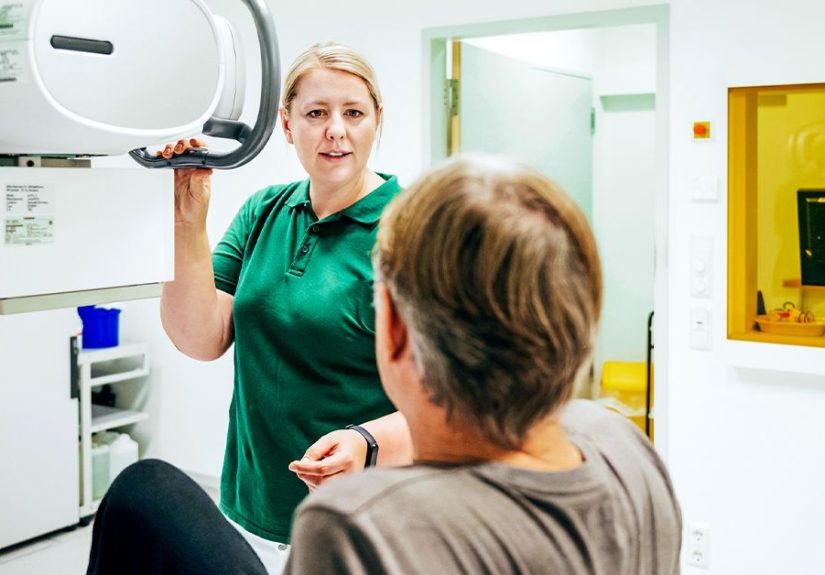
A common experience is the first X-ray visit. It’s fast: a tech positions the joint, you hold still, click-click, done. Sometimes the X-ray
shows a clearly defined osteochondral defect right away, and everyone feels oddly relievedbecause having a name for the problem is better than
vague mystery pain. Other times the X-ray looks “fine,” and that can be frustrating: the symptoms are real, but the image isn’t spilling the tea yet.
That’s when MRI often becomes the next chapter. The experience varies by person: some are totally unfazed, others learn in real time that
an MRI machine is basically a futuristic drum solo. The good news is that MRI gives answers X-rays can’t: cartilage integrity, fluid at the interface,
marrow changes, and whether the lesion looks stable. Clinicians love this because the MRI is less about “Is there something?” and more about “What
exactly is happening, and what’s the smartest next move?”
Patients and families often remember the conversation that follows MRI: words like “stable,” “unstable,” “fragment,” and “loose body” suddenly sound
very real. A stable lesion can feel like a lucky breakbecause it may heal with activity modification, physical therapy, and time. But it also demands patience,
and that’s its own emotional workout. People can feel caught between wanting to “push through” and fearing they’ll make it worse. Radiology helps by showing
objective signs of healing or progression, so the plan doesn’t rely on vibes alone.
CT tends to show up in the story when the team needs “bone truth.” From the patient perspective, CT is usually quick and less claustrophobic
than MRI. From the clinician perspective, CT can clarify fragment shape, subtle separation, fragmentation, and mineralized loose bodiesdetails that matter
for surgical planning. The experience here often feels practical: “We’re getting the blueprint.”
One of the most relatable experiences is the follow-up phase. Someone hears “healing takes months,” and their soul briefly leaves the chat.
Repeat radiographs (and sometimes MRI) become milestones. Small improvementsreduced lucency, smoother contours, less concerning interface signalcan be
reassuring. On the flip side, persistent pain with imaging signs of instability can prompt a shift toward orthopedic procedures. Even then, radiology remains the
referee: it documents baseline defect size, tracks post-op changes, and helps clinicians explain why a particular treatment makes sense.
In real clinics, the best outcomes often come from the same formula: good imaging + a clear report + shared decision-making. And if you’re the person inside
the scanner? Know that your images aren’t just picturesthey’re the roadmap for getting you back to walking, running, throwing, or dancing without your joint
staging a protest.