Table of Contents >> Show >> Hide
- Why Predicting a Financial Crisis Is Really About Pattern Recognition
- The Classic Warning Signs of a Financial Crisis
- 1. Credit Grows Faster Than the Real Economy
- 2. Asset Prices Start Floating Away From Reality
- 3. Funding Looks Stable Until It Suddenly Does Not
- 4. The Yield Curve, Financial Conditions, and Stress Indexes Start Sending Side-Eye
- 5. Consumers Start Cracking at the Margins
- 6. Commercial Real Estate and Refinance Risk Stop Being Background Noise
- 7. Leverage and Margin Make the Market More Fragile Than It Looks
- Why Experts Still Miss Crises
- How to Build a Practical Financial Crisis Dashboard
- Experiences From the Warning Zone: What Crisis Risk Feels Like Before the Headlines Catch Up
- Final Thoughts
Trying to predict a financial crisis can feel a little like trying to predict when a toddler will throw a tantrum in a grocery store. You know the warning signs. You know the odds go up when everyone is tired, overconfident, and surrounded by shiny things they cannot afford. But the exact minute of the meltdown? That part remains annoyingly mysterious.
That is the central challenge of predicting a financial crisis. Experts rarely “call” a crisis the way meteorologists call a thunderstorm. Instead, they watch for a dangerous mix of rising leverage, overheated asset prices, fragile funding, weakening credit quality, and stress spreading through the financial system. A crisis usually does not arrive because of one dramatic villain. It shows up because small weaknesses pile into a system that looked perfectly fine right up until it absolutely did not.
So if you want to understand predicting a financial crisis, the smartest approach is not to search for one magical indicator. It is to build a dashboard. You look for clusters of warning signs. You study the pattern. You ask whether the boom is being financed by sustainable income or by borrowed optimism wearing a nice suit.
This article breaks down how economists, regulators, investors, and ordinary financially curious humans try to spot crisis risk before it turns into front-page chaos. We will look at credit booms, asset bubbles, banking stress, consumer debt problems, market signals, and the awkward truth that the best warnings are often early enough to be dismissed as boring.
Why Predicting a Financial Crisis Is Really About Pattern Recognition
A true financial crisis is more than a bad market week. Markets can drop, recover, and move on. A crisis is different. It usually involves a breakdown in confidence, funding, and credit. Banks stop trusting one another. Investors rush for cash. Borrowers who looked healthy suddenly look overextended. Businesses pull back. Consumers spend less. The economy starts acting like it just read its own group chat and did not like what it saw.
That is why analysts study financial crisis warning signs in layers. One signal on its own can be noisy. Asset prices can rise for good reasons. Credit can expand because the economy is genuinely strong. Delinquencies can tick up without triggering disaster. But when several indicators flash at once, the story changes. Rapid credit growth plus soaring asset prices plus weak underwriting plus funding fragility is the sort of combination that makes serious people reach for serious coffee.
In plain English, crises tend to grow during good times. That sounds unfair, but finance has always had a talent for irony. Easy money, rising prices, and confidence encourage more borrowing. More borrowing pushes prices up even further. Higher prices make balance sheets look stronger. Stronger balance sheets justify even more lending. That loop feels brilliant until it runs out of fuel. Then it turns from a feedback loop into a trapdoor.
The Classic Warning Signs of a Financial Crisis
1. Credit Grows Faster Than the Real Economy
If you remember only one thing from this article, remember this: fast credit growth deserves respect. Not panic, not drama, just respect. When debt expands much faster than income, production, or cash flow, the financial system becomes more fragile. People are no longer simply financing growth; they are often pulling future demand into the present.
This is one of the oldest and most reliable crisis clues. Before many banking crises, credit has a habit of booming. Households borrow more to buy homes at higher prices. Businesses take on debt because financing is cheap and optimism is free. Lenders loosen standards because nobody wants to be the only person at the party wearing a helmet.
That does not mean every credit boom ends in disaster. Some booms reflect healthy investment, productivity growth, or genuine household formation. But when debt quality weakens while lending speeds up, the risk rises sharply. Analysts pay close attention to where the credit is going. Household borrowing against inflated home values is one story. Aggressive commercial lending backed by shaky assumptions is another. Speculative borrowing to chase financial assets is yet another. Different sectors, same basic problem: borrowed confidence can vanish faster than earned income.
2. Asset Prices Start Floating Away From Reality
Credit alone is not enough. A lot of crises become dangerous when credit growth teams up with a major asset boom. Think homes, stocks, commercial real estate, or any market where people stop asking, “What is this worth?” and start asking, “How much higher can it go before lunch?”
When valuations detach from income, rent, earnings, or cash flow, the system becomes vulnerable to even a modest shock. If prices depend on constant refinancing, constant inflows, or constant faith, then falling prices can trigger forced selling, margin calls, tighter lending, and a chain reaction that hits the broader economy.
The housing bubble before 2008 is the classic example. Prices rose, lending standards weakened, and borrowers, lenders, and investors all assumed the trend would continue long enough to rescue every risky decision. It did not. The lesson still matters today: when price appreciation becomes the business model, risk is already in the room.
3. Funding Looks Stable Until It Suddenly Does Not
Crises are often less about assets than about funding. A bank, lender, fund, or financial firm can survive a lot if it has stable funding and enough liquidity. It can fail quickly if its funding base is concentrated, nervous, or easy to pull in seconds.
That is one reason bank runs remain relevant in the digital age. In older crises, depositors stood in line. In modern stress events, depositors can move huge sums with a few taps and a dramatic group text. When institutions depend heavily on large uninsured deposits or other flight-prone funding, confidence becomes a lot more fragile.
This is not just a banking issue. The same principle applies across the financial system. If long-term assets are financed with short-term money, trouble can arrive when the short-term money demands the exit. Duration mismatch, liquidity mismatch, and concentrated funding are not glamorous terms, but they are often where the real danger lives.
4. The Yield Curve, Financial Conditions, and Stress Indexes Start Sending Side-Eye
No, the yield curve is not a magic crystal ball. But it is one of the most famous recession indicators for a reason. When shorter-term Treasury rates rise above longer-term rates, that inversion can signal that markets expect weaker growth and easier policy later on. It is a warning, not a guarantee, but historically it has earned its reputation.
Even better, smart analysts do not stop at the yield curve. They also watch broader banking stress indicators and financial conditions indexes. These tools track what is happening in money markets, debt markets, equity markets, and the banking system. If financing becomes more expensive, spreads widen, liquidity thins, and stress measures rise, the system may be telling you that risk is no longer theoretical.
This matters because financial crises are rarely caused by headlines alone. They become crises when stress travels through funding channels, lending standards, and balance sheets. A scary headline can fade. Tightening credit conditions can stay, spread, and bite.
5. Consumers Start Cracking at the Margins
Household stress is another important piece of the puzzle. If credit card delinquencies, subprime auto delinquencies, missed mortgage payments, or other forms of consumer strain begin rising, that does not always mean a full-blown crisis is coming. But it can signal that the economy’s shock absorbers are wearing thin.
Consumer weakness matters because households are not just borrowers. They are shoppers, workers, renters, homeowners, and taxpayers. When more families fall behind, retail demand weakens. Loan losses rise. Lenders tighten standards. That makes credit harder to get, which slows spending further. It is the financial version of stepping on a rake and then discovering the rake has friends.
Analysts also ask an important follow-up question: who is under stress? If delinquency increases are concentrated among the most vulnerable borrowers, the damage may stay contained. If pressure spreads into broader income groups, larger loan balances, or major categories like housing and commercial credit, the risk becomes more systemic.
6. Commercial Real Estate and Refinance Risk Stop Being Background Noise
Financial crises often hide in refinancing risk. Loans made in a low-rate environment can look perfectly manageable until they need to be rolled over at much higher rates. Suddenly, the numbers no longer work. That can hit office properties, multifamily assets, retail centers, and overleveraged businesses that built their capital structures on yesterday’s cheap money.
This is why analysts track vacancy rates, debt-service coverage, loan maturities, cap rates, and bank exposure to stressed property segments. A property does not need to collapse to create trouble. It just needs to become difficult enough to refinance that lenders start absorbing losses and borrowers start mailing the keys back with the emotional enthusiasm of a tired intern.
7. Leverage and Margin Make the Market More Fragile Than It Looks
Leverage can make strong times look stronger than they really are. It boosts gains on the way up, encourages bigger positions, and gives investors the illusion of genius. Then prices fall, margin calls arrive, and forced selling speeds up the decline. Suddenly everyone is rediscovering humility at market speed.
That is why leverage matters not only in banks, but also in funds, broker accounts, private credit structures, and shadow-banking channels. A market can appear liquid and resilient until too many participants need to sell at once. When leverage is widespread, volatility is not just a mood. It becomes a mechanism.
Why Experts Still Miss Crises
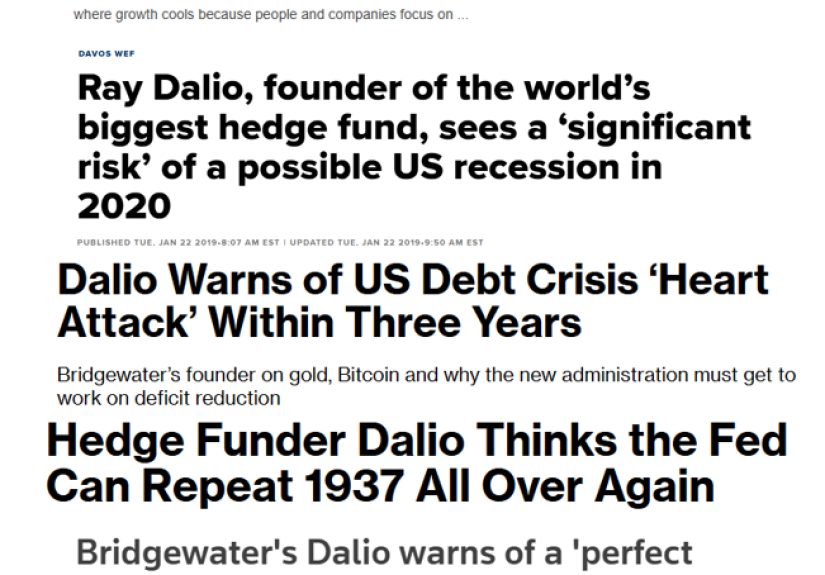
If the warning signs are so familiar, why do crises still surprise people? First, because timing is hard. A system can remain vulnerable for years before something snaps. Analysts who warn too early look foolish right up until they look prophetic. Markets, sadly, do not grade on eventual correctness.
Second, good booms and bad booms can look similar at first. A healthy expansion also features rising credit, rising investment, and rising confidence. The difference usually lies in quality: underwriting standards, concentration risk, cash flow support, funding stability, and whether asset prices are being driven by income or by pure expectation.
Third, incentives get in the way. During a boom, everyone benefits from optimism. Borrowers like easy money. lenders like growth. investors like gains. politicians like happy headlines. No one becomes popular by standing up at the party and announcing that the floorboards seem spiritually overleveraged.
Finally, every crisis has its own costume. One centers on housing. Another on banks. Another on sovereign debt, shadow banks, private credit, or overhyped technology assets. The structure changes, but the underlying pattern often rhymes: leverage rises, asset prices climb, risk looks manageable, and then liquidity disappears exactly when it is needed most.
How to Build a Practical Financial Crisis Dashboard
If you want a useful framework for predicting a financial crisis, think in checklists rather than prophecies. A practical dashboard might include the following questions:
- Is credit growing much faster than GDP, income, or cash flow?
- Are home prices, stock valuations, or commercial real estate values detached from fundamentals?
- Are lenders loosening standards or extending riskier credit to keep the boom going?
- Is funding dependent on uninsured deposits, short-term borrowing, or confidence-sensitive flows?
- Are stress measures, spreads, or financial conditions worsening?
- Are consumer delinquencies or corporate defaults rising?
- Are refinancing needs piling up into a higher-rate environment?
- Is leverage magnifying the potential for forced selling?
One or two “yes” answers do not mean a crisis is imminent. But as the pile grows, so does vulnerability. That is the real art of crisis prediction. You are not trying to forecast the exact spark. You are trying to judge how much dry tinder has accumulated, how windy the environment has become, and whether everyone has convinced themselves that matches are a form of diversification.
Experiences From the Warning Zone: What Crisis Risk Feels Like Before the Headlines Catch Up
Here is the part that charts cannot fully capture: financial crises usually feel weird before they feel obvious. In the early stage, nothing looks cinematic. There is no dramatic soundtrack. There is just a growing sense that small things are becoming harder all at once.
For households, the experience often starts with the monthly budget becoming less forgiving. Credit card balances stop being convenient and start becoming sticky. A car payment, rent increase, or insurance bill suddenly matters more than it did a year ago. People do not say, “I am now participating in a broad macro-financial tightening cycle.” They say, “Why does everything cost more, and why is my cushion disappearing?” That is how stress shows up in real life: not as a theory, but as a shorter pause before someone says no to dinner out.
For small business owners, the warning phase often arrives through financing. A line of credit that used to renew easily comes back with stricter terms. Customers pay more slowly. Inventory becomes more expensive to carry. Hiring decisions get delayed because uncertainty starts eating confidence one invoice at a time. Nobody hangs a sign in the office that says, “Liquidity conditions are deteriorating,” but the vibe in the room changes. Expansion plans become survival math.
For bankers and lenders, the experience is usually subtler at first. The loan book may still look fine. Current delinquencies may still look manageable. But conversations change. Underwriters ask more questions. Funding teams become more alert. Risk managers who were politely ignored six months earlier suddenly get invited to more meetings. People start using phrases like “selective pressure,” “idiosyncratic weakness,” and “elevated but manageable,” which is finance-speak for “we are trying not to spook anyone while the dashboard gets less cute.”
For investors, the warning zone can be psychologically confusing because markets often stay strong longer than expected. That is what makes financial bubbles so effective. They reward disbelief in risk right before they punish it. A cautious investor can feel stupid during the final stretch of a boom. The leveraged trader looks brilliant. The speculative asset keeps rising. The friend who says, “It’s different this time,” appears to have a point. Then the trend breaks, correlations change, leverage bites, and the same people who laughed at caution start asking about cash.
There is also a social experience to crisis prediction. Early warnings are unpopular because they interrupt profitable stories. It is fun to believe that technology has removed the business cycle, that risk models have tamed volatility, or that central banks can permanently cushion every landing. It is much less fun to hear that funding structures are fragile, that credit quality is slipping, or that valuations are being held together by heroic assumptions and motivational speaking.
And yet, this is exactly why experience matters. People who have lived through previous disruptions tend to focus less on the story and more on the plumbing. They ask boring but crucial questions. Who is funding whom? For how long? Against what collateral? At what spread? What happens if refinancing gets expensive? What happens if depositors move? What happens if margin calls force selling into a falling market? Those questions rarely trend on social media, but they are often the ones that separate a routine slowdown from a full-scale financial accident.
The most memorable lesson from these experiences is that crises often feel gradual, then sudden. First, stress appears in pockets. Then it spreads through connections people underestimated. A property problem becomes a bank problem. A bank problem becomes a confidence problem. A confidence problem becomes a credit problem. And a credit problem, if large enough, becomes an economic problem.
So when people talk about predicting a financial crisis, what they really mean is learning to respect fragility before the crowd does. It means noticing when optimism is debt-funded, when liquidity is more fragile than advertised, and when the system’s strength depends too heavily on everyone continuing to believe in the same story at the same time. That is not paranoia. It is pattern recognition with a memory.
Final Thoughts
Predicting a financial crisis will never be a precise science, but it is not guesswork either. The best forecasts come from watching the system as a whole: credit growth, asset prices, leverage, funding risk, consumer strain, and stress in the plumbing of finance. A crisis rarely appears out of nowhere. More often, it spends years sending postcards that say, “Wish you were paying closer attention.”
The goal is not to become permanently bearish or to panic every time one indicator twitches. The goal is to understand how fragility builds. When credit booms, valuations soar, funding gets shakier, and stress rises across multiple channels, the odds of trouble increase. You may not know the date. You may not know the trigger. But you can know when the system is becoming less resilient. And in finance, that knowledge is often the difference between being surprised and being prepared.