Table of Contents >> Show >> Hide
- Why Serial Killers Who Target Women Terrify Us
- 20 Most Infamous Serial Killers Who Killed Women
- 1. Ted Bundy – The “All-American” Predator
- 2. Samuel Little – The “Most Prolific” U.S. Serial Killer
- 3. Gary Ridgway – The Green River Killer
- 4. Robert Pickton – The Pig Farmer Killer
- 5. Pedro López – “The Monster of the Andes”
- 6. Jack the Ripper – The Original Urban Boogeyman
- 7. Peter Sutcliffe – The Yorkshire Ripper
- 8. Dennis Rader – BTK (“Bind, Torture, Kill”)
- 9. Rodney Alcala – The “Dating Game Killer”
- 10. Joseph James DeAngelo – The Golden State Killer
- 11. Richard Ramirez – The Night Stalker
- 12. Andrei Chikatilo – The “Butcher of Rostov”
- 13. Edmund Kemper – The Co-ed Killer
- 14. Harold Shipman – The Doctor Who Killed His Patients
- 15. Robert Hansen – The “Butcher Baker” of Alaska
- 16. Israel Keyes – The Travel-Heavy Killer
- 17. David Berkowitz – The Son of Sam
- 18. John Reginald Christie – The Monster of Rillington Place
- 19. Niels Högel – The Killer Nurse
- 20. Kenneth Erskine – The Stockwell Strangler
- Patterns Behind These Crimes: Misogyny, Power, and “Invisible” Women
- What These Cases Teach Us About Women’s Safety Today (Experience & Reflection)
- Conclusion
True crime podcasts, documentaries, and late-night rabbit holes on YouTube
have turned serial killers into a sort of grim pop culture topic. But behind
every name and nickname“Night Stalker,” “Green River Killer,” “Co-ed
Killer”are real women whose lives were stolen, often after being ignored,
disbelieved, or written off as “risky” or “runaway.” This article looks at
20 of the most infamous serial killers who killed women, how they operated,
and what their crimes reveal about violence against women worldwide.
We’ll keep the focus on facts, patterns, and lessonsnot morbid details.
Think of this less as “murder fan club” and more as a sobering tour through
some of the worst cases in modern criminal history, and what they still
mean for women’s safety today.
Why Serial Killers Who Target Women Terrify Us
Statistically, serial killers make up a tiny fraction of violent offenders.
But the idea of a stranger stalking, abducting, and killing women taps into
a deeper cultural fear. Many of these men targeted women they saw as
“disposable”sex workers, runaways, elderly patients, or women walking home
alonepeople society has historically failed to protect.
These cases also shine a harsh light on sexism and bias in law enforcement
and media. Time and again, investigations dragged on because missing women
were assumed to be “off partying,” “on drugs,” or “living a risky
lifestyle.” When women aren’t believed, serial killers get time and space to
keep killing.
20 Most Infamous Serial Killers Who Killed Women
1. Ted Bundy – The “All-American” Predator
Ted Bundy is often wrongly framed as “charming” or “handsome,” as if those
things matter more than the dozens of young women he murdered in the 1970s.
He typically targeted college-age women, often luring them by pretending to
be injured, then abducting and killing them. His case became infamous not
just for the brutality of his crimes, but for how he exploited stereotypes
about “nice” educated men to gain women’s trust.
Bundy’s crimes also exposed weaknesses in law enforcement at the time:
interstate communication was poor, missing women’s cases were often treated
as isolated events, and the idea of a mobile serial predator wasn’t yet
fully understood.
2. Samuel Little – The “Most Prolific” U.S. Serial Killer
Samuel Little, who died in 2020, confessed to killing more than 90 people,
mostly Black women and women of color. Many of his victims were sex workers,
homeless, or struggling with addiction. For years, their deaths were written
off as overdoses or isolated homicides. Only late in his life, through
detailed confessions and victim sketches, did investigators begin linking
dozens of cold cases to him.
Little’s case is a devastating example of how racism, sexism, and
socio-economic bias can allow a serial killer to operate almost invisibly.
3. Gary Ridgway – The Green River Killer
Gary Ridgway murdered at least 49 women and teens in Washington state,
mostly sex workers and runaways. He often picked up women along major
highways, killed them, and left their bodies in remote or wooded areas. For
years, the “Green River Killer” case haunted the Pacific Northwest. Advances
in DNA technology finally linked Ridgway to multiple victims, leading to a
plea deal that spared him the death penalty in exchange for detailed
confessions.
Ridgway openly admitted he targeted women he believed no one would miss,
revealing a chilling level of misogyny and dehumanization.
4. Robert Pickton – The Pig Farmer Killer
In Canada, pig farmer Robert Pickton was convicted of murdering several
women from Vancouver’s Downtown Eastside and is suspected of killing many
more. Most of his victims were marginalized womenoften Indigenous women and
sex workers. Their disappearances were brushed aside for years, despite
families insisting something was terribly wrong.
The Pickton case forced Canada to reckon with systemic neglect of missing
Indigenous women and ongoing failures to respond quickly when vulnerable
women vanish.
5. Pedro López – “The Monster of the Andes”
Pedro López, nicknamed “The Monster of the Andes,” claimed to have killed
hundreds of young girls across Colombia, Ecuador, and Peru. While the exact
number is still debated, dozens of murders were confirmed. López preyed on
children in poor and Indigenous communities, counting on the fact that
authorities would be slowor unwillingto investigate their disappearances.
His story is often cited as one of the most horrifying examples of how
poverty and political instability can help predators hide in plain sight.
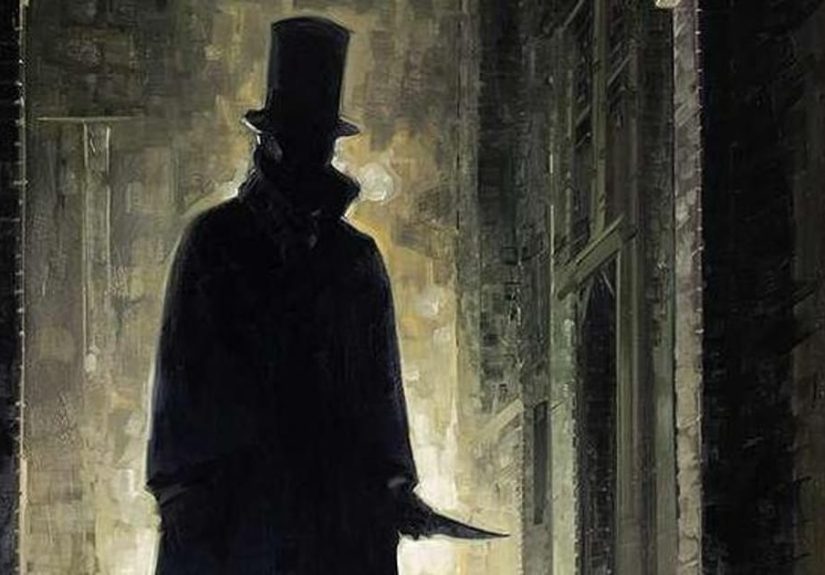
6. Jack the Ripper – The Original Urban Boogeyman
The identity of “Jack the Ripper” remains unknown, but the murders of at
least five women in London’s Whitechapel district in 1888 became the
blueprint for the “mysterious killer” myth. The victims were all poor women,
several engaged in sex work, living in harsh conditions in the East End.
More than a century later, the Ripper story still gets endless reboots,
often focusing more on the killer’s “mystique” than the women he murdered.
Modern historians push back, re-centering the victims as real people with
complicated lives, not just names on a grim list.
7. Peter Sutcliffe – The Yorkshire Ripper
Peter Sutcliffe killed at least 13 women and attempted to kill several
others in northern England in the 1970s. Many of his victims were sex
workers, and police initially framed the case publicly as “attacks on
prostitutes,” a label that led investigators to downplay or misclassify
attacks on women who didn’t fit that category.
This victim-blaming narrative contributed to a chaotic investigation and
left many women feeling abandoned by authorities, even as they lived in fear
of going out at night.
8. Dennis Rader – BTK (“Bind, Torture, Kill”)
Dennis Rader presented himself as a churchgoing family man and compliance
officer in Kansas. Secretly, he murdered at least 10 people, including
several women, between the 1970s and 1990s. He stalked victims, broke into
their homes, and enjoyed taunting police with letters and packages.
Rader’s double life is a grim reminder that dangerous people don’t always
“look like” villains. Social status, church involvement, or family roles
aren’t guarantees of safety.
9. Rodney Alcala – The “Dating Game Killer”
Rodney Alcala gained notoriety after appearing on the TV show
The Dating Game in the 1970s, seemingly charming the audience. Off
camera, he was a predator who raped and murdered multiple women and girls.
Investigators later uncovered a stash of photographs of unknown women and
children, raising fears there were more victims than those confirmed.
Alcala’s case is often cited as one of the most chilling examples of how a
serial killer can float in and out of everyday entertainment culture without
being recognized for what he is.
10. Joseph James DeAngelo – The Golden State Killer
Joseph DeAngelo, a former police officer, was unmasked decades after he
terrorized California as the Golden State Killer (also known as the East
Area Rapist and Original Night Stalker). He committed numerous home
invasions, rapes, and murders, many involving women or couples attacked in
their own homes.
DeAngelo was finally identified through genetic genealogyusing DNA from old
crime scenes matched to a distant relative in a public databasesetting a
new standard for solving cold cases.
11. Richard Ramirez – The Night Stalker
Richard Ramirez stalked neighborhoods in California in the mid-1980s,
breaking into homes at night to assault, terrorize, and kill. Many of his
victims were women he attacked while they slept or as they woke to find him
in their homes. His seemingly random choice of victims and use of satanic
imagery amplified the public’s fear.
Ramirez’s arrest came only after his photo was made public and citizens
recognized and physically stopped him, showing how community action can
sometimes succeed where fear had kept people silent.
12. Andrei Chikatilo – The “Butcher of Rostov”
In the former Soviet Union, Andrei Chikatilo murdered dozens of women and
children over more than a decade. He often targeted people at train stations
or bus stops, luring them with promises of food, work, or shelter during a
time when economic hardship made such offers tempting.
Soviet secrecy and fear of admitting a serial killer existed delayed
coordinated action against him. His case is a powerful example of how
political systems can obstruct truthand cost lives.
13. Edmund Kemper – The Co-ed Killer
Edmund Kemper murdered several young women in California in the early
1970s, often picking them up while they were hitchhiking. His victims
included college students and, ultimately, his own mother. Kemper’s
cooperative, even talkative, behavior after his arrest made him a favorite
subject for criminal profilers.
The “co-ed killer” story often gets retold with a focus on his IQ and eerie
calm; less attention is paid to how normalized hitchhiking and trust in
strangers made young women uniquely vulnerable at that time.
14. Harold Shipman – The Doctor Who Killed His Patients
British general practitioner Harold Shipman is believed to have murdered
over 200 of his patients, the majority of them elderly women. He used his
medical authority to administer lethal doses of drugs and sign off on death
certificates, making the deaths look natural.
Shipman’s case shattered trust in the idea that a doctor is always a
protector and prompted major reforms in how deaths are recorded and how
healthcare systems track unusual mortality patterns.
15. Robert Hansen – The “Butcher Baker” of Alaska
Robert Hansen ran a bakery in Anchorage and appeared to be a regular
small-business owner, but he spent years abducting womenoften sex workers
or dancersflying or driving them to remote wilderness areas, and killing
them. For a long time, no one connected the missing women or believed the
few who tried to report him.
Hansen was finally exposed after a teenage victim escaped and worked with
police to identify him. Her courage helped bring an end to one of Alaska’s
most terrifying crime sprees.
16. Israel Keyes – The Travel-Heavy Killer
Israel Keyes is sometimes called a “serial killer built for the modern
age.” He traveled widely across the United States, hid “murder kits” in
different states, and chose victimsincluding womenat random, often far
from his home. This made his crimes incredibly hard to link together.
Keyes’s case underscores how mobility, anonymity, and planning can let a
violent offender slip through the cracks of state-by-state policing.
17. David Berkowitz – The Son of Sam
In New York City in the late 1970s, David Berkowitz targeted young women and
couples in parked cars, shooting them with a .44-caliber revolver. The
media dubbed him the “Son of Sam,” and his taunting letters turned him into
a dark celebrity.
Women across the city cut or dyed their hair because the press repeated the
idea that he preferred brunettes. His crimes show how fear, rumor, and media
hype can shape behavior far beyond the crime scenes themselves.
18. John Reginald Christie – The Monster of Rillington Place
John Christie murdered multiple women, including his wife, in his London
flat during the 1940s and early 1950s. He often posed as a helpful,
medically knowledgeable man who could treat women’s health complaints,
using that trust to overpower them.
Christie’s actions also led to a notorious miscarriage of justice: another
man was wrongly executed for murders that were later linked to Christie,
fueling debates about capital punishment and police errors.
19. Niels Högel – The Killer Nurse
German nurse Niels Högel was convicted of murdering dozens of patients, with
investigators suspecting the true number could be much higher. Many of his
victims were elderly or critically ill, including women who trusted hospitals
to keep them safe.
Högel’s case has forced hospitals across Europe to reconsider how they track
medication use, sudden deaths, and staff behaviorespecially in high-stress
environments like intensive care units.
20. Kenneth Erskine – The Stockwell Strangler
Kenneth Erskine targeted elderly people in London in the 1980s, breaking
into homes and strangling his victims, many of whom were older women living
alone. His crimes sparked panic among seniors and exposed gaps in support
systems for isolated older adults.
The Stockwell Strangler case highlighted how age, disability, and social
isolation can make victims especially vulnerablenot just to neglect, but to
predatory violence.
Patterns Behind These Crimes: Misogyny, Power, and “Invisible” Women
Looking across these 20 cases, some disturbing patterns emerge:
-
Victims were often marginalized women. Sex workers,
women in poverty, elderly women, and women of color were disproportionately
targeted. Their disappearances were too often dismissed as lifestyle
choices or “high risk.” -
Killers exploited trust or authority. Doctors, nurses,
police officers, and family men used their roles to lower women’s guard. -
Society’s biases slowed investigations. When women
aren’t believedbecause of race, class, or professionserial killers get
more time to operate. -
Technology eventually caught up. DNA databases, genetic
genealogy, and better crime-scene recordkeeping helped solve several of
these cases years or decades later.
What These Cases Teach Us About Women’s Safety Today (Experience & Reflection)
It’s tempting to think of serial killers as relics of the pastgrainy mug
shots, yellowed headlines, bad 70s mustaches, and all that. But the themes
behind these stories are painfully current. Talk to women who commute late,
work night shifts, or live alone, and you’ll hear echoes of the same
anxieties: walking with keys between fingers, pretending to be on the phone,
sharing live locations with friends “just in case.”
One of the most striking “experiences” tied to this topic is how women are
taught from childhood to manage the risk of male violence. Don’t walk alone
at night. Don’t drink too much. Don’t get in a stranger’s car. Don’t go to
his apartment. Don’t “lead him on.” The list is endlessand exhausting.
Serial killer stories plug straight into that running background script,
turning ordinary errands or social outings into something tinged with danger.
Another experience lives in the true crime fandom itself. Many women are
drawn to true crime not because they “love killers,” but because the
stories feel like survival manuals. Hearing how others were targeted and how
investigations unfolded can sharpen intuition: noticing patterns, spotting
red flags, understanding that a “nice” or “normal” guy can still be
dangerous. There’s a weird paradox hereconsuming dark stories as a way to
feel a little safer, or at least more prepared.
At the same time, there’s a growing discomfort with how some serial killers
are turned into edgy aesthetic icons. Tumblr collages, thirst posts about
actors playing killers, merchandise with mugshotssome of that crosses from
analysis into glamorization. The more attention we give the killers, the
more we risk sidelining the people who mattered most: the victims and the
families still living with the aftermath.
Survivors’ experiences push the conversation in a healthier direction. Many
women who escaped attackers or survived serial predators have spoken about
the long shadow trauma castspanic in parking garages, hyper-vigilance in
crowded spaces, a deep distrust that takes years to unlearn. Their stories
remind us that the end of a trial isn’t the end of the impact. Healing is
slow, expensive, and often under-supported, especially for women from
marginalized communities.
There’s also a systemic experience we can’t ignore: communities realizing,
sometimes too late, that their institutions failed them. Families of missing
sex workers who were brushed off. Indigenous communities who warned for
years that women were disappearing. Patients whose deaths were signed off as
“complications” until the numbers looked impossible to ignore. Those
communities carry a justified sense of betrayaland a determination to do
better by the next generation.
If there’s a constructive takeaway from studying these 20 infamous cases,
it’s this: safety isn’t just about individual women making “better choices.”
It’s about building systems and cultures that take women seriously when they
say, “Something is wrong.” That means believing families when a loved one
goes missing, treating sex workers and marginalized women as fully worthy of
protection, investing in cold case work, and designing cities and services
with vulnerability in mind.
Serial killers may be rare, but everyday violence against women is not.
Understanding these extreme caseswithout romanticizing themcan sharpen our
awareness of more common dangers and strengthen the push for a world where
women don’t have to live on high alert just to get home safely.
Conclusion
The 20 serial killers in this list aren’t famous because they’re
interesting; they’re infamous because they revealed how badly society can
fail women. Their stories are really stories about the people who should
still be aliveand about the families and communities that had to fight to
be heard.
If we focus less on the “mystique” of the killer and more on the structural
lessonsprevention, early warning signs, systemic bias, better policingthen
true crime becomes more than morbid entertainment. It becomes a tool for
awareness, accountability, and, hopefully, fewer names ever being added to
lists like this in the future.