Table of Contents >> Show >> Hide
- Quick Comparison: The 8 Best Portable Generators for 2025
- How to Choose the Right Portable Generator for Home Backup
- 1) Honda EU2200i Best Quiet Portable Generator for Essentials
- 2) Yamaha EF2200iS Best “Alternative to Honda” in the 2,000W Class
- 3) Champion 4500 Dual Fuel Inverter (CO Shield) Best Mid-Size Inverter for Home Backup
- 4) Westinghouse WGen9500DF Best High-Watt Dual Fuel Generator for Home Backup
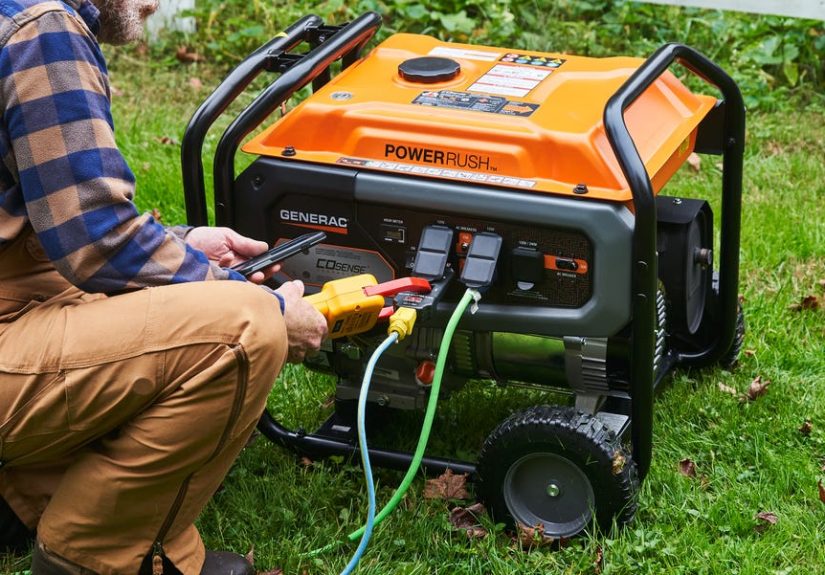
- 5) Generac GP6500 (COsense) Best Reliable Workhorse for Essentials + Heavy Loads
- 6) WEN DF1100T Dual Fuel Best Budget-Friendly High Output
- 7) DuroMax XP13000HXT Tri-Fuel (CO Alert) Best “Fuel Freedom” for Serious Home Backup
- 8) EcoFlow Delta Pro Ultra-Style Portable Power Backup Best No-Fumes “Generator” Alternative
- Portable Generator Setup Tips (So You Don’t Become a Cautionary Tale)
- Real-World Experiences: of What Outages Actually Teach You
- Bottom Line: The Best Portable Generator for Your Home in 2025
Power outages are like surprise houseguests: they show up uninvited, eat all your snacks (read: spoil your fridge),
and somehow always arrive at the worst possible time. A good portable generator doesn’t just keep the lights onit
keeps your routine intact: coffee still brews, phones still charge, the sump pump still pumps, and your family still
believes you’re basically a wizard.
This guide pulls from real-world testing insights from major U.S. review outlets, plus manufacturer specs and safety
standards, to land on eight portable generators that make sense for actual homes in 2025not fantasy “powers a mansion”
claims. We’ll cover what each generator is best at, where it falls short, and how to choose the right size without
accidentally buying a small power plant (or a glorified phone charger).
Quick Comparison: The 8 Best Portable Generators for 2025
Use this table to narrow your shortlist, then jump to the full reviews below.
| Generator | Type | Fuel | Power Class | Best For |
|---|---|---|---|---|
| Honda EU2200i | Inverter | Gas | 2,200W peak / 1,800W rated | Quiet essentials (fridge, router, lights) + electronics |
| Yamaha EF2200iS | Inverter | Gas | 2.2 kVA class | Quiet, efficient backup with strong run time |
| Champion 4500 Dual Fuel Inverter (CO Shield) | Inverter | Gas / Propane | 4,500W class | Flexible fuel + quieter home backup |
| Westinghouse WGen9500DF | Conventional | Gas / Propane | 12,500W peak / 9,500W running | Big home loads (transfer switch ready) |
| Generac GP6500 (COsense) | Conventional | Gas | 6,500W running class | Workhorse backup for essentials + some heavy loads |
| WEN DF1100T Dual Fuel | Conventional | Gas / Propane | 11,000W surge / 8,300W running (gas) | High output on a budget |
| DuroMax XP13000HXT Tri-Fuel (CO Alert) | Conventional | Gas / Propane / Natural Gas | 13,000W peak / 10,500W running (gas) | Whole-home-ish capability + fuel freedom |
| EcoFlow Delta Pro Ultra-style Backup (Portable Power) | Battery inverter | Battery / Solar (optional) | High-output modular | No-fumes backup (indoor-safe power) for essentials |
How to Choose the Right Portable Generator for Home Backup
1) Start with the loads you actually need
The simplest way to avoid regret is to list what you want to power during an outage. Most homes fall into one of these
“realistic backup” categories:
-
Essentials-only: refrigerator/freezer, Wi-Fi router, a few lights, phone chargers, maybe a fan.
(Often doable with a 2,000–2,500W inverter generator.) -
Essentials + comfort: add microwave, coffee maker, small space heater (careful), or a small window A/C.
(Typically 3,000–5,000W class.) -
Home systems: sump pump, furnace blower, well pump, larger A/C startup surges, multiple circuits through
a transfer switch. (Often 7,000–13,000W class, sometimes 240V.)
Here’s the key: motors surge. A fridge might run at a few hundred watts, but it can spike much higher for a moment at startup.
That’s why you’ll see both running watts (continuous) and starting/surge watts (short burst).
2) Decide: inverter vs conventional
-
Inverter generators are quieter, more fuel-efficient at low loads, and produce cleaner power for sensitive electronics.
They’re usually the best fit for neighborhoods, camping, and “keep the house livable” backup. - Conventional generators are often cheaper per watt and can be great for larger loadsbut tend to be louder and less refined.
3) Fuel matters more than you think
- Gasoline: easy to find, but storage is a chore and it goes stale.
- Propane: stores indefinitely, burns cleaner, but you’ll need tanks and runtime can be shorter at high loads.
- Natural gas: amazing convenience (no refueling), but you need a compatible generator and proper hookup.
- Battery “generators”: no fumes, no engine noise, indoor-friendlybut energy is limited unless you add more batteries/solar.
4) Don’t skip safety features and proper connection
Portable generators must be used outdoors with plenty of clearance from doors/windows and never in garages or enclosed spaces.
If you want to power home circuits, the safest approach is a professionally installed transfer switch or interlock.
Also: carbon monoxide shutoff sensors are becoming a must-have, not a “nice-to-have.”
1) Honda EU2200i Best Quiet Portable Generator for Essentials
The Honda EU2200i is the generator you buy when you want the outage solved without the generator becoming
the main character. It’s compact, famously reliable, and quiet enough that your neighbors won’t start a petition.
If your plan is “keep food cold, keep phones charged, keep the router alive,” this is the gold-standard style of solution.
Why it’s one of the best portable generators of 2025
- Super quiet inverter power: excellent for electronics, routers, laptops, TVs, and modern appliances.
- Highly portable: easy to move, store, and deploy quickly when the power drops.
- Strong efficiency at light loads: ideal for overnight “essentials duty.”
Who should buy it
Apartment/condo owners who need outdoor-only use on a balcony or patio (where allowed), homeowners who want a
quiet essentials setup, and anyone who values reliability over raw wattage bragging rights.
Watch-outs
- You won’t run central A/C or a whole-house transfer switch on this alone.
- Premium pricingbecause reliability isn’t free.
2) Yamaha EF2200iS Best “Alternative to Honda” in the 2,000W Class
Yamaha’s EF2200iS lands in the same “small inverter that punches above its size” category.
If you’re comparing top-tier 2,000W-class inverters, Yamaha is the brand that makes Honda actually feel competition.
It’s compact, engineered for efficiency, and designed to be pleasant to live with during an outagebecause you’re already
stressed enough.
What makes it stand out
- Long run time at light load: excellent for refrigerators, internet gear, lights, and charging.
- Quiet operation: suitable for neighborhoods and close-quarters use.
- Quality build: the kind of generator you keep for years, not seasons.
Best for
Essentials-only backup with a premium feelespecially if you find it at a better price than the Honda in your area.
3) Champion 4500 Dual Fuel Inverter (CO Shield) Best Mid-Size Inverter for Home Backup
For many households, the sweet spot is a mid-size inverter generator: powerful enough to run multiple essentials at once,
but still quiet-ish and efficient. Champion’s 4500W-class dual-fuel inverter models are popular for a reason:
you get inverter cleanliness, better noise manners than open-frame brutes, and the option to run propane when gasoline
is scarce or annoying.
Why it earns a spot
- Dual fuel flexibility: gasoline for maximum output, propane for storage-friendly simplicity.
- CO auto shutoff: an added layer of safety for real-world use.
- Great “fridge + freezer + lights + internet + microwave” capability when managed smartly.
Best for
Homeowners who want a transfer-switch-friendly lifestyle later, but right now just want reliable portable power with fewer headaches.
Watch-outs
- Propane typically reduces output; plan your loads accordingly.
- Still needs outdoor placement, ventilation, and safe cabling.
4) Westinghouse WGen9500DF Best High-Watt Dual Fuel Generator for Home Backup
If you want a generator that feels like a serious home-backup tool (without stepping into permanent standby territory),
the Westinghouse WGen9500DF is a strong candidate. It’s built for outages: lots of power, dual-fuel flexibility,
and the kind of outlet selection people actually use when they’re wiring in a transfer switch or powering multiple loads.
Why homeowners like it
- High running wattage: supports more simultaneous appliances and circuits.
- Dual fuel: run gasoline or propane depending on what you have.
- Longer runtime potential: useful for multi-day outages.
Best for
Larger homes, families who want to keep more of the house functional, and anyone planning a manual transfer switch setup.
Watch-outs
- It’s not “lift it with one hand” portable. Expect real weight and real storage space.
- Louder than inverter modelsplan placement and neighbor relations accordingly.
5) Generac GP6500 (COsense) Best Reliable Workhorse for Essentials + Heavy Loads
Generac’s GP series hits the classic “do the job, don’t be precious about it” vibe. The GP6500 is often a practical pick for
homeowners who want more muscle than a small inverter, but don’t need (or want to pay for) the biggest units.
It’s a solid fit for keeping essentials running and handling occasional higher-draw tools or appliancesespecially with smart load management.
Why it’s on this list
- Balanced power: a useful step up for homes with sump pumps, multiple fridges, or heavier circuits.
- CO sensing safety feature: designed to help reduce carbon monoxide risk in unsafe conditions.
- Maintenance-minded design: useful runtime and durability features for storm season.
Best for
Suburban homes that want a straightforward generator for storms and occasional emergenciesno fancy vibes required.
6) WEN DF1100T Dual Fuel Best Budget-Friendly High Output
WEN often wins fans by offering a lot of wattage for the money. The DF1100T is the type of generator that makes you think,
“Wait… that much power for that price?” It’s dual fuel, high output, and positioned for people who want serious backup capability
without paying premium-brand tax on every component.
Why it’s a smart value
- Big surge power: helpful for starting larger motors (with proper planning).
- Dual fuel flexibility: propane gives you easier long-term storage.
- Home-backup friendly: can support transfer-switch-style setups with the right planning and equipment.
Watch-outs
- This is not the quiet neighbor-friendly categoryexpect conventional generator noise.
- Like any high-output unit: you’ll want sturdy cords, safe placement, and realistic expectations.
7) DuroMax XP13000HXT Tri-Fuel (CO Alert) Best “Fuel Freedom” for Serious Home Backup
Tri-fuel is the ultimate “choose your own adventure” for outages: gasoline, propane, or natural gas. And DuroMax has become one of
the better-known names in that space. The XP13000HXT is aimed at homeowners who want to run larger 240V loads and keep more of
the house operationalespecially if natural gas is available and you want to avoid the fuel-can lifestyle.
Why it earns the title
- Tri-fuel support: lets you adapt to what’s available during an emergency.
- High output: built for bigger home backup scenarios.
- CO alert feature: an added safety layer when used correctly outdoors.
Best for
Homes with more demanding needs: well pumps, larger HVAC starts (sometimes), and multi-circuit transfer switch setups.
Watch-outs
- Natural gas output is typically lower than gasoline; still extremely useful, but plan accordingly.
- This is a “wheels required” generator. It’s portable… the way a mini fridge is portable.
8) EcoFlow Delta Pro Ultra-Style Portable Power Backup Best No-Fumes “Generator” Alternative
If your top priority is no fumes, no engine noise, and indoor-friendly power, a high-output portable power station
can be a game-changerespecially for apartments, people with attached garages (where gas generators should never run),
or anyone who wants instant backup for electronics, internet, medical devices, and selective home circuits with the right panel integration.
Why it belongs in a 2025 home backup conversation
- Indoor-safe operation: no combustion, no carbon monoxide from the unit itself.
- Fast switchover with compatible panels: can keep critical circuits stable.
- Expandable capacity: add batteries to stretch runtime far beyond “a few hours.”
Best for
People who want clean backup power for essential circuits and electronics, or who can’t (or don’t want to) store gasoline and run an engine.
Watch-outs
- Energy is finite unless you add more batteries or solarand those add cost.
- For whole-home, long-duration outages, fuel-based generators can still win on sustained runtime per dollar.
Portable Generator Setup Tips (So You Don’t Become a Cautionary Tale)
Use a transfer switch or interlock for home circuits
If you want to power wall outlets, furnace blowers, or selected circuits safely, the best move is a transfer switch or interlock installed by a qualified electrician.
It prevents dangerous backfeeding and makes powering your home far more controlled.
Size your extension cords like you mean it
Generators don’t forgive flimsy cords. Use outdoor-rated, heavy-duty cords sized for the amperage and length you need.
Undersized cords waste power and generate heataka “spicy rope.”
Fuel storage and maintenance: boring but important
- Rotate gasoline and consider a stabilizer if it sits.
- Run the generator periodically so you’re not learning troubleshooting during a storm.
- Keep oil, a funnel, and a spare spark plug on hand. Future-you will be grateful.
Real-World Experiences: of What Outages Actually Teach You
Here’s the funny thing about buying a generator: the day you unbox it, you feel like you’ve prepared for the apocalypse.
The day you use it, you realize the apocalypse has a checklist.
Experience number one: the first outage is never the “easy” outage. It’s always the one with sideways rain, a trash can
that’s trying to become a kite, and a flashlight that died emotionally sometime last year. In that moment, the best generator
isn’t the one with the most wattsit’s the one you can start confidently, in the dark, without reading a manual like it’s a
suspense novel.
That’s why people fall in love with small inverter generators for essentials. In a typical home, the “we’re fine” loads are
surprisingly modest: refrigerator, router, a few LED lights, and phone charging. When those are running, the house feels normal
enough that everyone calms down. You can even keep a small fan going so the air doesn’t get weird. The generator becomes background
noiseliterallyespecially if it’s a quieter inverter model.
Experience number two: you learn what you miss when it’s gone. It’s rarely the TV. It’s the internet. It’s the ability to charge
phones. It’s the way your garage door suddenly becomes a medieval gate. And if you have a sump pump, you learn an important truth:
water has zero respect for your timeline. Homeowners who’ve dealt with flooded basements tend to get very serious, very quickly,
about having enough wattage and the right connections.
Experience number three: fuel is a lifestyle. Gasoline sounds easy until you’re standing in a line at a gas station during a regional outage,
negotiating with your conscience about whether buying that last can makes you a villain in someone else’s story. Propane starts to look
brilliant because it stores neatly and doesn’t go stale. Natural gas feels like cheating (in a good way) because you’re not refueling at all.
But it also teaches you to plan aheadhoses, fittings, and safe placement become part of the prep.
Experience number four: the “best generator” is the one that matches your reality. If you live in a neighborhood where noise is an instant drama,
an inverter generator can save friendships. If you have medical devices or simply want indoor-safe power, a battery-based backup can be the calmest
optioneven if it costs more upfront. If your goal is to keep a bigger portion of the home running through a transfer switch, you start thinking
in 240V terms and paying attention to starting surges like you’re suddenly an electrician.
Finally, experience number five: once you’ve used a generator successfully during an outage, you become that person who texts friends like,
“Do you have a plan for your fridge if the power goes out?” It’s not smugness. It’s compassionseasoned with the memory of throwing away
$200 of groceries and pretending it’s fine.
Bottom Line: The Best Portable Generator for Your Home in 2025
If you want the simplest, quietest path to “keep essentials running,” a small inverter like the Honda EU2200i is still the classic move.
If you want more home capability with fuel flexibility, the Champion 4500 dual-fuel inverter is a sweet spot.
For bigger home-backup ambitions, high-output dual-fuel and tri-fuel models from Westinghouse, WEN, and DuroMax can power more circuitsespecially
when paired with a transfer switch. And if you want no-fumes backup, a modular portable power station setup can be the cleanest option.