Table of Contents >> Show >> Hide
- Why the torpedo POV is so mesmerizing
- Plot twist: you’re usually watching a practice torpedo (and that’s the point)
- Inside a torpedo tube: the submarine’s underwater airlock
- The launch moment, from the torpedo’s perspective
- What happens after launch: guidance, sensors, and the “invisible leash”
- What the submarine crew is doing while you’re enjoying the POV
- Testing and training: why recovery matters (and why the ocean isn’t a junk drawer)
- Pop culture vs. physics: what the POV gets right (and what movies still fake)
- Experiences that make the torpedo POV hit even harder (about )
- Conclusion
The internet has given us a lot of “POV” content: POV you’re a sourdough starter, POV you’re a houseplant being
overwatered, POV you’re a raccoon with a tiny trash-can diploma. But there’s one POV that hits differentbecause
you almost never see it in real life: a torpedo being launched from inside a submarine’s torpedo tube.
That’s why a short clip that shows a camera strapped to a practice torpedo feels so unreal. It’s not just
the novelty. It’s the fact that submarine warfare is built around secrecy, distance, and “you can’t film what you
can’t see.” When you finally get the torpedo’s-eye view, it’s like the ocean briefly turns into a sci-fi hallway:
dark tube, sudden shove, roaring bubbles, then a fast glide into open water.
Before we nerd out too hard, a quick note: this article sticks to publicly available, high-level information.
No tactics, no how-to instructionsjust the “what you’re watching” and “why it works that way,” plus the kind of
details that make you pause the video and say, “Wait… that’s inside the submarine?”
Why the torpedo POV is so mesmerizing
A torpedo launch POV feels cinematic for three reasons:
- It’s an “impossible camera angle.” The crew can’t stand there and watch the weapon leave; they’re separated by a pressure hull and a sealed tube.
- The environment is extreme. Everything happens in darkness, under pressure, surrounded by seawater that does not care about your filming schedule.
- The motion is dramatic. Even when launches are designed to be quiet, the first seconds are still a forceful transition from “stored” to “moving.”
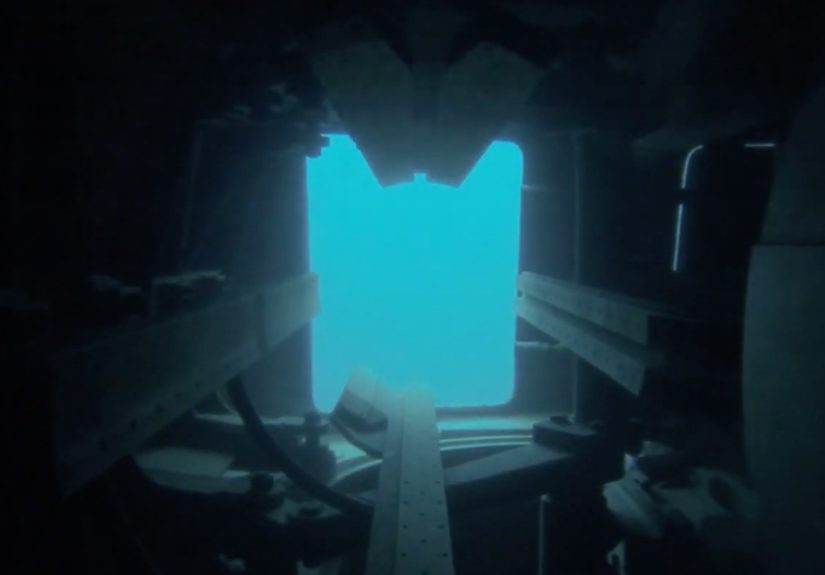
The most famous modern example comes from a documentary shoot aboard a Dutch submarine, where footage shows a
camera mounted on a practice torpedo as it exits the tube and later surfaces for recovery. The headline basically
wrote itself: “Watch a submarine launch a torpedofrom the torpedo’s POV.”
Plot twist: you’re usually watching a practice torpedo (and that’s the point)
Most “torpedo POV” clips involve exercise or training configurations, not live warshots.
That doesn’t make the video less impressiveit actually explains why it exists at all.
A real-world heavyweight torpedo is a serious weapon; you don’t casually slap a GoPro on it and hope for the best.
Training versions are built for evaluation, data collection, and (in many cases) recovery.
What makes a training torpedo different?
In many test and training events, the weapon’s live payload is replaced with instrumentationoften described as an
exercise section that records performance data and can transmit telemetry. After the run, the torpedo can shut down,
rise, and be located and recovered so the data (and the very expensive hardware) can come home.
If you’ve seen footage of teams hoisting a training torpedo out of icy water, you’ve seen the “end credits” of this
process: recovery, handling, and post-run servicing. It’s not glamorous, but it’s how navies learn whether systems
worked as expected and how crews gain real launch experience without turning the ocean into a permanent scrap yard.
“End-of-run” is a very polite phrase
“End-of-run” sounds like a marathon hydration station. In torpedo testing, it can mean the weapon finishes its
programmed run, stops propulsion, and transitions into a recoverable state. That recovery requirement is a major
reason the torpedo POV clip can exist: the camera is meant to come back.
Inside a torpedo tube: the submarine’s underwater airlock
A submarine torpedo tube isn’t just a pipeit functions like an airlock for the sea.
The tube has to temporarily become “part of the ocean” (wet, pressurized, equalized) while the rest of the submarine
stays very much “not the ocean” (dry, breathable, expensive).
Two doors, one rule: not at the same time
Torpedo tubes are built around safety interlocks because the basic failure mode is… well… turning a room into a
swimming pool at depth. In simplified terms, the tube is loaded from inside the submarine, then sealed internally;
later, an outer door opens to the sea only after pressures are managed. This is why “watching a launch” is usually
impossible from the crew’s perspective. The tube is doing the job of keeping two worlds separate.
How the torpedo gets pushed out (quietly, on purpose)
Hollywood loves the idea that a torpedo launches like a champagne corkPOP!with a huge bubble trail.
Real submarines, however, prefer to remain undiscovered for obvious career-longevity reasons. So modern launch
systems focus on controlling noise, limiting disturbances, and avoiding dramatic “tell everyone where I am” effects.
Broadly speaking, submarines can use different approaches to get a torpedo out of the tube:
- Pump/ejection systems using water impulse (think: a controlled “slug” of water pushing the weapon out).
- Swim-out concepts where the weapon leaves under its own power once conditions are right.
- Other engineered ejection methods designed to reduce reliance on noisy high-pressure air and simplify machinery.
One publicly discussed U.S. Navy concept uses stored energy to rapidly push water behind a weapon, opening a valve
to release the impulse into the tubean elegant “physics does the heavy lifting” approach designed with quiet
operation in mind. Different submarine classes have used different ejection hardware over time, including pump-based
systems that pressurize water for ejection.
Meanwhile, that famous documentary clip from a Dutch submarine described the practice torpedo being ejected by a
pulse of compressed airproof that launch methods can vary depending on platform, configuration, and what’s being
demonstrated.
The launch moment, from the torpedo’s perspective
Let’s translate the video into what’s physically happening, frame by framewithout turning this into a “how to fire
a torpedo” manual.
1) Darkness, stillness, and “you are now cargo”
Inside the tube, the camera sees almost nothing: a confined cylinder, minimal light, and the sense that you’ve been
packed into a can that is about to be opened from the outside. It’s claustrophobic in a way only machinery
can be.
2) The shove: sudden acceleration, controlled chaos
The weapon transitions from stationary to moving in a blink. Depending on the system, that initial push can come
from water impulse or air pressure. To the camera, it reads as a rapid surge forward, often accompanied by a burst
of bubbles and turbulence at the tube’s mouth.
Here’s the weird part: even when the launch is engineered to be “quiet,” the immediate visual is still loud. Water
churns, bubbles scatter, and the scene flashes from tight tunnel to open ocean like someone yanked a curtain away.
3) Exit into open water: stabilization and glide
Once outside the tube, the torpedo stabilizes. In many clips, the camera shows a short, fast glide with bubbles
thinning out behind it. The weapon’s design is all about hydrodynamicsminimizing drag, controlling flow, and
keeping the ride stable enough for onboard sensors to do their job.
In training footage, you may also see the weapon eventually rise and bob at the surface. That’s not “mission
accomplished” in the cinematic senseit’s “please come pick me up so the testers can read my homework.”
What happens after launch: guidance, sensors, and the “invisible leash”
Torpedoes aren’t just underwater rockets. Modern heavyweight torpedoes are guided systems with onboard sensing,
processing, and programmable behavior. In some cases, they can also be controlledat least initiallyvia a
wire connection that trails back toward the launching submarine.
Wire guidance: the underwater version of “don’t text and drive”except you’re texting the torpedo
If you’ve read about heavyweight torpedoes like the U.S. Navy’s Mk 48, you’ll see frequent mention of wire guidance.
Conceptually, it allows the launching platform to send updates while the weapon is in the water, which can matter
when targets move, conditions change, or the launch is part of a broader engagement.
Think of it less as joystick gaming and more as controlled decision-making: the weapon can run its own search and
attack logic using onboard sonar, but the launch platform may provide guidance updates early in the run.
Onboard sonar: how a torpedo “sees” without eyes
The torpedo POV video gives you a camera’s view, but the weapon’s real “vision” is sonaractive and/or passive,
depending on how it’s employed. A torpedo can listen for acoustic signatures, scan for returns, and process signals
to track or classify a target.
The Mk 48 family, for example, is widely described as a heavyweight torpedo used for both anti-submarine and
anti-surface roles, with continued upgrades over time. Public discussions also describe the under-keel detonation
concept against surface ships as a way to maximize structural damageone reason torpedoes remain among the most
feared naval weapons even in an era of missiles.
What the submarine crew is doing while you’re enjoying the POV
The torpedo camera makes it feel like the weapon is the main character. On the submarine, it’s a team sport:
launch systems, fire control, navigation, and ship handling all intersect. Even in training events, the crew’s work
includes checklists, coordination, and a strong preference for everything staying inside the submarine that’s
supposed to stay inside the submarine.
After launch, the tube isn’t just forgotten. It has to be manageddrained, readied, and kept safe. Submarines
operate as closed ecosystems; small mistakes become big problems quickly. The real flex isn’t the dramatic moment
of launchit’s the boring competence that makes it repeatable.
Testing and training: why recovery matters (and why the ocean isn’t a junk drawer)
Undersea training is not “fire and forget.” Navies invest heavily in evaluation because the undersea environment is
complex: salinity layers, temperature gradients, currents, background noise, and all the delightful unpredictability
of a living ocean. Exercise configurations, telemetry, and post-run recovery are part of building confidence that
systems workand that crews know how to employ them.
There’s also a practical reality: these systems are expensive, and losing them unnecessarily is bad for budgets and
readiness. Recovery ensures accountability, supports analysis, and keeps sensitive technology from becoming a
permanent seafloor exhibit.
Pop culture vs. physics: what the POV gets right (and what movies still fake)
Movies often portray torpedoes as slow, visible, bubble-belching cylinders you can outrun with a dramatic turn of
the wheel and a heartfelt speech. The torpedo POV clip corrects a few myths instantly:
- It’s fast at the start. The transition from tube to open water is immediate and forceful.
- Visibility is limited. Underwater visuals are messy; bubbles and turbulence dominate early frames.
- It’s engineered, not improvised. The “cool shot” is the result of serious systems built around safety and control.
And here’s the funniest contrast: the torpedo POV is dramatic, but the real-world purpose of many filmed launches
is almost painfully practicaldata collection, crew qualification, and proving the system did what it was supposed
to do. The ocean doesn’t care about your plot arc. Engineers do.
Experiences that make the torpedo POV hit even harder (about )
If you’ve ever watched a torpedo POV clip and immediately replayed it three times, you’re not alone. There’s a
specific kind of fascination that kicks in when you realize you’re seeing a viewpoint that usually belongs to
classified reports, sonar screens, and the collective imagination of submarine movie writers.
One “experience” a lot of viewers share is the pause-and-zoom ritual. You pause at the moment the
torpedo exits the tube and try to decode the chaos: “Is that a door? Is that the edge of the tube? Are those
bubbles from the launch system or the torpedo itself?” It’s the same energy people bring to slow-motion sports
replays, except the stadium is the sea and the athlete is an extremely expensive cylinder having the ride of its
life.
Another common experience is the soundtrack in your head. Even if the clip is silent, your brain
supplies audio anyway: a heavy thunk for a door, a muffled rush for flooding water, the whoosh of release.
It’s funny because submarines work hard to avoid loud signatures, yet the visuals feel loud. Your imagination fills
in what the camera can’tpressure, vibration, and the sense that everything is happening behind steel and rules.
For people who’ve visited naval museums or toured historic submarines, the POV footage can be a special kind of
“ohhh.” Standing in a preserved torpedo room, you see the tubes as these tidy, almost mundane fixtureslike giant
industrial cabinets. Then you watch the POV clip and realize: that cabinet is an airlock to a world that can crush
you. It reframes the museum experience from “cool hardware” to “this is an engineering argument with the ocean, and
the engineers are winning.”
Some viewers come in through video games and documentaries. Maybe you played a naval sim where “fire torpedoes” is a
button press and a countdown timer. The POV clip adds texture: the cramped tube, the violent transition to open
water, the bubble storm that makes everything briefly look like shaken soda. It’s a reminder that real systems are
mechanical, procedural, and physicalstuff has to open, equalize, move, and not leak.
And then there’s the oddly human experience of rooting for the torpedonot in a destructive sense,
but in a “buddy, I hope you don’t bonk into anything” sense. Because in many of these clips, it’s a training
weapon. It’s carrying telemetry, not a live payload. It’s going to pop up later like a floating punctuation mark
that says, “Launch successful.” You end up caring about the outcome the way you care about a space capsule reentry:
not because you want impact, but because you want the system to complete the journey and come home with the data.
That’s the magic of the torpedo POV. It turns an abstract conceptundersea launchinto a visceral moment you can
actually feel in your stomach. It’s part engineering documentary, part sensory oddity, and part reminder that the
ocean is the biggest “no filming allowed” zone on Earth… right up until someone bolts a camera onto the one thing
guaranteed to leave the tube.
Conclusion
Watching a submarine launch a torpedo from the torpedo’s POV is thrilling for the same reason deep-sea footage is
thrilling: it reveals a hidden world where engineering has to be precise, repeatable, and stubborn enough to work
under pressureliterally.
The video may look like an action scene, but the story behind it is craftsmanship: tube systems that behave like
underwater airlocks, launch methods designed to minimize noise, training configurations built for telemetry and
recovery, and crews who make the whole thing happen without turning their workplace into a very expensive aquarium.