Table of Contents >> Show >> Hide
- What “Alien Humanoid Entities” Means in UFO Lore
- 10 UFO Encounters Involving Humanoid Entities
- 1) Roswell (New Mexico, 1947): The “Bodies” That Wouldn’t Stay Buried
- 2) The Flatwoods Monster (West Virginia, 1952): A Humanoid Figure on a Hillside
- 3) The Kelly–Hopkinsville Encounter (Kentucky, 1955): The Night of the “Little Green Men”
- 4) Betty and Barney Hill (New Hampshire, 1961): The Prototype Abduction Narrative
- 5) Socorro (New Mexico, 1964): Lonnie Zamora’s Close Encounter
- 6) Pascagoula (Mississippi, 1973): “We Just Went Fishing”
- 7) Travis Walton (Arizona, 1975): A Dispute That Became a Legend
- 8) The Allagash Abductions (Maine, 1976): A Wilderness Light and Later Memories
- 9) Ariel School (Zimbabwe, 1994): Dozens of Children, One Striking Theme
- 10) Voronezh (Soviet Union, 1989): A Landing Reported in Official Channels
- Why Humanoid Entities Keep Appearing in UFO Encounter Stories
- How to Evaluate a Humanoid UFO Encounter Without Losing Your Mind (or Your Group Chat)
- of Experiences: What People Say These Encounters Felt Like
- Conclusion
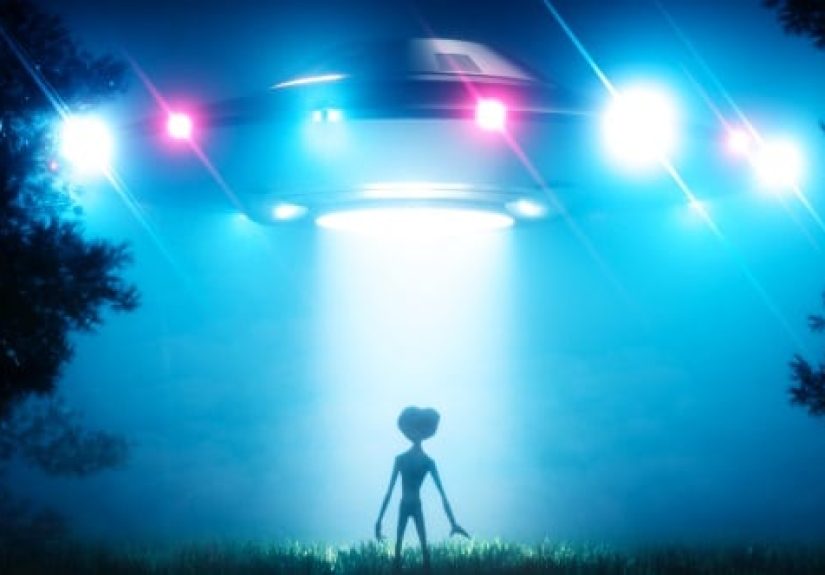
If you’ve ever gone down the UFO rabbit hole, you’ve probably noticed a pattern: sooner or later, the story stops being
“we saw a weird light” and becomes “and then… there were beings.” Not just shapes in the sky, but humanoid
entitiesfigures with heads, arms, eyes, and sometimes an unsettling talent for showing up right when your flashlight
batteries are at 12%.
This article explores 10 famous UFO encounters in which witnesses reported alien humanoid entities. None of these cases
are “proven” in the scientific sense, and many have skeptical explanations. But they’re culturally important, heavily
documented in books, archives, and media, and they’ve helped shape what people mean when they say
“close encounter of the third kind.”
What “Alien Humanoid Entities” Means in UFO Lore
In UFO discussions, a humanoid entity typically means a figure that looks broadly human-shaped:
upright posture, head-on-top-of-body proportions, arms/legs, and some kind of purposeful movement. Reports range from
“short, suit-like figures” to “tall, human-looking visitors.” Sometimes they’re described as robotic. Sometimes they’re
described as organic. Sometimes they’re described as… honestly, like someone tried to draw a person from memory while
riding a roller coaster.
The key theme isn’t that the entities are confirmed aliensit’s that witnesses experienced something they interpreted as
intelligent, humanoid occupants in connection with a UFO or UAP (Unidentified Anomalous Phenomenon).
10 UFO Encounters Involving Humanoid Entities
1) Roswell (New Mexico, 1947): The “Bodies” That Wouldn’t Stay Buried
The Roswell incident is the grandparent of modern UFO mythology. In July 1947, debris was recovered near Roswell, and
the story famously ricocheted from “flying disc” headlines to official explanations involving a balloon. Over time,
Roswell became less about debris and more about claims of recovered alien bodies and a government cover-up.
The important point for humanoid-entity lore is this: the “Roswell bodies” narrative helped cement the idea that UFOs
aren’t just objectsthey might have occupants. Later official reports argued that many “body” accounts could be tied to
misunderstandings, unrelated incidents, or later cultural contamination. Still, Roswell remains the reference point that
other humanoid-entity cases get compared to, even when the facts don’t line up neatly.
2) The Flatwoods Monster (West Virginia, 1952): A Humanoid Figure on a Hillside
In 1952, residents near Flatwoods, West Virginia reported seeing a bright object in the sky, followed by a strange
encounter on a hillside. The “entity” described in this case is often portrayed as a towering humanoid with a distinctive
head shape and glowing eyesone of the reasons the story has stayed alive for decades.
Skeptical interpretations frequently propose a combination of a meteor (or bright aerial phenomenon) plus misidentifying
a perched owl, intensified by fear, darkness, and the power of suggestion. Whether you view it as folklore, misperception,
or something stranger, Flatwoods is a classic example of how a UFO report can quickly become an “encounter” story once a
witness believes they’re seeing a humanoid presence.
3) The Kelly–Hopkinsville Encounter (Kentucky, 1955): The Night of the “Little Green Men”
One summer night in 1955, a farm family near Hopkinsville, Kentucky reported a prolonged ordeal involving small,
humanoid figures around their home after seeing something unusual in the sky. Police responded, searched the area, and
found indications of a commotionbut not the kind of evidence that neatly confirms “aliens were here.”
This case matters because it helped popularize the idea of “little green men” in American culture. Skeptical
explanations have suggested misidentified animals (notably owls), heightened stress, and group dynamics. Believers point
to the number of witnesses and the intensity of the event. Either way, it’s a cornerstone “humanoid entity” story:
figures at windows, movement around the property, and a sense of being targeted by something intelligent.
4) Betty and Barney Hill (New Hampshire, 1961): The Prototype Abduction Narrative
If alien abduction stories have a “pilot episode,” it’s the Hills’ account. In 1961, Betty and Barney Hill reported a
strange experience on a nighttime drive through New Hampshire. They described seeing a UFO, experiencing “missing time,”
and later recalling disturbing details under hypnosisdetails that included humanoid beings.
This case shaped the modern abduction script: a strange craft, anomalous memory gaps, and beings with a clinical,
observational vibe. Critics argue hypnosis can create confabulation, and that cultural expectations influence what
“comes back” as memory. Supporters emphasize consistency and the Hills’ sincerity. Regardless of your stance, the Hill
case is foundational for alien humanoid entities in UFO storytelling.
5) Socorro (New Mexico, 1964): Lonnie Zamora’s Close Encounter
In 1964, Socorro police officer Lonnie Zamora reported seeing an unusual craft near the groundand, crucially,
two small humanoid figures beside it. The case became one of the most discussed incidents associated with
Project Blue Book, partly because it involved a trained observer, quick reporting, and claims of physical traces.
Over the years, suggestions have ranged from experimental testing to elaborate hoax theories. What keeps Socorro in the
conversation is the combination of a structured narrative (time, place, sequence) and a humanoid element that feels
“specific” rather than dreamy. If you’re looking for a case that reads like a scene from a moviebut was reported as a
real event by an on-duty officerSocorro is hard to ignore.
6) Pascagoula (Mississippi, 1973): “We Just Went Fishing”
In October 1973, Charles Hickson and Calvin Parker reported an abduction-like encounter while fishing near the
Pascagoula River. The entities were described as humanoid but unusualoften characterized as robotic or “not quite
biological.” The story gained traction partly because law enforcement secretly recorded the men when they were left
alone, expecting contradictionsand instead captured what sounded like continued fear and distress.
Skeptics have argued for hoax, misperception, or altered-state explanations; believers point to the immediate report,
the recorded conversation, and the way the men’s lives were affected by the attention. Pascagoula remains one of the
best-known American cases where the “occupants” are not just reported, but described in unnervingly concrete terms.
7) Travis Walton (Arizona, 1975): A Dispute That Became a Legend
Travis Walton’s 1975 storysparked by a late-night incident involving loggers in Arizonabecame famous enough to inspire
books, debates, documentaries, and the film Fire in the Sky. Walton claimed he encountered beings aboard a craft,
describing humanoid figures and an environment that felt more “facility” than “spaceship bridge.”
The case has a long afterlife because it sits at the intersection of pop culture and contested evidence: polygraph talk,
shifting narratives in public discussion, and a witness group with complicated dynamics. Supporters highlight the
consistency of Walton’s central claim over decades; skeptics argue the story has too many incentives and inconsistencies.
Either way, Walton’s account keeps the “humanoid entity” idea front and centeroccupants who are not just implied, but
interacted with.
8) The Allagash Abductions (Maine, 1976): A Wilderness Light and Later Memories
The Allagash story starts like a classic outdoors tale: four men on a canoe trip in Maine see an intense light in the
sky. Later, they report missing time and eventually recount humanoid-entity encounters, often discussed in connection
with hypnosis and later investigation. Media coverage over the years has included both supportive retellings and
skeptical reassessments, including disputes among the witnesses themselves.
What makes Allagash relevant here is how it shows two things at once: the power of the initial “UFO light” event, and
the complex way humanoid details can emerge later. It’s also a reminder that these cases aren’t static:
they evolve, especially as witnesses talk, disagree, revisit memories, or face new scrutiny decades after the fact.
9) Ariel School (Zimbabwe, 1994): Dozens of Children, One Striking Theme
Ariel School is one of the most famous “many-witness” cases involving humanoid entities. In 1994, students at a school
in Ruwa, Zimbabwe reported seeing a craft and beings nearby. The story is notable because of the number of witnesses
and the consistency of some reported elements, even when individual details differed.
Skeptical views often focus on social contagionhow groups of children can influence one another’s interpretationsplus
memory effects and the role of interview dynamics. Supporters emphasize the immediacy of the reports and the emotional
conviction shown by many witnesses. Ariel School is a key global example of how “humanoid entity” narratives can be
amplified by group experience, media attention, and the lasting impact of a shared, frighteningly vivid moment.
10) Voronezh (Soviet Union, 1989): A Landing Reported in Official Channels
In 1989, reports from Voronezh (then in the Soviet Union) captured international attention after official media claimed
a UFO had landed and that witnesses saw tall beings. What makes this case stand out is that it was widely repeated
through news channels and later documented in government-adjacent archives, even as the details were debated and
criticized.
The Voronezh story illustrates how humanoid-entity narratives can spread rapidly when they’re tied to “official”
reporting. At the same time, it shows why verification is so difficult: secondhand reporting, translation issues, and
the tendency for sensational details to balloon (pun only mildly intended) once a story goes global.
Why Humanoid Entities Keep Appearing in UFO Encounter Stories
Across decades and continents, humanoid entities keep showing up in UFO reports for a few big reasonssome mundane, some
fascinating:
-
Human brains love human shapes. In low light, stress, and uncertainty, we’re primed to interpret
ambiguous forms as faces and figures. -
Story structure matters. A “craft in the sky” becomes a narrative people can retell once it has
charactersoccupants with intent. -
Culture supplies a template. Once certain “types” (small greys, tall beings, uniform-like suits)
enter pop culture, later witnesses may describe what best fits the mental vocabulary they already have. -
Memory is reconstructive. Especially with hypnosis, therapy, or repeated retellings, details can
sharpen over timebut sharper doesn’t always mean truer.
How to Evaluate a Humanoid UFO Encounter Without Losing Your Mind (or Your Group Chat)
If you want to read these cases like a careful grown-upwhile still enjoying the mysteryuse a simple checklist:
- When was the story recorded? Contemporary reports generally beat decades-later recollections.
- How many independent witnesses? Independent matters more than numerous.
- What physical evidence exists? Photos, traces, verified radar, or official records help (but can still be misleading).
- Were interviews leading? The way questions are asked can shape answers, especially with kids.
- Are there plausible alternatives? Animals, aircraft, meteors, hoaxes, sleep effects, and misperception cover a lot of ground.
Also worth noting: modern U.S. government assessments of UAP have emphasized that most cases are likely explainable with
better data and do not constitute confirmed evidence of extraterrestrial origin. That doesn’t “solve” every historical
mysterybut it does anchor expectations.
of Experiences: What People Say These Encounters Felt Like
Across humanoid-entity UFO accounts, the most striking similarities aren’t always the “what,” but the how it felt.
Witnesses often describe a sudden shift from normal life into a scene that seems stagedlike reality changed channels
without asking permission.
One of the most common reported sensations is time distortion. People describe “missing time,” abrupt
jumps in memory, or the eerie realization that an hour passed while they believed only minutes had. In some stories, the
timeline fracture becomes the central clue: a drive that should have taken 20 minutes takes two hours; a night that
should be continuous feels chopped into segments. Whether this points to stress, dissociation, sleep-like states, or
something unknown, “time weirdness” is a repeating feature in the abduction-style cases.
Another frequent theme is immobility. Witnesses report feeling “frozen,” unable to move or shout, even
when they desperately want to. Skeptics note that fear responses can cause temporary freezing, and sleep-related
phenomena can mimic paralysis. Believers counter that the immobility seems situationalhappening at the exact moment
the entities appear. Either way, the experience tends to be described as intensely physical, not merely imaginative.
People also mention hyper-specific sensory details: humming or buzzing sounds, bright lights that feel
“thick,” odd smells (ozone-like or chemical), and a sensation of pressurelike the air itself is pushing back. These
details pop up in cases separated by decades, which is part of why these stories remain compelling. Even when you doubt
the conclusion, the sensory descriptions often feel like someone trying to report an event honestly, using the closest
words they have.
Emotionally, witnesses tend to fall into two camps. Some describe pure terrorpanic that lingers for years, reluctance to
discuss the event, and a sense of violation. Others describe a confusing calm, even curiosity, as if the experience
bypassed normal fear and went straight into stunned observation. In the larger multi-witness cases, you often see both
reactions at once: one person insists it was the scariest moment of their life; another says it felt dreamlike, surreal,
almost muted.
Finally, there’s the “after” effect: meaning-making. People revisit the memory repeatedly, trying to
fit it into something stable: a hoax, a misidentification, a spiritual experience, a psychological episode, or a genuine
encounter with non-human intelligence. That need to interpret may be the most human thing about these humanoid-entity
stories. Whatever happened, the witnesses often report that it changed how they relate to the night skyturning it from
background scenery into a question that never fully goes away.
Conclusion
Humanoid-entity UFO stories sit in a weird space between folklore and investigation. They’re often messy, emotionally
charged, and difficult to verify. But they’re also persistentshowing up again and again across different eras, places,
and witness types. If you read them carefully (and skeptically), they can teach you a lot about perception, memory,
culture, and the stories humans tell when something genuinely unexplained happens.