Table of Contents >> Show >> Hide
- 1. Create a Cool, Moist, Leafy Environment That Resembles Real Life
- 2. Feed the Frog Like an Insect Hunter, Not Like a Tiny Garbage Disposal
- 3. Handle Less, Stress Less, and Treat the Frog Like Wildlife, Not a Toy
- Common Mistakes People Make With Pacific Tree Frogs
- What Caring for a Pacific Tree Frog Looks Like in Real Life
- Conclusion
If you have ever heard that classic movie-soundtrack “ribbit” and pictured a frog the size of a coffee mug, allow me to gently ruin Hollywood for a second. One of the real stars behind that soundtrack is often the Pacific tree frog, also called the Pacific chorus frog, a small native amphibian known for its big voice, adaptable coloring, and talent for turning a pond edge into a spring concert venue. It may be tiny, but caring for one properly is not a tiny responsibility.
That is the first important point: Pacific tree frogs are not “easy because they’re small.” They are delicate, moisture-dependent amphibians with absorbent skin, specific environmental needs, and in many places, legal protections or restrictions because they are native wildlife. In other words, this is not a hamster with a better jump shot. Whether you are temporarily caring for one under a legal educational setting, helping a rescued frog while waiting for professional guidance, or creating a frog-friendly yard so wild Pacific tree frogs can thrive without moving into your sock drawer, the same principles apply: keep the environment right, keep the food and water clean, and keep stress as low as possible.
Here are three practical, science-based ways to care for a Pacific tree frog without turning the poor thing into a stressed little raisin.
1. Create a Cool, Moist, Leafy Environment That Resembles Real Life
The Pacific tree frog naturally turns up in wet places like marshes, ponds, streams, meadows, woodlands, and brushy areas. It also uses damp cover on land, including logs, vegetation, leaf litter, and shady spaces near water. That means good care starts with a setup that feels more like a mini Pacific Northwest edge habitat and less like a decorative glass prison with one plastic palm tree and a lot of bad intentions.
Think “shady pond margin,” not “desert sunroom”
If you are housing a Pacific tree frog legally and temporarily, choose a secure enclosure with ventilation, climbing surfaces, and cover. Branches, cork bark, leafy plants, and a damp but not swampy substrate help the frog hide, climb, and stay hydrated. Tree frogs are famous for using vertical space, but they also spend plenty of time low to the ground hunting and sheltering. A good enclosure gives them both options.
Temperature matters, but here is the simple version: do not overheat the animal. Amphibians do not do well in hot, dry, sun-baked conditions. A Pacific tree frog is better matched to a mild, shaded setup than to a tropical sauna. Place the enclosure away from direct sunlight, hot windows, heaters, and any area that turns into a convection oven by midafternoon. The goal is stable, gentle conditions, not “let’s see what happens if we recreate July inside a glass box.” Nothing good happens there.
Humidity also matters because amphibians rely heavily on moist skin. Light misting, moisture-retaining décor, and shade help prevent drying. But this is where beginners sometimes overachieve. Damp is good. Waterlogged muck that smells like a forgotten salad is not. Your frog should have humidity and moisture, but also clean surfaces and airflow.
Water quality is a big deal for a frog with absorbent skin
Pacific tree frogs do not need a deep aquarium, but they do need access to clean, shallow water. A shallow dish is ideal in captivity because it lets the frog soak without risking exhaustion or accidental drowning. Use dechlorinated water, not straight untreated tap water fresh from the faucet. Amphibians absorb water through their skin, so water quality is not a cosmetic issue. It is a health issue.
Keep the water dish clean, change the water regularly, and wipe down the enclosure before grime builds into a science fair project. Spot-clean waste daily if possible, and do a more thorough cleaning on a regular schedule. Fancy décor does not compensate for dirty conditions. In frog care, cleanliness is glamorous.
If your goal is to care for Pacific tree frogs in your yard rather than in a tank, the same environmental logic applies. A frog-friendly space includes shallow water, gentle edges, both sun and shade, native vegetation, leaf litter, logs, and places to hide. Fishless water is especially important if you want breeding activity, because fish often eat eggs and tadpoles. A tidy yard may please humans, but a slightly wild, moist, layered yard is much more persuasive to frogs.
2. Feed the Frog Like an Insect Hunter, Not Like a Tiny Garbage Disposal
Pacific tree frogs are active little predators. In the wild, they eat a wide variety of small invertebrates, especially insects. If you want to care for one well, diet has to match that reality. This is not an animal that thrives on random flakes, mystery pellets, or “one heroic mealworm the size of its face.”
Offer appropriately sized live prey
For a frog in human care, small live insects are the right starting point. Think tiny crickets, fruit flies, small flies, or similarly sized prey items the frog can easily track and swallow. Live prey works best because frogs are visual hunters. Movement gets their attention. A motionless bug is basically salad, and most frogs are not emotionally prepared for salad.
Feed prey that is proportionate to the frog’s size. If the insect looks like it could bench-press the frog, make a better choice. Younger, smaller frogs need smaller prey and more frequent observation. Adults usually do best with measured, consistent feeding instead of a chaotic insect storm once every leap year.
Variety is helpful. In the wild, Pacific tree frogs do not eat one identical item forever, and a mixed menu better reflects natural feeding. Rotate safe, appropriate feeder insects when possible. Also remove uneaten prey if it lingers too long, especially overnight. Loose insects can stress a frog, bite it, or foul the enclosure.
Do not forget the boring part: food and water hygiene
The glamorous image of frog care is a bright-eyed little amphibian perched on a leaf. The real image of frog care is you cleaning a dish and muttering, “How does something this small make such a mess?” That second image is where success lives.
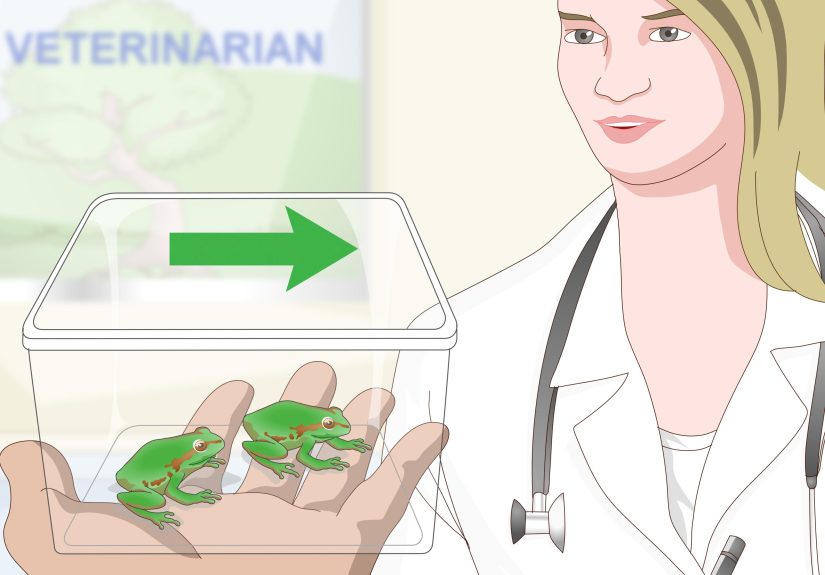
Clean food and water dishes daily. Replace contaminated substrate. Wash décor as needed. If you are housing the frog temporarily during enclosure maintenance, move it with minimal contact and keep that holding container moist, ventilated, and temperature-safe. Frog care is less about showing off a beautiful terrarium on day one and more about maintaining healthy conditions on day twenty, day fifty, and day one hundred.
If you are supporting wild frogs in your garden, the feeding strategy changes from “provide prey directly” to “support the insect buffet naturally.” Native plants, leaf litter, moisture, and chemical-free yard care all help sustain the small invertebrates frogs eat. In short, if you want more frogs, grow more bug habitat. I realize that sounds like a threat, but ecologically speaking, it is excellent advice.
3. Handle Less, Stress Less, and Treat the Frog Like Wildlife, Not a Toy
If there is one golden rule that belongs on a sticker, it is this: most frogs do best with very little handling. Pacific tree frogs are no exception. Their skin is delicate, absorbent, and part of their immune defense. Excess handling can injure that skin, dry the frog out, or expose it to chemicals, pathogens, and stress.
Your hands are not as harmless as you think
Even clean-looking hands may carry soap residue, lotion, sunscreen, natural skin oils, or trace chemicals. For amphibians, that can be a serious problem. If handling is absolutely necessary, use moistened gloves or otherwise follow amphibian-safe handling practices. Keep contact brief. Support the frog gently. Do not squeeze, chase, or repeatedly pick it up because it “looked cute on the fern and I wanted a better angle.” The frog did not consent to becoming a lifestyle influencer.
Watch behavior from a distance whenever possible. A healthy frog is usually alert, responsive, moist-skinned, and interested in cover, climbing, or food. A stressed frog may sit exposed, seem unusually sluggish, look dry, stop eating, or repeatedly try to escape. Those signs often point back to one of the big husbandry problems: poor temperature, poor humidity, poor water quality, too much disturbance, or all of the above having a very rude party together.
Good care includes disease prevention and legal common sense
Amphibians worldwide face serious disease pressures, including chytrid fungus, so biosecurity matters. Clean equipment between uses. Do not move frogs from one location to another just because it seems kind. Do not release captive frogs, pet frogs, or classroom frogs into the wild. And do not assume collecting a native frog is automatically legal. In some states, native amphibians cannot legally be kept as pets; in others, permits may be required for educational or scientific holding. The safest default is simple: check your local wildlife rules before taking action, and leave healthy wild frogs where they are whenever possible.
If your goal is really to “care for” Pacific tree frogs in the broadest and best sense, the most effective approach may be hands-off stewardship. Protect wetlands. Preserve vegetation around ponds and streams. Leave some leaf litter and logs in place. Avoid pesticides, herbicides, and fungicides that can directly harm amphibians or wipe out their food supply. Help the habitat, and the habitat will help the frog.
Common Mistakes People Make With Pacific Tree Frogs
One of the biggest mistakes is treating a native frog like a novelty pet. Another is building a beautiful enclosure that is too hot, too dry, too bare, or too dirty. Some people provide plenty of water but no cover. Others provide lots of décor but forget that untreated tap water can be a problem. And then there is the classic overenthusiastic mistake: constant handling. If your frog spends more time on your hand than on a branch, the setup has become less “care” and more “awkward social obligation.”
Another major mistake is trying to improve outdoor frog habitat with fish, aggressive pond cleaning, or chemical yard products. Frogs do not want a chlorinated resort with koi. They want shallow edges, quiet water, cover, insects, and a neighborhood that does not smell like lawn treatment. Amphibian luxury is basically a damp log and fewer human ideas.
What Caring for a Pacific Tree Frog Looks Like in Real Life
On paper, Pacific tree frog care sounds straightforward: moisture, cover, clean water, live insects, minimal handling. In real life, it feels more like learning to notice details you used to ignore. You start paying attention to whether the room gets warmer in late afternoon, whether the water dish collected substrate, whether the frog is perched high tonight or tucked down low under a leaf. The work is not dramatic. It is observational. That is part of the charm.
People often imagine frog care as passive because frogs are quiet compared with dogs, less interactive than parrots, and thankfully less likely than cats to knock your drink off the table just to feel something. But Pacific tree frogs teach a different kind of caretaking. You learn to read posture, moisture levels, appetite, and hiding patterns. If the frog is active at the usual time, climbing normally, and snapping up prey with enthusiasm, that is good news. If it suddenly seems dry, dull, uninterested in food, or frantic to escape, that tiny behavioral change matters.
There is also something humbling about caring for an animal that depends so completely on its environment. A Pacific tree frog does not negotiate. It does not send feedback in complete sentences. It simply responds to conditions. If the habitat is right, the frog settles in. If the habitat is wrong, the frog tells you with stress, stillness, or refusal to eat. That makes you a better observer, and honestly, a less overconfident human.
Many people who create frog-friendly gardens describe the same small thrill: first you change the habitat, and then one evening the habitat answers back. Maybe it is a call from the pond margin. Maybe you spot a tiny green frog clinging to a stem after sunset. Maybe you notice eggs attached to vegetation in shallow water and suddenly realize the pond is not just decorative anymore. It is working. That is a wonderful feeling because you are no longer “keeping” the frog. You are making room for it.
Even the maintenance becomes oddly satisfying. Replacing water, trimming plants, leaving leaf litter where it helps, checking that the shady side stays damp, resisting the urge to over-clean the outdoor pond into sterilitythese things add up. Frog care rewards patience more than gadgets. The best setups are usually the ones that feel stable, planted, quiet, and a little bit untidy in the most ecological way possible.
And then there is the humor of it all. You can spend an hour arranging branches like an interior designer for amphibians, only to discover your frog’s favorite place is still the least photogenic corner of the enclosure. You can offer a carefully selected feeder insect and watch the frog miss on the first strike, regroup, and then absolutely nail it on the second. You can build a lovely outdoor pond and discover the frog prefers the muddy edge by the old rock. Pacific tree frogs are charming, but they are not here to validate your aesthetic.
In the end, caring for a Pacific tree frog is less about possession and more about respect. Respect its skin, its need for moisture, its preference for cover, its dependence on clean water, and its status as native wildlife. Respect the fact that a small frog can still have complicated needs. Respect the habitat enough to protect it. When you do that, you are not just caring for one frog. You are participating in the care of a whole little world built on shade, water, insects, plants, and patience.
That is what makes Pacific tree frogs so memorable. They are tiny enough to fit on a leaf, loud enough to own a spring evening, and sensitive enough to remind us that good wildlife care is rarely flashy. Usually, it is just careful attention repeated over time. For a creature famous for a two-note call, that is a pretty impressive lesson.
Conclusion
If you want to care for a Pacific tree frog well, keep the priorities simple and smart. First, provide a cool, moist, shaded environment with cover and clean, shallow water. Second, feed appropriate live insects and keep the enclosure or habitat clean enough that the frog is not living in yesterday’s leftovers. Third, handle as little as possible, respect wildlife laws, and think like a conservationist rather than a collector. That approach works whether you are supporting a legally housed frog for a limited purpose or building a better backyard habitat for the wild frogs already sharing your neighborhood. Pacific tree frogs do not ask for luxury. They ask for moisture, safety, food, and fewer terrible human decisions. Frankly, that is relatable.