Table of Contents >> Show >> Hide
- Before You Start: Understand What Bleach Did to Your Carpet
- Supplies You May Need
- Way 1: Stop the Bleach Damage Immediately
- Way 2: Blend or Re-Dye a Small Bleach Spot
- Way 3: Patch the Carpet or Call a Professional
- What Not to Do With a Bleach Stain on Carpet
- How to Choose the Best Method
- Experience Notes: What Usually Happens in Real Homes
- Conclusion
Bleach on carpet is the tiny household accident with the emotional range of a full disaster movie. One minute you are disinfecting the bathroom, doing laundry, or trying to rescue a mysterious stain. The next minute, your carpet has a pale spot that looks like it was personally attacked by a tiny ghost.
Here is the important truth: a bleach stain is not a normal stain. Coffee, mud, pet accidents, and red wine usually add something to the carpet fibers. Bleach does the opposite. It removes or alters the dye that gives carpet its color. That means the goal is not simply to “clean out” bleach. The real goal is to stop the chemical damage, blend the color loss, or replace the damaged fibers.
The good news? A bleach mark does not always mean your carpet is doomed. Small spots can often be improved with careful rinsing, color blending, carpet dye, or a marker. Larger or bright-white areas may need a carpet patch or professional color correction. The trick is knowing which repair makes sense before you turn one little spot into a modern art installation.
This guide breaks the fix into three practical methods: stopping the bleach damage, recoloring the spot, and repairing or patching the carpet. You will also find safety warnings, examples, and experience-based tips to help you choose the least dramatic path back to a normal-looking floor.
Before You Start: Understand What Bleach Did to Your Carpet
Bleach is designed to lighten, whiten, and disinfect. On colored carpet, that power can be brutal. The pale area you see is usually not leftover bleach sitting on top of the carpet; it is missing color. That is why regular carpet stain remover will not magically bring the original shade back. A cleaner can remove residue, but it cannot restore dye that has been chemically stripped away.
Carpet type matters too. Nylon carpet is often the easiest to spot-dye because it accepts dye better than some other fibers. Polyester, olefin, triexta, wool, and patterned carpets can be trickier. Wool is especially sensitive to chlorine bleach and should not be treated with harsh DIY methods. If the carpet is expensive, vintage, wool, or part of a rental deposit drama, slow down and consider professional help before experimenting.
Safety also matters. Never mix bleach with vinegar, ammonia, rubbing alcohol, hydrogen peroxide, toilet cleaner, drain cleaner, or random “cleaning hack” ingredients. Some combinations can release dangerous fumes. If the carpet still smells strongly of bleach, ventilate the room, keep pets and children away, and focus on rinsing with plain water first.
Supplies You May Need
- Clean white towels or plain white paper towels
- Cold or lukewarm water
- Spray bottle
- Wet/dry vacuum or carpet extractor, if available
- Baking soda, used only after rinsing to help absorb moisture and odor
- Carpet-safe bleach neutralizer, if available
- Rubbing alcohol, used only after the bleach has been thoroughly rinsed and the area is dry
- Cotton swabs or cotton balls
- Fabric marker, carpet dye pen, or carpet dye kit
- Small scissors for trimming fibers
- Carpet scrap or hidden donor piece for patching
- Carpet seam tape or adhesive for patch repair
- Gloves and good ventilation
Way 1: Stop the Bleach Damage Immediately
If the bleach spill is fresh, your first job is not to fix the color. Your first job is to stop the bleach from spreading deeper into the carpet. The faster you dilute and remove it, the less damage it can do to the fibers, backing, and surrounding color.
Step 1: Blot, Do Not Scrub
Use a clean white towel to blot the area. Press down gently and lift. Repeat with a fresh section of towel. Do not rub in circles. Scrubbing can push bleach outward, damage the pile, and make the spot bigger. Think “gentle sponge,” not “angry raccoon washing a dish.”
Step 2: Rinse With Plain Water
Fill a spray bottle with cold or lukewarm water and lightly mist the bleach spot. Do not flood the carpet. Too much water can soak the padding and cause a new problem under the surface. After misting, blot again with a dry white towel. Repeat this rinse-and-blot process several times.
If you have a wet/dry vacuum or carpet extractor, use it to pull moisture out of the fibers. Extraction is helpful because it removes diluted bleach rather than just spreading it around. If you do not have a machine, stack dry paper towels over the spot, place a heavy object on top, and let the towels pull moisture upward.
Step 3: Use a Carpet-Safe Bleach Neutralizer If Needed
For a fresh or strong spill, a carpet-safe bleach neutralizer can help stop remaining chemical activity. These products are often used before carpet dyeing. Follow the label exactly. Do not improvise with vinegar or ammonia. Mixing chemicals with bleach is not worth the risk, and your carpet does not need a chemistry experiment.
Step 4: Let the Area Dry Completely
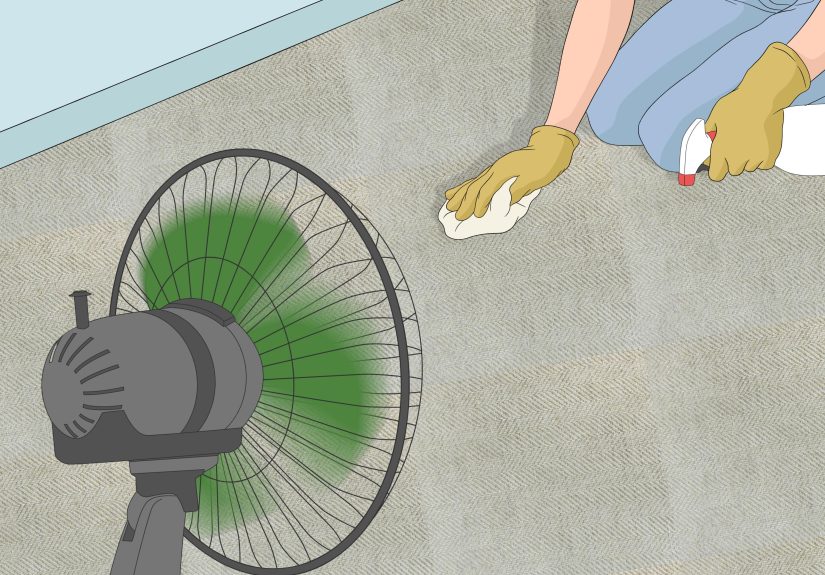
Once the bleach has been rinsed and extracted, let the carpet dry fully. Open windows, run a fan, and keep people off the area. When dry, evaluate the true color loss. A damp spot can look darker or lighter than it really is, so judging too early may lead you to overcorrect.
This first method works best when the spill just happened. It may not restore the original color, but it can prevent the stain from expanding, weakening fibers, or interfering with later dye repair. In other words, it is the emergency brake.
Way 2: Blend or Re-Dye a Small Bleach Spot
Once the carpet is rinsed, dry, and free of active bleach odor, you can try to blend the color. This method is best for small dots, thin streaks, and light discoloration. It is not ideal for large white patches, patterned carpet, or high-visibility areas where a slight color mismatch will bother you every morning before coffee.
Option A: Try the Alcohol Blending Method for Tiny Spots
For very small bleach marks, rubbing alcohol may help move a little surrounding dye into the lightened area. This is a delicate technique and should only be attempted after the bleach has been thoroughly rinsed and the carpet is fully dry. Never apply rubbing alcohol to active bleach.
Test first in a hidden area, such as inside a closet. If the test area does not bleed badly or change texture, dampen a cotton swab or cotton ball with rubbing alcohol. Lightly dab the edge of the bleach mark, moving from the colored carpet toward the pale center. The goal is to soften and blur the boundary, not soak the carpet. Keep the motion small and controlled.
This technique is best for beige, tan, gray, or medium-toned carpet where a soft blend looks natural. It is usually less successful on very dark carpet because dark colors show every tiny mismatch. If the spot starts looking muddy, stop. More rubbing rarely makes it better.
Option B: Use a Fabric Marker or Carpet Dye Pen
For small spots, a fabric marker, carpet dye pen, or permanent marker can camouflage color loss. The key is matching the carpet’s undertone. Beige carpet may lean yellow, pink, gray, or green. Brown carpet may have gold, red, or ash tones. A marker that looks perfect in the store can look like a cartoon mustache on your carpet at home.
Start lighter than you think. Apply color to a few fibers at a time using short strokes. Let it dry, then check the color in daylight and evening light. If needed, add another layer. It is much easier to darken a spot gradually than to remove a blob of too-dark color.
For multi-toned carpet, use two or three similar marker shades instead of one flat color. Real carpet is rarely one solid shade. It has highlights, shadows, and fiber direction. A little variation helps the repair disappear better.
Option C: Use a Carpet Dye Kit
A carpet dye kit can give better results than a marker, especially on nylon carpet. These kits usually include small dye containers that can be mixed to match the surrounding fibers. Before applying dye, the bleach must be neutralized or thoroughly rinsed. Active bleach can continue to lighten the carpet and may ruin the dye job.
Apply dye sparingly with a cotton swab, small brush, or applicator. Work in thin layers. After each layer dries, compare the repaired area with the surrounding carpet from several angles. Carpet pile reflects light differently depending on direction, so brush the fibers both ways before deciding whether the color is right.
This method requires patience, but it can make a small bleach stain far less noticeable. It is a little like filling in eyebrows: subtle is stylish; heavy-handed is newsworthy.
Way 3: Patch the Carpet or Call a Professional
Sometimes a bleach stain is too large, too bright, or too chemically damaged for DIY blending. If the spot is bigger than a coin, located in the middle of the room, or on a dark carpet, patching or professional repair may be the smartest choice.
When Patching Makes Sense
A carpet patch replaces the damaged section with matching carpet. This works best if you have leftover carpet from installation. If not, you may be able to take a donor piece from inside a closet, under a large piece of furniture, or another hidden area. The donor area can then be patched with a less-perfect piece because no one is hosting dinner inside your closet.
To patch carpet, the damaged piece is carefully cut out in a square, rectangle, or circle. The replacement piece is cut to match the same size and pile direction. Pile direction is critical. If the fibers run the wrong way, the patch may look darker or lighter even when the color is technically the same.
Carpet seam tape or adhesive secures the patch. The edges are pressed down, blended, and trimmed so the repair sits level with the surrounding carpet. This is possible as a DIY project, but precision matters. A crooked patch can look more obvious than the original bleach spot.
When to Call a Carpet Repair Professional
Professional carpet repair is worth considering for large bleach stains, expensive carpet, patterned carpet, wool rugs, rental properties, stair carpet, or rooms with strong natural light. Pros can use color correction, spot dyeing, bonded inserts, or invisible patching techniques that are difficult to duplicate with basic home tools.
A technician may first neutralize the bleach, then apply custom-mixed dye to rebuild the lost color. If the fibers are too damaged, they may cut out the spot and install a bonded insert. Good repair work accounts for color, pile direction, texture, wear pattern, and lighting. That is why a professional repair often looks more natural than a quick marker fix.
If you are renting, take clear photos before and after the repair attempt. Keep receipts for any professional service. A documented repair may help if you need to discuss the issue with a landlord or property manager.
What Not to Do With a Bleach Stain on Carpet
Do Not Add Vinegar to Fresh Bleach
Vinegar is useful for many household cleaning jobs, but it should not be mixed with bleach. If bleach is still active in the carpet, do not pour vinegar on it. Rinse with plain water instead.
Do Not Use Ammonia, Peroxide, or Random Cleaners
Bleach can react dangerously with other cleaning products. Avoid ammonia, hydrogen peroxide, rubbing alcohol, toilet cleaner, drain cleaner, and mystery sprays until the bleach has been fully rinsed and the area is dry. Even then, test any product first.
Do Not Overwet the Carpet
More water does not always mean more cleaning. Overwetting can push moisture into the carpet pad, encourage odors, and damage backing. Use controlled misting, blotting, and extraction.
Do Not Assume One Marker Will Match Forever
Marker repairs can fade, shift color, or look different under sunlight. They are best for small, low-traffic spots. For a long-term repair, carpet dye or professional color correction is usually better.
How to Choose the Best Method
If the bleach spill just happened, start with Method 1. Rinse, blot, extract, ventilate, and stop the damage. If the spot is tiny and only slightly lighter than the surrounding carpet, try Method 2 with alcohol blending, a fabric marker, or carpet dye. If the spot is large, bright, stiff, or located in a very visible place, skip the arts-and-crafts phase and consider Method 3.
For dark carpet, professional dyeing is often the best option because dark colors are unforgiving. For light beige carpet, a careful marker or dye kit may work surprisingly well. For patterned carpet, matching multiple tones is difficult, so patching or professional work usually looks better.
Also consider the age of the carpet. If the carpet is already worn, faded, or near replacement age, a perfect repair may not be worth the cost. A throw rug, furniture shift, or temporary blend may be enough until you replace the flooring. If the carpet is new, high-end, or in a main living area, repair it properly before the spot becomes the only thing you see when you walk into the room.
Experience Notes: What Usually Happens in Real Homes
Most bleach carpet accidents begin with good intentions. Someone is cleaning the bathroom, carrying a laundry basket, spraying mildew remover, or rescuing a white towel with heroic confidence. Then a few drops land on the hallway carpet. At first, the area may not look terrible. It might appear damp, slightly shiny, or barely lighter. A few hours later, the color loss becomes obvious, and panic enters wearing shoes.
The first experience lesson is that speed matters, but panic does not help. People often make the spot worse by scrubbing aggressively or dumping several cleaners onto it. The better move is boring but effective: blot, rinse with plain water, blot again, and remove as much moisture as possible. This does not always save the color, but it can stop the damage from spreading.
The second lesson is that lighting can lie. A bleach stain may look almost invisible at night and painfully obvious in morning sunlight. Before dyeing or coloring, check the spot in different light and from different angles. Carpet fibers reflect light based on pile direction, so a repair that looks perfect from the doorway may look too dark when viewed from the couch. Brush the fibers in their normal direction before judging the match.
The third lesson is that small repairs reward patience. The best DIY color fixes are usually built slowly. A homeowner who taps in a little beige dye, waits, checks, and adds another thin layer will usually get a better result than someone who colors the whole spot like a school poster. Bleach repair is more watercolor than wall paint.
The fourth lesson is that dark carpet is dramatic. On a tan carpet, a slightly imperfect repair can blend into the natural variation of the fibers. On charcoal, navy, espresso, or deep green carpet, even a tiny pale dot can glow like a lighthouse. In those cases, professional spot dyeing may save time, frustration, and several markers that looked “close enough” until they absolutely did not.
The fifth lesson is about donor carpet. If you still have leftover carpet from installation, protect it like treasure. A small remnant can make patch repair much easier. If you do not have extra carpet, hidden areas such as closets may provide a donor piece. The patch should match not only color but also wear. Brand-new spare carpet can sometimes look too fluffy beside older traffic-worn carpet, so blending and trimming may be needed.
Finally, prevention is easier than repair. Keep bleach-based products away from carpeted rooms when possible. Carry cleaners in a plastic caddy, tighten caps, and avoid setting bleach bottles on carpet “just for a second.” That second is when chaos clocks in. If you must clean near carpet, lay down towels or plastic protection first. Your future self, your carpet, and possibly your rental deposit will all be grateful.
Conclusion
Getting a bleach stain out of a carpet is really about repairing color loss. A fresh spill needs immediate rinsing and blotting to stop the damage. A small pale mark may be improved with careful blending, a fabric marker, or a carpet dye kit. A larger or highly visible bleach stain may need a patch or professional color correction.
The most important rule is safety. Do not mix bleach with other cleaners, and do not rush into recoloring until the area has been thoroughly rinsed and dried. Work slowly, test first, and choose the repair method that matches the size, color, fiber, and location of the stain. Bleach may be bossy, but with the right approach, it does not always get the final word.