Table of Contents >> Show >> Hide
- What Is the Kristina Dam Rotating Mirror, Exactly?
- Design DNA: Scandinavian Minimalism (With an Attitude)
- Key Features People Actually Care About
- Where the Rotating Mirror Looks Best
- How to Style the Kristina Dam Rotating Mirror (Without Overthinking It)
- Installation Notes: A Quick Reality Check
- Care & Maintenance: Keep It Looking Sharp
- Is the Kristina Dam Rotating Mirror Worth It?
- Conclusion: A Mirror That Moves With Your Life
- Real-World Experiences With the Kristina Dam Rotating Mirror (Extra Detail)
Some mirrors just sit there and reflect your face. The Kristina Dam Rotating Mirror shows up like:
“Yes, I’m reflective… but I also have range.” It’s a sculptural, wall-mounted mirror that pivots, letting you adjust
the angle for practical use and for that “gallery wall, but make it Nordic” vibe. If you’ve been hunting for a
Scandinavian design mirror that’s minimalist without being boring, this one hits the sweet spot:
clean lines, strong materials, and a subtle flex that whispers, “I probably own at least one really good wool coat.”
In this guide, we’ll break down what the rotating mirror is, how it works, where it looks best, how to style it in
real homes (not just in perfectly staged photos), and what to know about installation and care. We’ll also include a
longer “living with it” section at the endbecause a mirror isn’t just décor. It’s a daily relationship. Sometimes
supportive. Sometimes brutally honest.
What Is the Kristina Dam Rotating Mirror, Exactly?
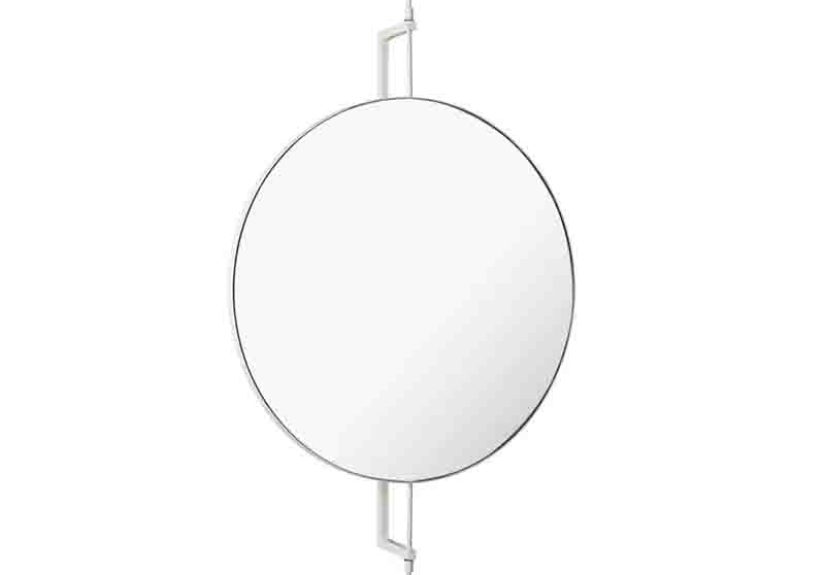
The Kristina Dam Rotating Mirror is a wall-mounted mirror designed to rotate/pivot
on its bracket. Instead of being fixed flat against the wall, it swings so you can change the viewing anglehandy in
entryways, bedrooms, and bathrooms where your “best light” isn’t always directly in front of you.
The look is intentionally restrained: a powder-coated steel (or steel/stainless steel) frame paired with a clean glass
mirror. It’s Scandinavian minimalism with a little edgeless “fluffy farmhouse” and more “Copenhagen coffee shop where
the chairs cost more than my first car.”
Design DNA: Scandinavian Minimalism (With an Attitude)
Kristina Dam Studio is known for sculptural minimalismpieces that feel architectural, monochromatic, and tactile.
That’s why the rotating mirror doesn’t rely on ornate frames or decorative flourishes. The “decoration” is the form
itself: the curve, the scale, the metalwork, and the way it moves.
This matters for styling because it means the mirror can behave like a quiet background piece or a focal point,
depending on what you pair it with. Put it above a slim console and it reads as refined and practical. Put it on a
clean wall with strong lighting and it suddenly looks like functional wall sculpture.
Key Features People Actually Care About
1) The rotation isn’t a gimmick
A rotating wall mirror is surprisingly useful in real life. You can angle it toward the doorway to do a last-second
outfit check, then pivot it slightly to bounce light back into the room. In bathrooms, that small angle change can
reduce glare and improve visibility, especially if your lighting is overhead and not ideal.
2) Material choices that look expensive (because they are)
The mirror is typically described with materials like powder-coated steel, steel, and
glass, with some listings also noting stainless steel components depending on the
finish/variant. The result is a crisp, modern wall mirror that reads “premium” without needing decorative trim.
3) Finish options: black, beige, and steel tones
If you’re choosing between finishes, think of it this way:
-
Black powder-coated steel: graphic, bold, and easy to pair with white walls, warm wood, chrome,
or matte black hardware. -
Beige powder-coated steel: softer, warmer, and great for creamy walls, oak, linen textures, and
“calm luxury” interiors. -
Steel/stainless look: sharper and more industrial-modern, especially nice with concrete, stone,
and minimal palettes.
4) Sizes: don’t mix up the “Rotating Mirror” and the “Rotating Full Size Mirror”
This is where shoppers sometimes get tripped up. There are listings for a rotating mirror around
23.6" wide x 35.8" high (often shown as a large, wall-mounted mirror), and there are also
“full-size/full-length” versions listed around 73" high. Different retailers may label these
differently, so always confirm dimensions before you commit.
Translation: one is “large wall mirror” energy; the other is “I can see my entire outfit and my life choices” energy.
Both can be excellent. Just don’t order one expecting the otherunless surprise is your interior design theme.
5) Hidden hooks: a tiny feature that becomes a daily favorite
Some retailer listings describe the mirror as having hooks tucked behind the mirroruseful for hanging
a scarf, a light jacket, or that one tote bag you swear you’re going to stop collecting. In an entryway, those hooks
can keep clutter off your console surface and make the space feel calmer (even if your group chat isn’t).
Where the Rotating Mirror Looks Best
Entryway or hallway: the “last look” zone
A mirror in the entryway isn’t just for vanityit’s for function. It brightens a tight space by reflecting light, and
it creates a moment of order: keys, wallet, sunglasses, go. Pair it with a slim console, a catchall tray, and one
sculptural object (not fifteen tiny ones that scream “I panic-bought décor”).
Bathroom: modern mirror ideas that feel elevated
In bathrooms, the rotating feature can help you angle the reflection toward the sink area or away from harsh overhead
lighting. If you’re working with a smaller bath, a well-sized mirror can visually expand the space by reflecting light
and creating depth. The clean frame also plays nicely with contemporary fixturesespecially matte black, brushed
nickel, or warm brass.
Bedroom or dressing area: calm, minimal, and practical
If you style a dressing corner, the rotating mirror is a smart choice because it gives you flexibility. Angle it for
outfit checks, then pivot it back so it reflects a window or artwork. It’s a simple trick that makes the room feel
more intentionallike you planned it, instead of “I put a mirror here because I had nowhere else.”
Living room: functional wall sculpture
In a living space, this mirror can act like art. Its shape and metal frame read as sculptural, especially on a clean
wall with good lighting. One styling move that works well is grouping mirrors (or mixing a mirror with framed art) to
create a curated wall compositionminimal, but not sterile.
How to Style the Kristina Dam Rotating Mirror (Without Overthinking It)
Style recipe #1: the Scandinavian entryway formula
- Rotating mirror centered above a slim console
- One tray for keys + a small bowl (or “pocket emptier” if you want to sound fancy)
- A small lamp or wall sconce to add warmth
- One plant (real or convincingly fakeno shame)
Style recipe #2: the “soft minimal” beige look
If you choose the beige version, lean into warm neutrals: oak, cream textiles, and gentle contrasts. Beige works
beautifully when you keep the palette tightthink sand, bone, oatmeal, and a single dark accent for grounding.
Style recipe #3: monochrome with one bold texture
Use the black frame as a graphic anchor. Pair it with white walls, a black console or bench, and one bold material
like marble, travertine, or ribbed wood. The mirror becomes the clean “outline” that makes the rest look intentional.
Style recipe #4: bathroom upgrade that doesn’t require demolition
If you want a higher-end bathroom feel without remodeling, focus on three changes: a design-forward mirror, upgraded
lighting, and tidy surfaces. A rotating wall mirror can instantly look more custom than a standard builder-grade slab,
especially when paired with sconces or a clean overhead light.
Installation Notes: A Quick Reality Check
This is a substantial wall mirror. If you’re installing it, treat it like a serious objectnot a poster you can hang
with wishful thinking and a sticky strip.
Practical tips (the “please don’t let it crash” section)
- Find studs when possible: If you can anchor into studs, do it.
-
Use proper anchors if studs aren’t available: Heavy-duty drywall anchors exist for a reasonuse the
right type and weight rating for your wall. -
Avoid adhesive hooks for mirrors: Mirrors are heavy, fragile, and emotionally devastating to clean
up at 7 a.m. on a Tuesday. -
Follow the manufacturer/retailer instructions: Especially for rotation clearance and bracket
alignment.
If you’re unsure, consider hiring a professional installer. It’s cheaper than replacing a mirror, patching drywall,
and explaining to your household why the hallway now looks like a crime scene made of glittering glass.
Care & Maintenance: Keep It Looking Sharp
Retailer care notes commonly recommend gentle cleaning: use mild soap and water for the metal surfaces and a proper
glass cleaner for the mirror, drying with a soft cloth. The general idea is simple: don’t treat powder-coated steel
like a cast-iron pan, and don’t scrub it with harsh chemicals as if it personally insulted you.
Is the Kristina Dam Rotating Mirror Worth It?
This mirror lives in the “designer object” tier. You’re paying for design integrity, material quality, and the brand’s
sculptural approachnot just a reflective surface. If your goal is “a mirror that exists,” you can spend far less.
But if your goal is “a modern wall mirror that doubles as minimalist décor,” the rotating mirror can be a satisfying
investment.
Who it’s perfect for
- People who love Scandinavian and Danish design
- Small-space dwellers who want a mirror that adds light and depth
- Minimalists who still want a statement piece (quietly)
- Anyone building a refined entryway or a spa-like bathroom vibe
Who should skip it
- Anyone who wants ornate frames or traditional detailing
- Shoppers who need a budget mirror (this is not that era)
- People who hate wall mounting or can’t install securely
Conclusion: A Mirror That Moves With Your Life
The Kristina Dam Rotating Mirror is more than a pretty face (and yes, the mirror appreciates the pun).
It’s a functional, rotating wall mirror with sculptural presenceminimal enough to work in many interiors, distinctive
enough to feel special. Whether you’re upgrading an entryway, elevating a bathroom, or creating a calmer dressing
corner, it offers a rare combo: useful movement and design-forward restraint.
Buy it for the pivot, the materials, and the clean Nordic shape. Keep it for the way it quietly improves your daily
routinehelping you check your outfit, bounce more light into the room, and pretend your home belongs in a Scandinavian
design book (even if your laundry basket is doing its own installation art).
Real-World Experiences With the Kristina Dam Rotating Mirror (Extra Detail)
When people talk about living with a rotating mirror, the first surprise is how quickly the “rotation” becomes normal.
You start by playing with it like a new gadgetpivoting it left, pivoting it right, admiring how smoothly it changes
angle. By day three, you’re using it without thinking: a quick tilt to catch better light before you leave the house,
a slight swing toward the entryway so you can check your shoes, and a gentle pivot back so it reflects the window and
makes the space feel brighter.
In an entryway, the mirror tends to become part of a routine. Many people build a little “launch pad” under it: a slim
console, a tray for keys, maybe a small bowl for coins that somehow still exist. The rotating feature shines when the
entry is narrow or the light changes throughout the day. Instead of standing in one exact spot to see yourself, you
adjust the mirror to you. It sounds small, but it’s one of those daily conveniences that feels oddly luxuriouslike
having a bathroom sink that doesn’t splash your shirt every time you wash your hands.
In bedrooms or dressing corners, the experience is less about function and more about mood. A well-placed mirror can
make a room feel calmer and bigger, and the rotating aspect gives you control over what the mirror reflects. On days
when you want the room to feel airy, you angle it toward natural light. On days when you’d rather not see clutter, you
pivot it away from the chair that’s currently wearing half your wardrobe. The mirror becomes a subtle tool for
“editing” your spacewithout moving any furniture.
Bathrooms are where many people fall in love with the practicality. Lighting in bathrooms is often… aspirational.
Overhead lighting can cast shadows, and side lighting isn’t always perfectly placed. The ability to tilt the mirror can
help reduce glare and improve visibility. People who share a bathroom also appreciate that the mirror can be angled for
different heights or positions, which is a polite way of saying it can accommodate everyone from “tall human” to “I
need a step stool but I’m emotionally fine.”
One common experience: because the mirror is minimalist and sculptural, it tends to make everything around it look more
intentional. A basic console suddenly feels curated. A simple towel hook feels like part of a design plan. It’s the same
effect a really good haircut hasyour entire outfit looks better, and you’re not totally sure why.
The only “learning curve” people mention is installation and placement. Because it rotates, you want enough clearance
so it can pivot without bumping into a wall sconce, a shelf, or the corner of a cabinet. Once it’s installed properly,
it’s easy to live with. The mirror doesn’t demand attention; it just quietly does its job and looks good doing it.
And honestly, in a home full of objects that require constant maintenance, that kind of low-drama relationship is
worth celebrating.