Table of Contents >> Show >> Hide
- What Project Mayhem Actually Is
- Why People Keep Calling It a “Secret Hypersonic Bomber”
- The 2022 Breakthrough: Leidos Wins the Big Contract
- What Makes Mayhem Different From Other Hypersonic Programs
- The Engineering Problem Is Enormous
- The 2024 Update: Real Milestones, Real Progress
- The Twist: Funding Trouble and an Uncertain Future
- What the Latest Updates Suggest About the Future
- So, Is Project Mayhem Dead?
- Experiences Around Project Mayhem: What Following a Program Like This Actually Feels Like
- Conclusion
If military aviation had a category called “programs that sound like a metal band and a classified spreadsheet at the same time,” Project Mayhem would win by a landslide. For years, the Air Force’s shadowy hypersonic effort has been described as everything from a next-generation strike platform to a secret bomber to an SR-71 heir with a caffeine problem. And yes, the headlines have been dramatic. But the real story is even more interesting: Project Mayhem is a case study in how cutting-edge defense programs evolve in public view through contract notices, design reviews, shifting mission demands, and a whole lot of strategic second-guessing.
The biggest update is this: Mayhem was not just internet vaporware. It moved into real contract work, hit meaningful design milestones, and then entered a murkier phase as the Air Force reassessed how badly it wanted this exact capability. In other words, the program did not vanish into thin air; it entered that very modern Pentagon state known as “technically alive, strategically complicated.”
This article breaks down what Project Mayhem actually is, why so many people call it a hypersonic bomber, what the Air Force and industry have really said, and where the concept seems to be heading next. Spoiler alert: the most important update may be that Mayhem’s lessons could outlive Mayhem itself.
What Project Mayhem Actually Is
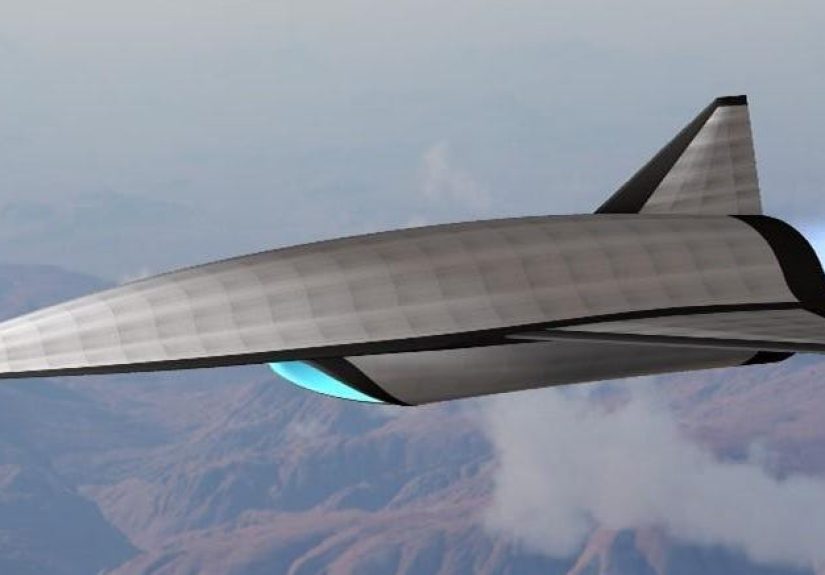
Strip away the sensational labels and Project Mayhem looks less like a classic bomber and more like an advanced air-breathing hypersonic system designed for multiple missions. Early Air Force descriptions framed it as a larger-class platform with a standardized payload interface, intended to support both strike missions and intelligence, surveillance, and reconnaissance missions. That matters because it separates Mayhem from more familiar hypersonic efforts built around single-purpose, one-shot attack weapons.
In practical terms, Mayhem has been associated with a vehicle that could carry different kinds of payloads, move at hypersonic speed, and use air-breathing propulsion rather than relying purely on a boost-glide architecture. That combination is what made defense watchers sit up straight. The Air Force was not merely chasing speed for speed’s sake. It appeared to be exploring whether a hypersonic platform could do several jobs in one body: see, strike, and survive in heavily defended airspace.
That is also why the program triggered so much fascination. A weapon that can only race toward a target is impressive. A platform that can gather intelligence, adapt payloads, and potentially reshape strike timelines is something else entirely. It starts sounding less like a missile and more like a high-speed operational problem-solver.
Why People Keep Calling It a “Secret Hypersonic Bomber”
The “secret hypersonic bomber” nickname is catchy, but it is not the cleanest description. Official language around Mayhem has emphasized a multi-mission hypersonic system with ISR and strike roles, not a formally identified bomber in the traditional B-2 or B-21 sense. So why did the bomber label stick? Because once a platform can carry meaningful payloads over long distances at extreme speed, the public imagination immediately starts sketching giant runway-to-target scenarios with dramatic music in the background.
Media coverage also connected Mayhem to the long-rumored idea of a hypersonic reconnaissance-strike aircraft, sometimes in the same breath as the SR-72 discussion. That does not mean the two are the same thing. It does mean Mayhem landed in a story ecosystem full of stealthy renderings, propulsion speculation, and enough acronym fog to block out the sun.
The smarter way to think about it is this: Mayhem sits somewhere between missile logic and aircraft ambition. It borrows the speed obsession of hypersonic weapons but reaches toward the mission flexibility normally associated with aircraft. That hybrid character is exactly what made the program so intriguingand so difficult.
The 2022 Breakthrough: Leidos Wins the Big Contract
The program stopped being abstract when the Air Force awarded Leidos a contract in late 2022 with a ceiling of up to $334 million. That was the moment Mayhem graduated from rumor-rich defense chatter to a funded effort with real industrial backing. The contract covered work on an air-breathing hypersonic system under the Expendable Hypersonic Multi-mission ISR and Strike program, with a 51-month period of performance.
Leidos said the initial task order was aimed at the System Requirements Review and Conceptual Design Review, both to be conducted in a digital engineering environment. Translation: before anyone starts racing toward flashy prototypes, the Air Force wanted the bones of the system defined carefully, modeled rigorously, and stress-tested in the digital world where mistakes are cheaper and explosions are less inconvenient.
Leidos also described the concept as a large-class air-breathing system powered by a scramjet and capable of speeds greater than Mach 5. That “greater than Mach 5” threshold is important because it is the official hypersonic baseline. Many splashier articles threw around Mach 10. Maybe someday. Maybe in a rendering’s dreams. But the more grounded public documentation has been much more careful than the wilder headlines.
What Makes Mayhem Different From Other Hypersonic Programs
Most public hypersonic programs focus on getting a warhead to a target incredibly fast. Mayhem’s appeal was that it aimed for more than that. The Air Force wanted a larger platform than some existing hypersonic systems, one capable of carrying modular payloads and supporting multiple mission sets. That opens the door to a radically different concept of operations.
Imagine a platform that can be configured one way for strike, another way for ISR, and potentially another for specialized effects. Now imagine that platform moving fast enough to compress an enemy’s reaction time into something between “not much” and “absolutely not enough.” That is the military attraction of Mayhem in a nutshell.
There is also a strategic flavor to this. Hypersonic debate in Washington has often centered on time-sensitive targets, access in contested regions, and the need to penetrate increasingly sophisticated air defense systems. A platform that blends speed with mission flexibility sounds like the sort of thing defense planners dream about after a long day of reading threat assessments and drinking coffee that tastes faintly of printer toner.
The Engineering Problem Is Enormous
Of course, wanting a hypersonic ISR-strike platform and actually building one are two extremely different hobbies. Hypersonic flight is cruel to materials, engines, guidance systems, and thermal management. At those speeds, the atmosphere does not politely step aside. It turns into a punishing environment that heats surfaces, stresses structures, and punishes bad design choices with exceptional enthusiasm.
That is why air-breathing propulsion matters so much in the Mayhem conversation. Scramjets offer a path to sustained hypersonic speeds, but they do not make life simple. They operate in a regime where airflow, combustion stability, and structural heating all become very demanding. And if designers want a platform that acts less like a disposable missile and more like a flexible air vehicle, the propulsion challenge becomes even nastier.
That helps explain why digital engineering played such a prominent role in program updates. In advanced aerospace development, model-based systems engineering is not just a fashionable buzz phrase executives toss around before lunch. It is one of the few practical ways to manage the complexity of a platform where propulsion, payloads, structure, thermal loads, software, and mission logic all interact in ways that can ruin your week at Mach 5 and above.
The 2024 Update: Real Milestones, Real Progress
By mid-2024, Leidos announced that Mayhem had completed two key milestones: the conceptual design review and the system requirements review. That was not a tiny administrative checkbox. It signaled that the program had advanced through an important phase of technical definition and design maturity. In defense acquisition terms, it meant the effort had produced enough structure and coherence to survive serious scrutiny.
Leidos said the work was executed in a digital engineering environment and involved a broader team that included Calspan, Draper, Kratos, and academic collaboration tied to the University of Michigan’s model-based systems engineering efforts. That is notable because Mayhem was never just about building one sleek vehicle. It was also about cultivating the design ecosystem, data structure, and engineering methods needed to make future hypersonic development more feasible.
So if you were looking for a clear update, here it is: Mayhem did not stall out at the concept-art stage. It made measurable progress through major reviews. That is a real accomplishment in a field where physics is stubborn, budgets are political, and every slide deck promises the moon with better drag coefficients.
The Twist: Funding Trouble and an Uncertain Future
Then came the plot twist. Reporting in 2024 indicated that Mayhem’s future had become uncertain. Air Force comments cited a lack of funding in fiscal year 2024 to move beyond the scope of the first task order, resulting in delays to the broader digital design and enabling technology work. Even more telling, officials suggested the “operational pull” behind the program was not yet clear enough to justify heavier investment toward a more complete design package for acquisition.
That phraseoperational pullis Pentagon gold. It basically means this: cool technology is not enough. The service needs a compelling, validated reason to buy it, field it, sustain it, and build doctrine around it. A platform can be brilliant on paper and still struggle if the customer is not fully convinced the mission case is urgent, affordable, and distinct from other options.
This is where Mayhem became more than a hypersonic story. It became a defense planning story. The question was no longer just “Can industry design this?” It became “Does the Air Force want this specific solution enough to keep paying for the next step?” Those are not the same question, and programs live or die in the gap between them.
What the Latest Updates Suggest About the Future
By 2025, attention had started shifting toward a related but somewhat different idea: Next Generation Responsive Strike, or Next RS. Public reporting indicated DARPA, AFRL, and NASA were exploring a reusable hypersonic air vehicle concept for ISR and strike roles, with work that could lead to a prototype or demonstrator by around 2030.
That matters because it suggests the strategic hunger for hypersonic strike-recon capability did not disappear. It may simply be evolving. If Mayhem was the rough draft, Next RS may be part of the rewrite. If Mayhem was too ambiguous, too early, or too difficult to justify in its original shape, its technologies and design lessons may still migrate into whatever comes next.
That is often how advanced aerospace development works. Programs do not always fail cleanly or succeed cleanly. Sometimes they shed skin. They become sources of data, propulsion lessons, payload concepts, design tools, supplier relationships, and operational questions that feed a follow-on effort with a different name and better timing.
So, Is Project Mayhem Dead?
Not exactly. But it is also not marching in a straight line toward an operational hypersonic bomber fleet. The clearest public picture is that Mayhem achieved meaningful design progress, then ran into strategic and funding uncertainty as the Air Force weighed whether the capability deserved deeper commitment in its original form.
That makes Mayhem one of the most revealing defense programs in recent memory. It shows how the Pentagon experiments at the edge of aerospace possibility: start with a high-ambition requirement, fund digital and conceptual work, pressure-test the mission value, and then decide whether the concept becomes a prototype, a program of record, or a technology seed for something else.
In that sense, Mayhem still matters enormously. Even if it never becomes the bomber of headline fantasy, it has already shaped the conversation about what an American hypersonic ISR-strike platform could look like. And in the defense world, shaping the conversation is often the opening act to shaping the future.
Experiences Around Project Mayhem: What Following a Program Like This Actually Feels Like
There is a strange, almost cinematic experience that comes with following a program like Project Mayhem from the outside. You do not get a neat reveal trailer and a cheerful spec sheet. You get fragments. A contract announcement here. A rendering there. A new acronym in a contracting notice. A phrase like “standardized payload interface” that sounds boring until you realize it could hint at a major shift in how hypersonic systems are designed and used. Covering Mayhem feels a lot like watching lightning through clouds: the flashes are brief, but they tell you a storm is absolutely there.
For defense enthusiasts, aerospace engineers, and policy watchers, the experience is equal parts thrilling and humbling. Thrilling because the concept itself is pure futuristic bait: a multi-mission hypersonic vehicle that might see, strike, and outrun danger in the same mission cycle. Humbling because every time the imagination starts sprinting toward sci-fi territory, the real world calmly throws a stack of engineering constraints onto the table. Heat. Cost. propulsion transitions. mission justification. materials. testing infrastructure. budget tradeoffs. Suddenly the “cool secret bomber” story turns into a master class on why aerospace development is hard.
There is also the emotional rhythm of these updates. One month brings a contract win and everyone says, “Aha, this is happening.” Then a later report introduces funding delays or uncertain operational demand, and the tone shifts from celebration to cautious eyebrow raise. That roller coaster is part of the experience of tracking advanced military technology in public. The story is rarely linear. It lurches. It pauses. It gets renamed. It reappears wearing a slightly different acronym and pretending nothing happened.
For people who care about strategy, Mayhem also creates a very modern feeling: the realization that future warfare may be shaped as much by integration and mission design as by raw speed. The exciting part is not only that something may go hypersonic. It is that the Air Force has been exploring whether speed can be merged with flexibility in a platform that does more than dash once and disappear. That idea lingers even when the specific program turns foggy.
And maybe that is the most honest experience of all. Project Mayhem is not satisfying because it gives the public a complete answer. It is fascinating because it does the opposite. It offers enough evidence to prove the idea is real, enough progress to show serious work happened, and enough uncertainty to remind everyone that breakthrough systems are never guaranteed. Following Mayhem feels like standing at the edge of aerospace’s next chapter while someone keeps flipping the lights on and off. You do not always get a perfect view, but when the room lights up, you can tell the future is being built in there.
Conclusion
Project Mayhem remains one of the most intriguing hypersonic efforts connected to the U.S. Air Force because it combined speed, payload flexibility, and ISR-strike ambition in a way few programs have publicly attempted. The biggest updates are not just that the effort existed, or that Leidos won the contract, or that design reviews were completed. The real update is that Mayhem exposed the central tension in hypersonic development: building the technology is hard, but proving the mission case may be even harder.
That does not make the program a dead end. It makes it important. Whether Mayhem itself returns in fuller form or its lessons flow into follow-on work like Next RS, the program has already helped map the path toward future high-speed air vehicles. And if the Air Force eventually fields a platform that can blend hypersonic speed with meaningful ISR and strike utility, do not be surprised if some of its DNA traces back to this very noisy, very secretive, and very appropriately named project.